Replacing your water heater in Colorado Springs
A replacement is more than swapping tanks. Venting, the gas connector, the expansion tank and the relief valve discharge all have to be right, and at this elevation the burner has to suit the altitude.
- Gas and electric tanks
- Expansion tank checked
- Phones answered 24/7
Updated October 2026Phones answered 24/7
Want a price on this job?
Call and describe the job. We answer 24/7 and set a visit.
Quick answer
Water heater replacement in Colorado Springs runs $1,400 to $3,000 for an installed tank on ConsumerAffairs' local estimate, and most of the spread comes from venting, gas and code items around the tank rather than the tank itself. A 40 or 50 gallon tank covers most homes, and keeping the fuel the house already has keeps the job simple.
What goes back in around the new tank
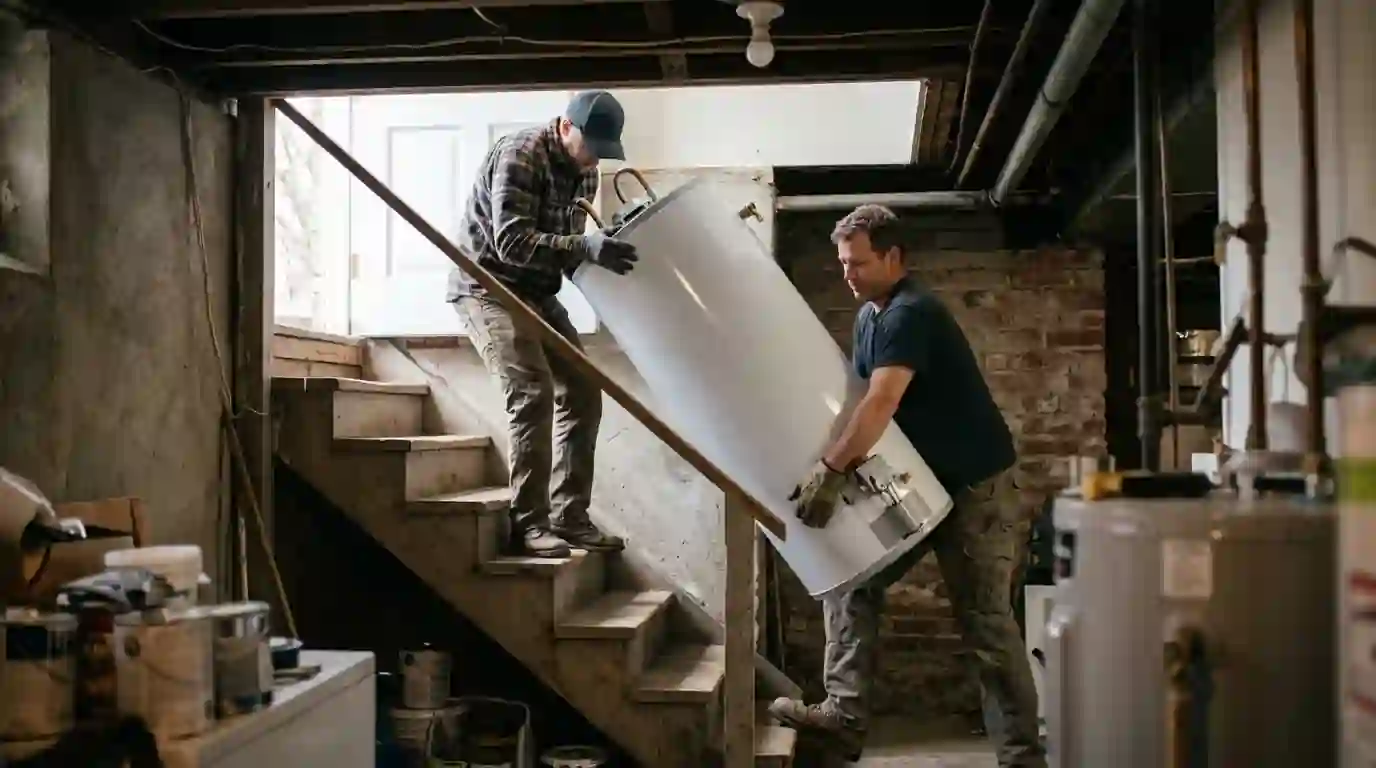
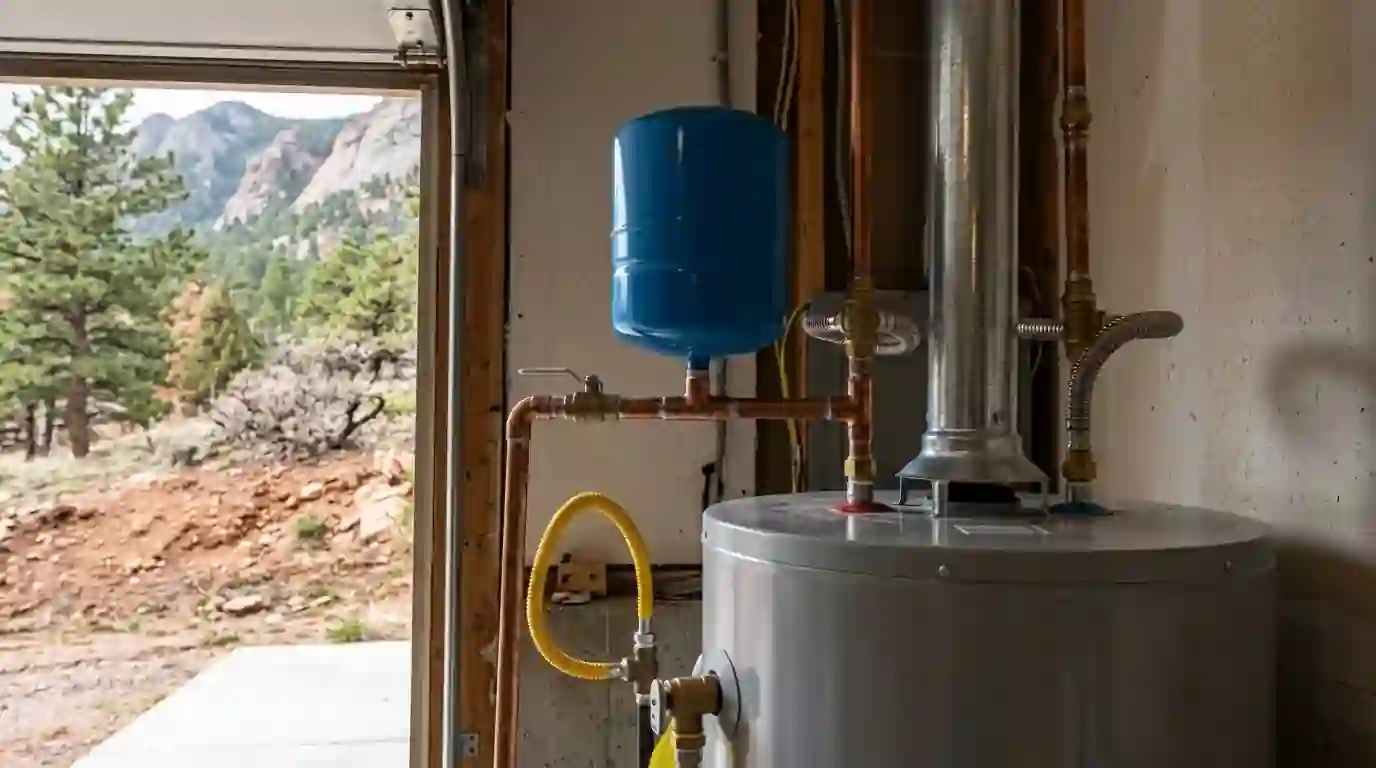
Pulling the old tank is the easy part. The real work is what goes back around the new one: a flexible gas connector and sediment trap, a vent connector sloped up to the flue with proper clearances, a new T&P valve piped down toward the floor or to a drain, a pan where the heater sits over finished space, and an expansion tank matched to house pressure. Older installs are often missing one or more of these.
Size matters too. We look at the bathrooms, any big soaking tub and how many people shower in the morning, then pick a capacity that covers the rush without keeping extra gallons hot. If you are weighing a tankless unit instead, we price both. If your heater is only a few years old and not leaking, repairing it probably makes more sense. Our replacement cost guide breaks down the line items.
Cost
What a new water heater costs, installed
Published averages swing widely because the tank is only part of the bill. These ranges are context, not our price; we quote after seeing your existing install.
What moves the price
- Gas or electric
- Tank capacity
- Atmospheric or power-vent
- Chimney liner or vent changes
- Expansion tank and pan
- Attic, closet or crawlspace access
Ranges are published market figures for planning, not a quote. We price your job after we see it.
Your options
Gas or electric for the new tank
Most people keep the fuel the house already has, since switching adds gas or electrical work.
| Gas tank | Electric tank | |
|---|---|---|
| Recovery after long showers | Faster | Slower |
| Venting | Flue or power vent | None |
| Power outage | Many atmospheric models still heat | No hot water |
| Altitude setup | Burner must suit the elevation | Not affected |
Gas tank replacement
In a house with gas heat, the water heater usually shares a flue with the furnace. We shut off the gas, disconnect the vent and connector, drain and remove the old tank, then set the new one level and reconnect. Before leaving we check gas pressure, burner flame and vent draft. One trap to watch: when a high-efficiency furnace has been vented out the side wall, a water heater left alone on an oversized masonry chimney may not draft well, and the chimney may need a liner.
HomeServe's Colorado average for a water heater replacement is $1,801.
Electric tank replacement
Electric tanks have nothing to vent, but they still need a correctly sized circuit, a disconnect or lockable breaker, and the same T&P, pan and expansion tank details. We check wire gauge and breaker size against the new heater's element wattage before connecting. Electric tanks recover more slowly than gas, so a household that runs out often may be better served by a larger tank or a heat pump water heater, which uses less electricity but needs space and a condensate drain.
Expansion tanks and venting
When the system has a pressure regulator or a check valve at the meter, heated water has nowhere to expand, and pressure spikes every time the heater runs. That makes relief valves drip and strains fittings and faucets. An expansion tank on the cold supply absorbs it, with its air charge set to match house pressure. On the venting side, the connector must rise toward the flue with proper clearance to combustibles, and power-vent units need their own PVC run to an outside wall.
Local conditions
Setting a burner for a city above 6,000 feet
Colorado Springs sits at about 6,035 feet, well above the elevation where water heater makers start adjusting gas burners. A tank built for sea level can run with more fuel than the thin air here can burn cleanly, which shows up as a yellow, lazy flame, soot at the flue and nuisance pilot outages. On every gas install we check the model's altitude rating and orifice, then watch the burner run before we leave.
What is included
What a new water heater should come with
Quotes for the same tank differ by what goes in around it. Compare them on these items.
- New gas connector and sediment trap
- Vent connector checked or replaced
- New T&P valve and discharge pipe
- Expansion tank sized to house pressure
- Drain pan over finished space
- Old tank hauled away
- Burner checked for altitude
- Leak and draft test before we leave

Tank leaking on the floor?
Call any hour and we will walk you through shutting off water and gas to the heater until we arrive.
How the job runs
From shut-off to the first hot shower
Size it
Confirm capacity, fuel and venting from the old unit and how the house uses hot water.
Drain and remove
Gas or power off, cold supply closed, tank drained and carried out.
Set and connect
New tank level in a pan, with new connectors, T&P discharge and expansion tank as needed.
Fill before firing
Fill with a hot tap open so no element or burner fires on an empty tank.
Light and test
Check gas pressure, burner flame, vent draft and every joint, then set the thermostat.
Brands we service
We install Rheem, A. O. Smith and Bradford White tank water heaters and can work with the brand you prefer.
- Rheem
- A. O. Smith
- Bradford White
- Navien
- Rinnai
- Noritz
- Moen
- Delta
- Kohler
- American Standard
- InSinkErator
- Uponor
- Watts
- Zurn
FAQ
Before you replace your water heater
Only if you run out often. Going bigger costs more to buy and to keep hot, and it may not fit the old spot. A high-recovery gas model can solve a morning rush better than extra gallons.
If the house has a pressure regulator or a check valve at the meter, in most cases yes. Without one, pressure rises every heating cycle. We check for both before we quote.
Yes, though it adds gas, vent and water piping. Moving it out of an attic or a finished room is often worth it, because a leak there does far more damage.
A leak from the tank itself, rusty hot water from an old tank, or a costly part such as a gas valve failing on a heater past ten years all point to replacement. A thermocouple or element on a younger tank does not.
Gas models must be rated or set up for the elevation, or the burner runs rich and sooty. Electric tanks are not affected. Our guide on water heaters at altitude explains what changes.
Related services
