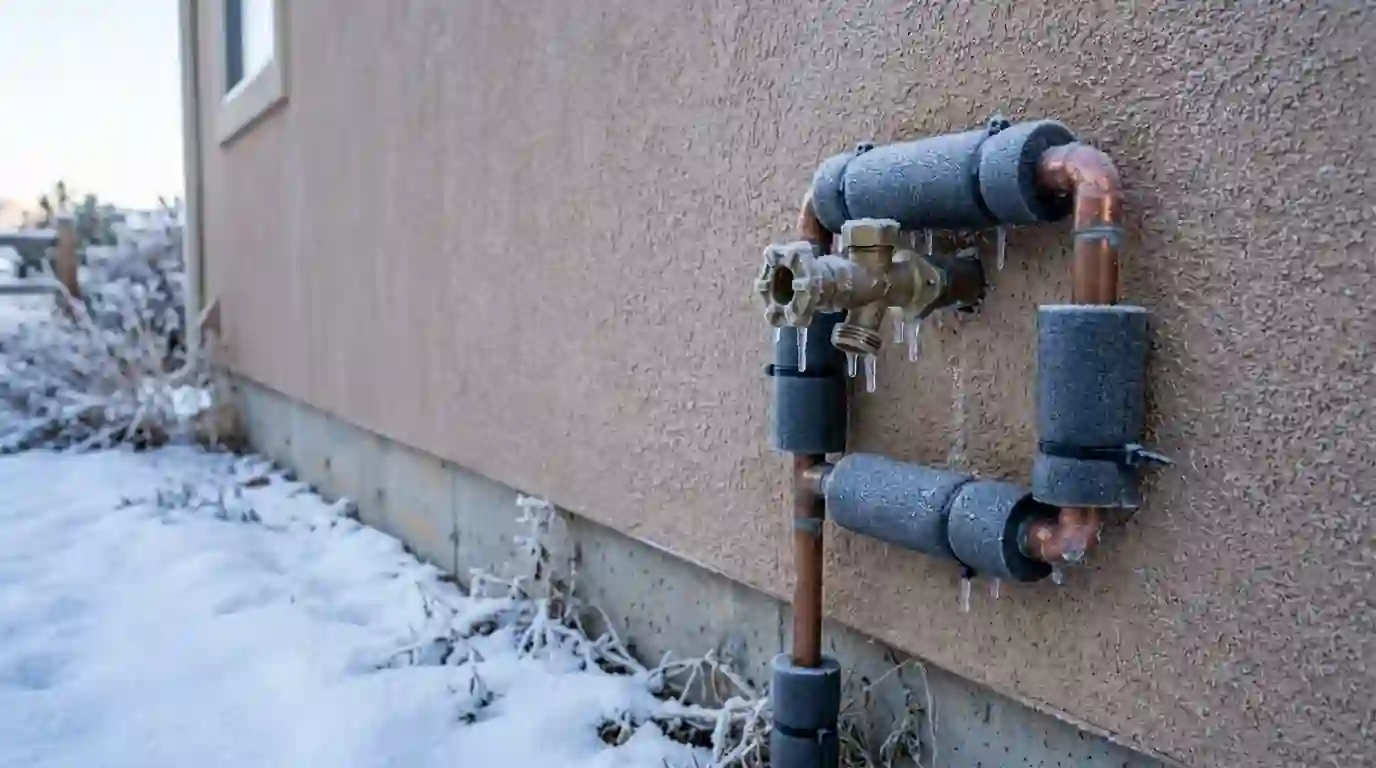
How altitude changes water heater setup in Colorado Springs
By Ulysses Elkins, Plumbing Guides EditorUpdated October 2026
Need a plumber, not a guide?
We answer 24/7 across Colorado Springs and the Pikes Peak region.
Quick answer
At 6,035 feet, a gas water heater in Colorado Springs needs a smaller burner orifice than the same model at sea level: a manufacturer service bulletin calls for four percent less for every 1,000 feet of altitude. Skip that adjustment and the burner runs rich, soots the flue and trips its own safety controls.
Thinner air, same gas: what goes wrong in the burner
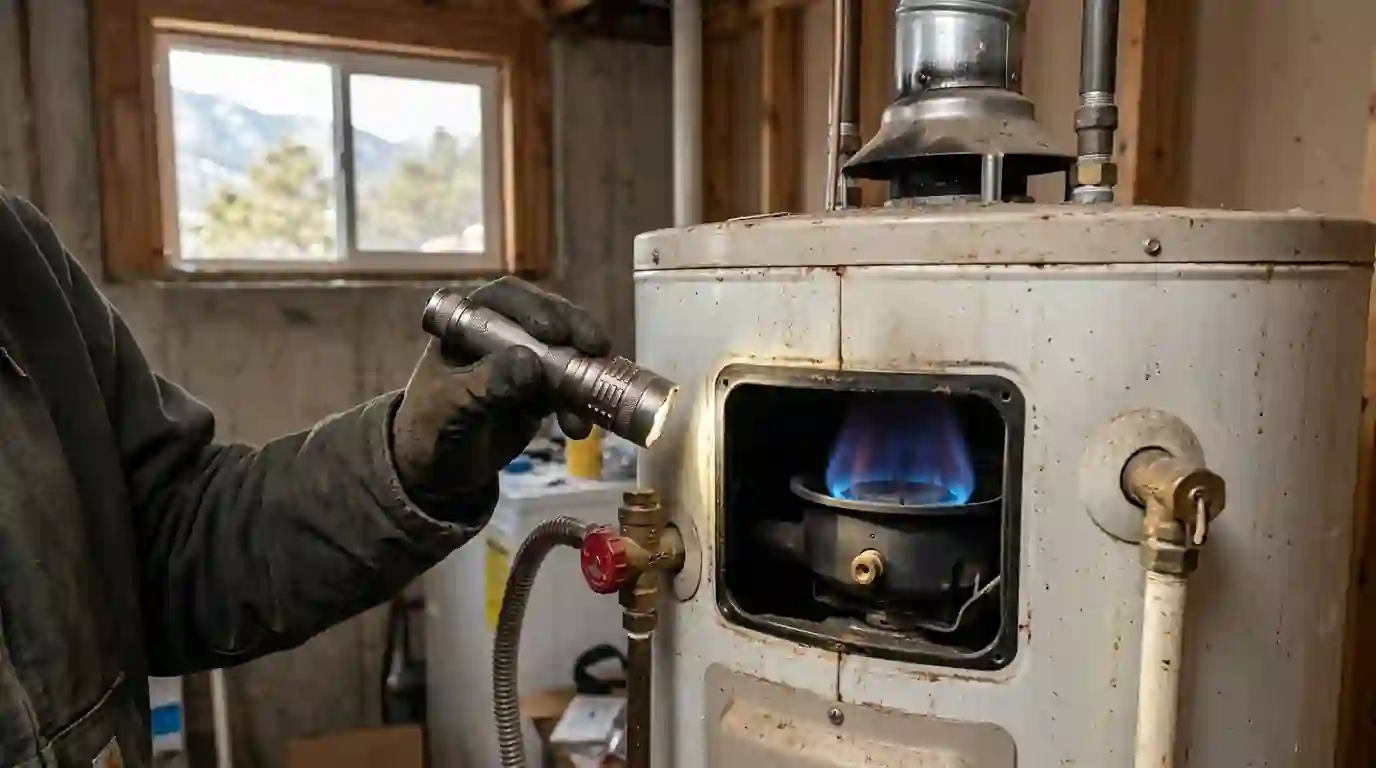
A gas burner is a recipe: so much fuel mixed with so much air. At sea level the orifice, the small brass fitting that meters gas into the burner, is sized for dense air. Air at Colorado Springs' 6,035 feet holds noticeably less oxygen in every cubic foot, but the gas pressure at the valve is the same. Feed a sea-level orifice into that thinner air and the flame gets more fuel than it can burn cleanly.
The symptoms are easy to spot once you know them. The flame turns lazy and yellow instead of crisp blue. Soot builds on the burner, the flue baffle and the bottom of the draft hood. The flame sensor or thermocouple gets coated and the pilot drops out. On sealed-combustion tanks the flame rollout switch trips and the heater locks itself off. A rich burner also produces more carbon monoxide, which is the part that matters most.
The four percent rule at 6,035 feet
A water heater technical service bulletin says altitude effects on gas water heaters normally begin at or above 2,000 feet, and that the main burner orifice must be reduced by four percent for every 1,000 feet. Run that rule out to Colorado Springs and the orifice ends up roughly 24 percent smaller than the sea-level part. The heater puts out less heat per hour as a result, which is why a correctly derated tank recovers a little slower than its label suggests.
Manufacturers handle this in different ways. Some build and list models for high altitude, some ship a conversion kit, and some list an altitude range on the rating plate with no change needed below a set height. The rating plate and the installation manual are the authority, not a rule of thumb. Every gas appliance in the house sits at the same elevation, so the same question applies to the furnace, the range and any hot water boiler as well.
Draft and venting when the air is thin
Most tank heaters here are atmospheric vent models. Hot flue gas rises up the vent because it is lighter than the air around it, and a draft hood on top of the tank pulls in room air to help. Thin air weakens that effect a little, so vent connectors that would scrape by at sea level can spill at altitude: too long a horizontal run, too little upward slope, too many elbows, or a connector shared with a furnace that is undersized for both.
A quick check during any install or service is to hold a smoke source at the draft hood edge a few minutes after the burner lights. Smoke should pull into the hood. If it rolls out into the room, combustion gas is spilling too, and the vent needs attention before anything else. Power-vent and direct-vent models use a fan or a sealed intake, which takes draft out of the equation but adds its own altitude settings.

Rather have a plumber look at it?
Call any hour. A person answers.
Boiling point, relief valves and safe tank temperatures
Colorado State University Extension notes that water boils at about 203 F at 5,000 feet and 198 F at 7,500 feet, compared with 212 F at sea level. Inside a pressurized tank, water does not boil at those temperatures. But if a thermostat or gas valve fails and the temperature and pressure relief valve opens, the overheated water that flashes out at room pressure turns to steam sooner than it would at the coast.
That is one more reason the relief valve discharge pipe matters: full size, no threads on the open end, no valves in it, and run down to within a few inches of the floor or to a safe drain. Set the tank thermostat around 120 F for daily use to limit scalding, and test the relief valve yearly as part of routine water heater maintenance.
Tankless heaters at altitude
Tankless units also lose output at elevation, and most have an altitude setting made through dip switches or a menu parameter during setup. Get it wrong and the unit throws ignition or combustion error codes, or runs with a poor flame. The derated output also changes sizing: a unit that delivers a given flow rate at sea level delivers less here, and less again in January when the water arriving from the street is colder.
For that reason a tankless install here starts with the unit's altitude tables, the gas line size from the meter, and the vent length limits. If an existing unit keeps faulting, tankless repair begins by confirming the altitude setting and the gas pressure under full fire before replacing parts.
A quick check you can do on your own heater
None of this needs tools. Look, listen and read the label. If two or more of these show up, have the burner and venting checked, and if anyone in the house has headaches that ease when they leave, get fresh air in and call right away.
- Rating plate lists an altitude range that covers 6,035 feet, or notes a conversion
- Flame is mostly blue with small, steady tips
- No soot or rust flakes at the draft hood or under the burner door
- Smoke pulls into the draft hood a few minutes after the burner lights
- Pilot or burner does not drop out repeatedly
- Relief valve pipe runs full size to near the floor
When a sooting heater should be repaired or replaced
A sooted burner on a sound tank is usually a cleaning, an orifice or conversion correction, and a new thermocouple or flame sensor, all handled during a water heater repair visit. If the tank is also leaking, rusted at the top fittings, or the combustion chamber is scorched, replacement makes more sense, and the new heater should be set up for altitude from day one. Our guide to water heater replacement costs shows how that setup appears on an estimate.
FAQ
Questions readers ask
Several causes overlap. A sooted thermocouple or flame sensor from a rich burner is common at our elevation. Downdrafts in a weak vent on windy days can blow it out too. Cold, dense air in winter changes draft slightly. Clean or replace the sensor, then fix the reason it sooted, or it returns.
No burner, no orifice and no vent, so the combustion issues do not apply. The relief valve and discharge pipe rules still apply, and so do sediment and anode maintenance. Electric elements work the same at any elevation, though recovery is slower than gas for the same tank size.
Small orange flecks from dust in the air are normal. A flame that is mostly yellow, tall and lazy, or one that leaves soot, means the fuel and air mix is off. At 6,035 feet the usual cause is an orifice or setup meant for lower elevation, or a blocked air inlet.
If the listed range covers 6,035 feet and the vent, gas pressure and clearances match the manual, yes. If the plate stops below our elevation, it needs the manufacturer's conversion or a model listed for altitude. Installing it as-is runs it outside its listing.
A correctly derated tank recovers a little slower, but the stored volume is the same, so the first showers are unchanged. If a household routinely runs out, the fix is a larger tank or a better recovery rate, not an oversized orifice, which brings back the soot and safety problems.
No. Keep a working alarm near sleeping areas and on the level with fuel-burning appliances, but an alarm only reacts once gas is already in the room. Setting the burner and vent correctly stops it at the source. Both belong in a house with gas appliances.
Related