Sewer camera inspections for Colorado Springs owners and buyers
A camera turns a guess into a picture. We push a self-leveling camera head down the main, track distance as it goes, and show you where the roots, bellies, offsets and cracks are before anyone prices a repair.
- Camera before we quote
- Defects marked on the surface
- Pre-purchase scopes
Updated October 2026Phones answered 24/7
Want a price on this job?
Call and describe the job. We answer 24/7 and set a visit.
Quick answer
A sewer camera inspection in Colorado Springs runs a waterproof camera on a push cable from a cleanout to the utility main, often 50 to 100 feet or more, recording the inside of the pipe. The footage shows material, roots, sags and breaks, and a locator marks each defect's position and depth on the ground above.
What is included
What a complete scope report should note
Scopes vary between plumbers. A useful one covers each of these, and ours does.
- Access point used and its condition
- Pipe material along each section
- Total length to the utility main
- Roots, and at which joints
- Bellies holding water
- Offsets, separations and cracks
- Old repairs or material changes
- Defects marked with depth on the surface
- A plain recommendation for next steps
What a camera shows that a cleaning cannot
Cleaning tells you a line was blocked. A camera tells you why. As the head travels toward the street, we watch for roots at joints, a belly where the pipe has sagged and holds water, an offset where one section has shifted, cracks, crushed sections and a change of material where someone made an old repair. The cable counter gives distance, and a transmitter in the head lets us find the spot from above.
That information decides what happens next. Roots at one joint may call for cleaning and a recheck in a year. One crushed section points to a spot repair. Clay failing along its length usually means replacing the line. Without footage, each of those is a guess.
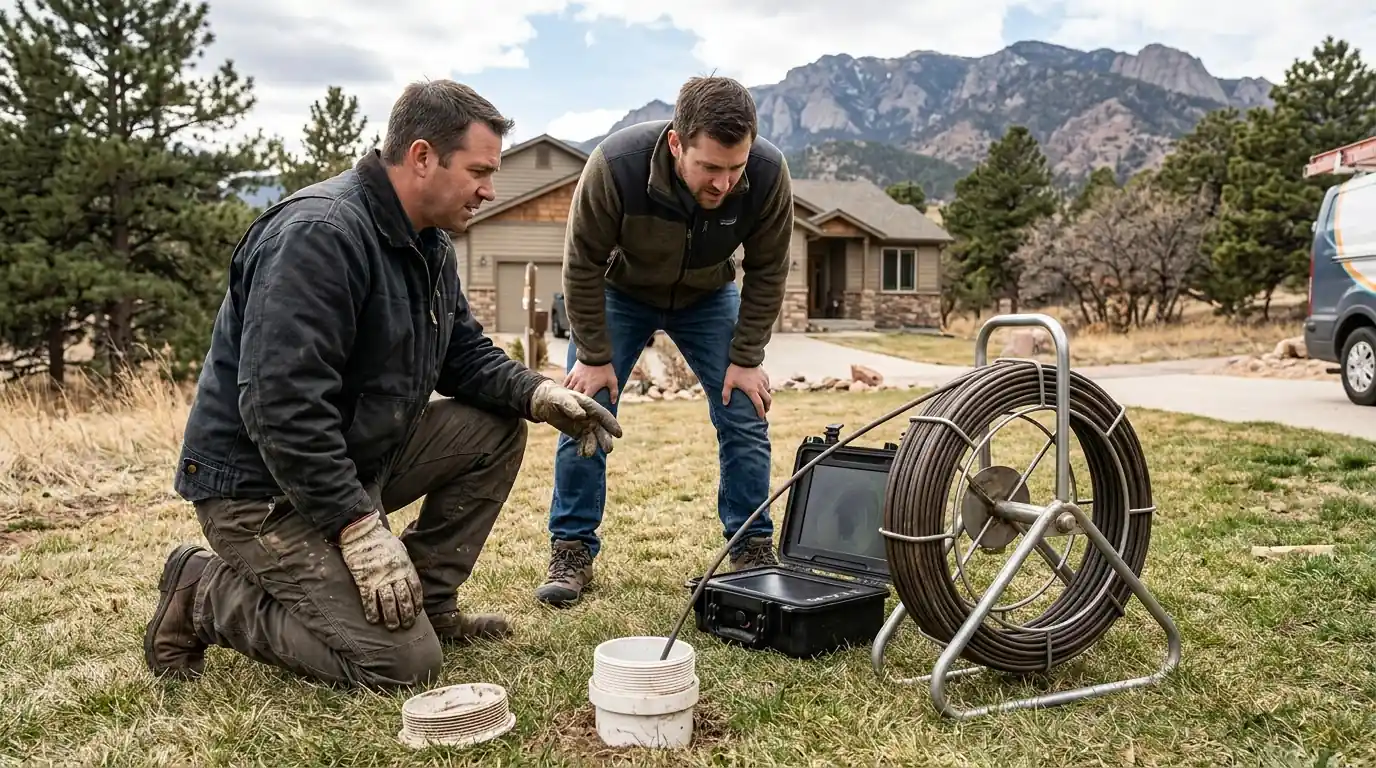
Sewer scope before buying a home
A standard home inspection usually stops at the floor drain. The sewer line from the house to the utility main is out of sight and, depending on its age, can be the most expensive repair on the property. We scope it from the cleanout, note material, joints, roots, sags and any break, and walk you and your agent through what we found. Doing this inside the inspection period gives you something concrete to negotiate with. Our buyer's guide to sewer scopes explains what to look for.
Locating a break or a belly
When a line keeps clogging at the same distance, or one patch of lawn keeps sinking, the camera finds out why. A belly shows as standing water the camera head dips into. A break shows as soil, rock or a gap in the pipe wall. The sonde in the camera head lets us trace it from the surface with a locator and mark it with its depth, so a repair means one hole in the right spot, not a trench across the yard looking for it.
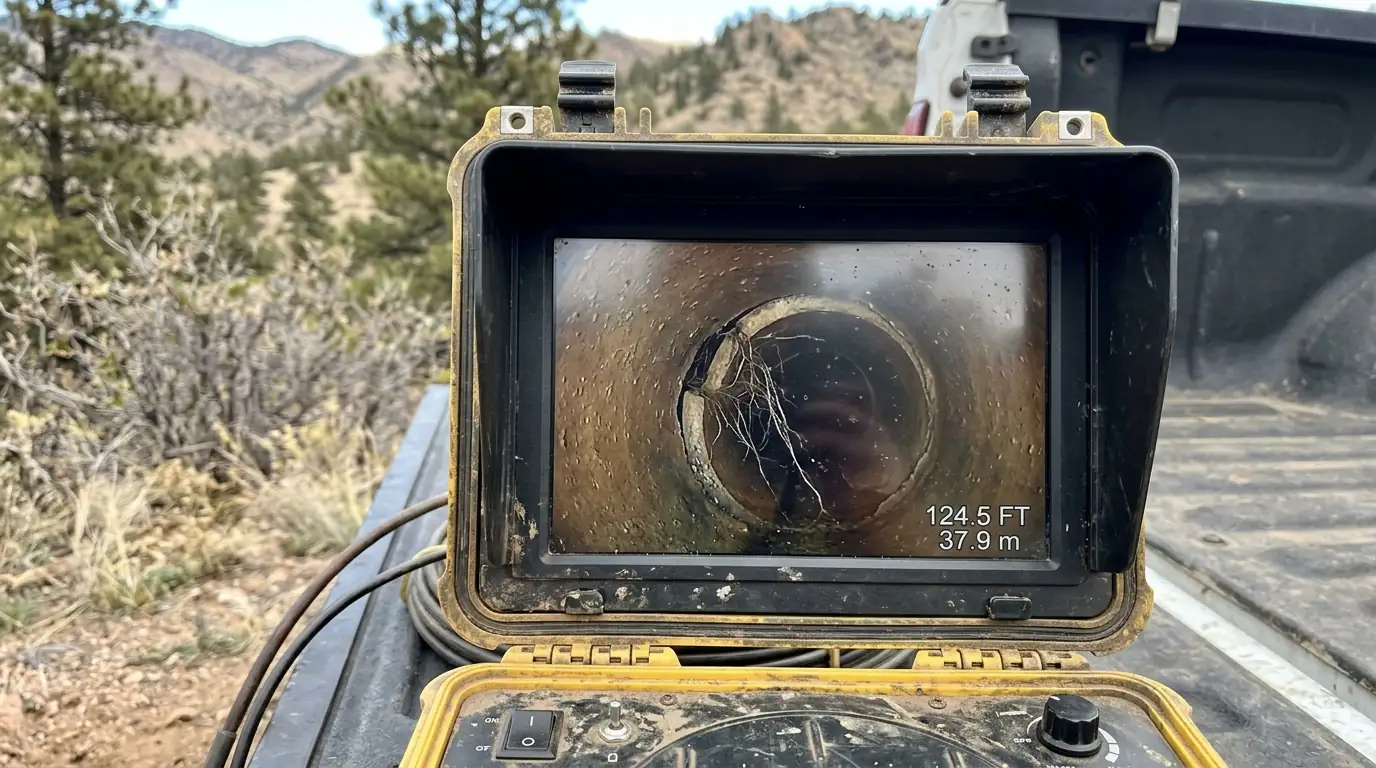
Checking a line after cleaning
Roots and grease hide what is under them. After a line is cut or jetted, a camera run shows whether the pipe is intact, whether roots came through one joint or twenty, and whether scale in cast iron has been knocked back far enough. It is also how we confirm a cleaning reached the utility main, rather than punching a hole through a clog that will close again. After a second backup in one year, this look is worth the time.
Local conditions
Why sewer scopes matter so much in this market
Colorado Springs Utilities puts upkeep of the wastewater service line, from the house to its main, on the customer, along with damage from blockages in it, and that duty passes to each new owner. HUD counts more than 65,800 active-duty and civilian personnel at Fort Carson and the region's other bases, with about 70% of military personnel living off base, and the metro recorded 12,000 existing home sales in 2023. Every one of those sales handed someone a sewer line, and the inspection window is the buyer's one chance to see it first.
Cost
What a sewer scope costs
A camera inspection is a small cost next to the repairs it can reveal or rule out. This is a national average, not our price.
What moves the price
- Outdoor cleanout, or entry through a toilet or vent
- Length of line to the utility main
- Whether the line must be cleared first
- Locating and marking defects
- Pipe material and number of joints
- Timing inside a purchase deadline
Ranges are published market figures for planning, not a quote. We price your job after we see it.
Timing
How long a scope takes during a home inspection
With an accessible cleanout, a scope usually fits within an hour, walk-through of the footage included. Pulling a toilet for access adds the time to lift it and reset it on a new wax ring.
If the line is blocked and the camera cannot pass, cleaning comes first. On a tight inspection deadline, call early in the window so there is time for both.
How the job runs
How a sewer camera inspection runs
Find the access
An outdoor cleanout is best; otherwise we pull a toilet or use a roof vent.
Run some water
A little flow shows how water behaves in bellies and offsets.
Push to the main
The camera travels to the utility connection while we log distance at each finding.
Locate defects
A locator picks up the sonde so we can mark position and depth.
Review with you
We go through the footage and separate cosmetic findings from real problems.
FAQ
Sewer scope questions from buyers and owners
That depends on your contract and inspection terms. Most sellers allow it during the inspection period, and your agent can confirm before you call.
Yes, by pulling a toilet or going through a roof vent, though a vent is harder to steer. If you are buying, a missing cleanout is worth noting in itself.
A belly is a low section where the pipe has settled and holds water. Small ones may just need watching. Long or deep ones collect solids, cause repeat clogs and are usually repaired.
We can see up to the connection and sometimes a short way into the main. Problems there belong to the utility, and we will tell you if what we see is on their side.
Yes. Construction debris, pipe crushed by heavy equipment and poorly bedded sections show up on new builds too, and they are easier to raise before closing.
Related services

