Tub and shower installation for Colorado Springs bathrooms
A new tub or shower is mostly about the drain, the valve and what is under the floor. We get those right first, so the finish work never has to come back out.
- Phones answered 24/7
- Drains, pans and valves
- Tub-to-shower conversions
Updated October 2026Phones answered 24/7
Want a price on this job?
Call and describe the job. We answer 24/7 and set a visit.
Quick answer
Tub and shower installation in Colorado Springs changes three pieces of plumbing: the drain, the pan or tub sitting on it, and the valve in the wall. A tub commonly drains through 1-1/2-inch pipe while a shower needs 2-inch, so a conversion is more than pulling the tub out and setting a base.
The plumbing under a new tub or shower
Every tub or shower sits on a drain that must be in the right spot, the right size, trapped and vented, and whether it sits in a slab or a framed floor decides how much floor comes up. Above it, the valve has to sit at a depth that matches the wall finish, whether tile, acrylic panels or a one-piece surround. The tile setter and glass installer can work around plumbing that is placed right. They cannot fix plumbing that is placed wrong.
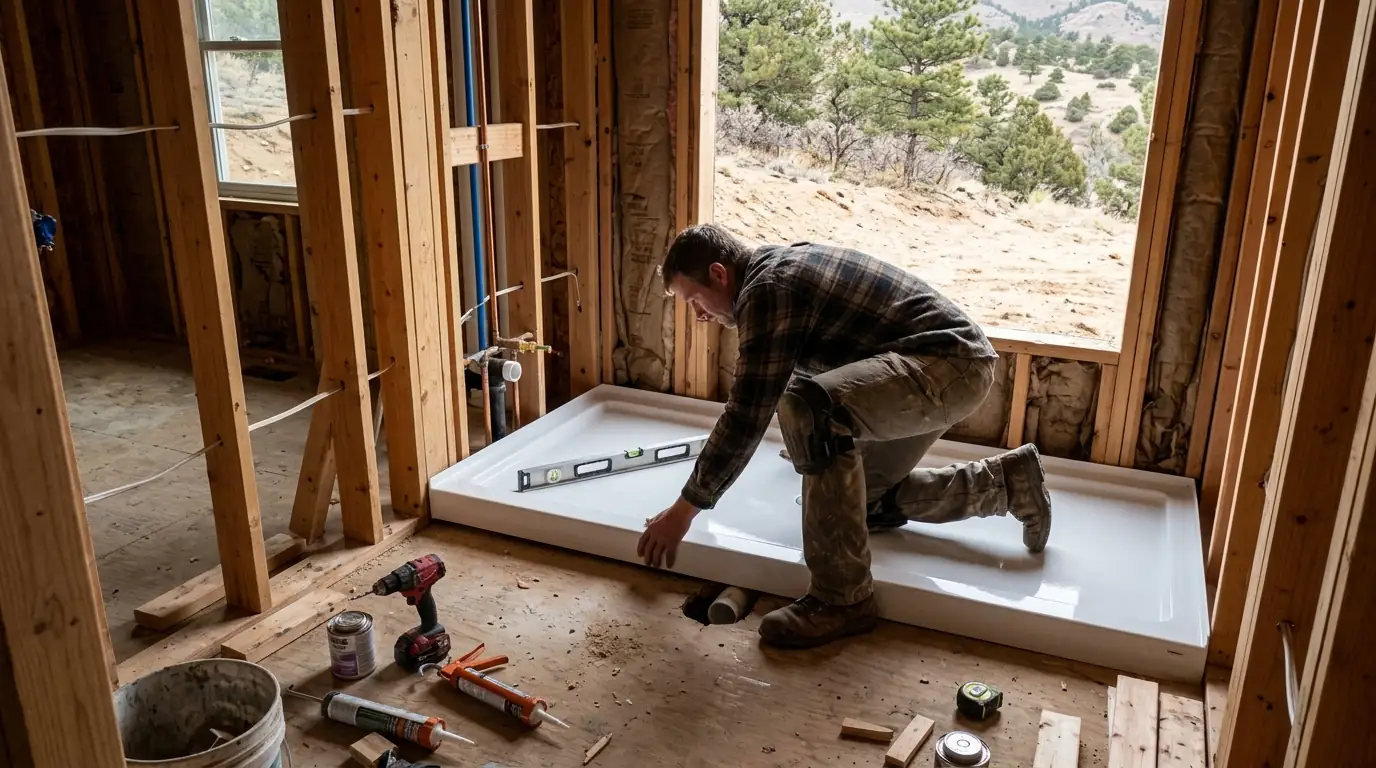
We handle the plumbing side: removing the old tub or base, moving and upsizing the drain, setting the pan or tub, installing the valve and the final trim. Moving fixtures around the room makes it bathroom remodel plumbing, and a shower going into an unfinished basement raises its own drain questions, covered on our basement bathroom page.
Cost
What a new tub or shower costs to put in
These published figures cover the whole installation, fixture and finish included, not plumbing alone. The plumbing share turns on whether the drain moves, concrete is cut and the valve is replaced.
What moves the price
- Drain moved or kept in place
- Slab cut versus framed floor
- Prefab base or tiled pan
- New valve and trim
- Tub weight and the path through the house
- Vent changes when the drain moves
Ranges are published market figures for planning, not a quote. We price your job after we see it.
Your options
Walk-in shower or keep a tub?
The plumbing differs as much as the look.
| Walk-in shower | Tub with shower | |
|---|---|---|
| Drain | 2-inch, often moved | 1-1/2-inch, usually reused |
| Floor work | More, especially on a slab | Less if the tub stays put |
| Bathing small children | Harder | Easier |
| Step-in height | Low or curbless | Over the tub wall |
Tub-to-shower conversions
Taking out a tub for a walk-in shower is the bathroom change we plumb most. The tub drain and overflow come out, the drain moves to where the new pan needs it and goes up to 2 inches, and a new trap is set below the floor. On a slab, that means cutting concrete around the drain. The valve usually moves up the wall, since a shower head sits higher than a tub spout, and the old spout outlet gets capped. A hand shower or body sprays need a valve built for them, chosen before the wall closes.
New shower pans and drains
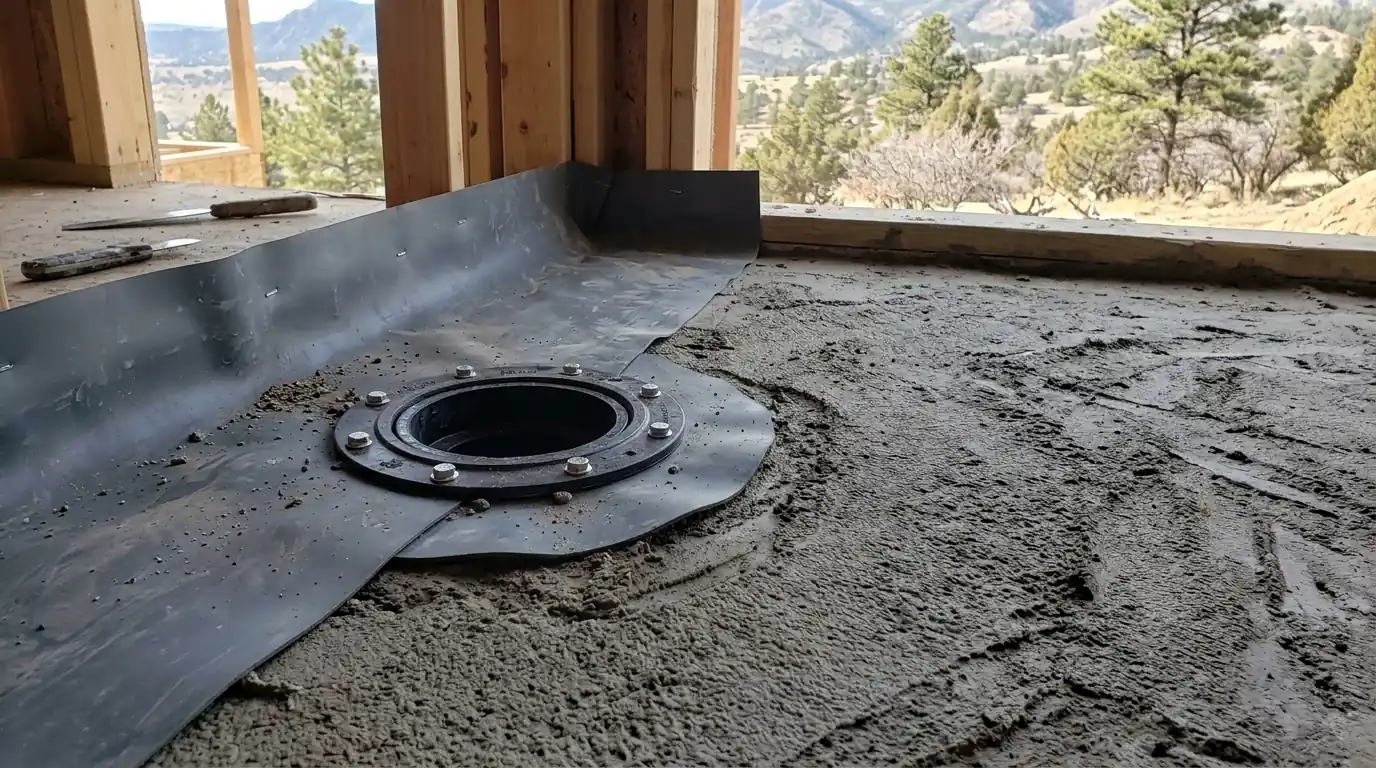
A shower pan has to slope to the drain and stay watertight where nobody can see it. Prefabricated acrylic or solid surface bases are simplest: a drain in the right spot and a level, supported floor. A tiled shower gets a mortar bed or foam tray over a liner or membrane, with a clamping-ring or bonding-flange drain that matches that waterproofing system. We set the drain to the system your tile setter is using and flood test the pan before tile goes on. When an old pan has rotted a subfloor, the cause is usually a drain gasket or a liner nailed through low.
Tub and valve replacement
Replacing a tub in the same spot keeps the drain where it is, but the waste and overflow assembly and trap connection come out with it. Steel and cast iron tubs are heavy, and whether a new one fits through the hallway door decides a lot about what you can buy. Acrylic tubs are lighter but need full support under the base, usually a mortar bed, so they do not flex and crack. If the old valve is a two-handle stem valve, replace it while the wall is open rather than repairing it later through finished tile.
Local conditions
Slabs, basements and framed floors around Colorado Springs
Homes around Colorado Springs sit on slabs, over basements or over crawlspaces, and the first question on any tub or shower job here is what the drain is set in. A drain in a framed floor can usually be moved by opening the floor or the ceiling below it. A drain in a slab means saw-cutting and patching concrete. Before we price a conversion, we find out which one you have and where the stack and vent run.
What is included
What the plumbing side of the job covers
Scopes for this work vary a lot between plumbers. Ours includes each of these.
- Old tub or base removed, drain capped
- Drain located and upsized for a shower
- New trap and vent tie-in
- Valve set to the wall finish depth
- Valve pressure tested before the wall closes
- Pan flood tested before tile
- Tub or base set level and supported
- Trim, spout and head installed after finish
How the job runs
How a tub or shower install comes together
Walk the space
Drain location, floor type, vent path and valve access.
Demo and expose
Old tub or base out, floor and wall opened enough to reach the plumbing.
Rough the drain
Move or upsize it, set the trap and tie into the vent.
Set the valve
At the depth the wall finish needs, pressure tested before the wall closes.
Set the tub or pan
Supported and level, drain connected, tiled pans flood tested.
Trim and test
After finish work, the trim, spout and head go on and everything runs.
Brands we service
We install tubs, valves and trim from Kohler, American Standard, Delta and Moen, matched to the wall finish you have chosen.
- Rheem
- A. O. Smith
- Bradford White
- Navien
- Rinnai
- Noritz
- Moen
- Delta
- Kohler
- American Standard
- InSinkErator
- Uponor
- Watts
- Zurn
FAQ
Questions about new tubs and showers
Rarely as is. A shower needs a 2-inch drain under the plumbing code, while tubs commonly drain through 1-1/2 inches, and the location usually has to shift to suit the pan. On a framed floor that is straightforward; on a slab it means cutting concrete.
A prefab base goes in faster, has fewer places to fail and costs less. A tiled shower fits any size and looks custom, but depends on the waterproofing being done right. We set the drain for either one.
Not always. A single-handle pressure-balance valve in good shape can stay with new trim. A two-handle stem valve or one with a cracked body is worth replacing while the wall is open.
It can, but the framing should be checked for the weight of tub, water and bather, and the tub has to fit through doors and around corners on the way up. Acrylic is often the practical choice on upper floors.
Those are separate trades. We handle the drain, pan or tub, valve and trim, and time our work so the plumbing is set and tested before the tile setter starts.
Related services

