Shower valve and cartridge repair in Colorado Springs
Most shower valve problems are fixed from the front, through the trim, with a new cartridge. When the valve body itself has failed, we plan the access before any tile is cut.
- Call us 24/7
- Pressure-balance cartridges
- Access planned before cutting
Updated October 2026Phones answered 24/7
Want a price on this job?
Call and describe the job. We answer 24/7 and set a visit.
Quick answer
Shower valve repair in Colorado Springs is usually a cartridge replacement done through the trim in a couple of hours, without opening the wall. Full valve replacement is the exception, needed when the body is cracked, the cartridge is no longer made or the valve has no anti-scald protection, and it means working from behind or through tile.
What sits behind the shower handle
Behind the trim is a valve body soldered, crimped or threaded into the hot and cold lines, with a cartridge or stems inside that mix and shut off the water. Most single-handle valves from recent decades are pressure-balancing: a spool in the cartridge shifts when either side loses pressure, so a flushing toilet does not turn the shower icy or scalding. Thermostatic valves hold a set temperature. Older two- and three-handle valves use stems and washers like an old faucet.
The cartridge is the wear part, and matching it is most of the skill: a Moen 1222 and a 1225 look alike and are not interchangeable. When the body has to come out, we coordinate with tile work or a full shower replacement so the wall opens once. A ceiling stain under the shower with no obvious source starts with finding the leak before anyone cuts.
Cost
What shower valve work usually costs
A cartridge swap is a short job with a modest part. Full valve replacement costs more because of the access, and patching tile or drywall afterward is its own line.
What moves the price
- Cartridge swap or full valve body
- Valve brand and cartridge availability
- Access from behind or through tile
- Copper, PEX or galvanized supply
- Seized cartridges or stripped bonnet nuts
- Wall patching after the valve is set
Ranges are published market figures for planning, not a quote. We price your job after we see it.
Your options
New cartridge or a new valve body?
This is the main decision on most shower valve calls.
| Cartridge replacement | Full valve replacement | |
|---|---|---|
| Wall opening | None, done through the trim | From behind or through tile |
| Fixes | Drips, stiff handle, stuck spool | Cracked body, obsolete valve, no anti-scald |
| Trim | Existing trim reused | New matching trim kit |
| Shower out of use | Only while we work | Until the valve is set and trimmed |
Cartridge replacement
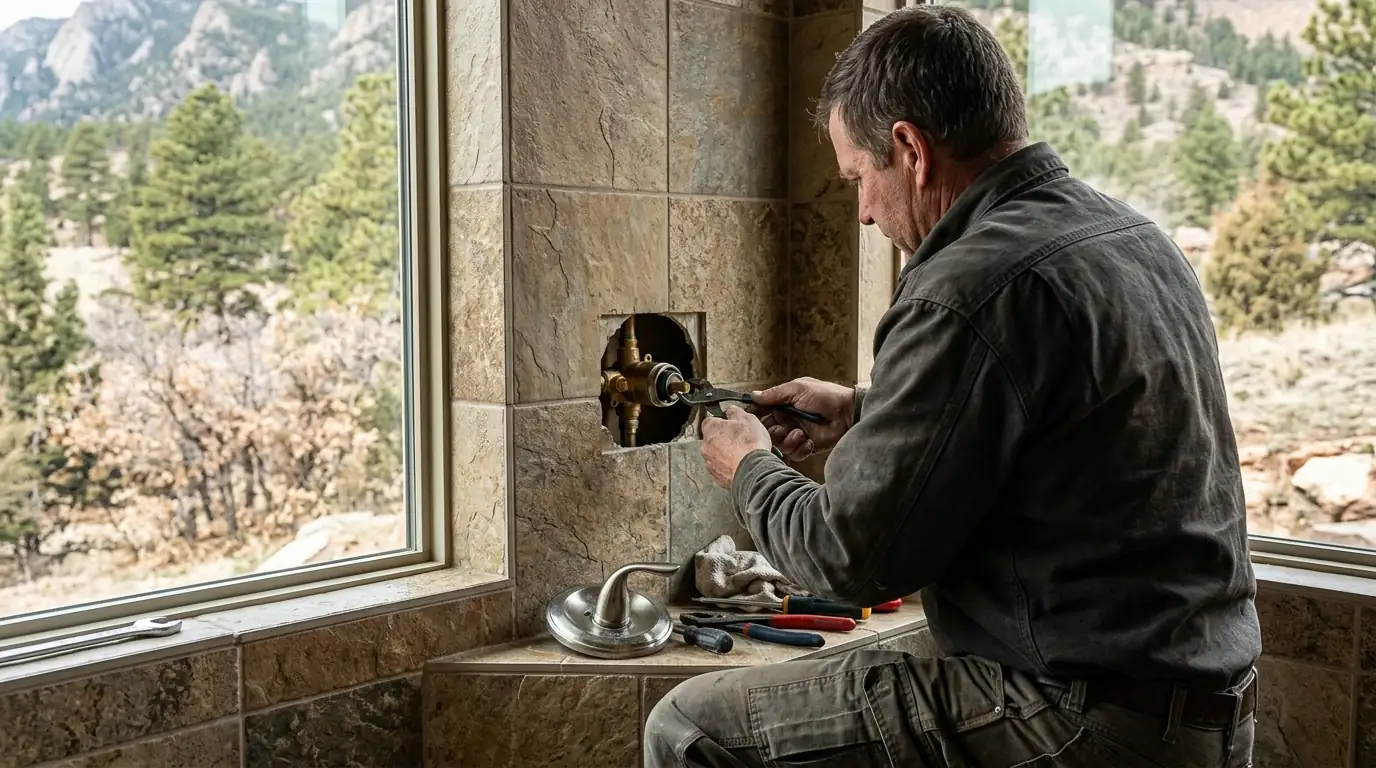
A shower that drips after the handle is off, a handle that turns hard, or a valve that will not reach full hot are cartridge symptoms. We shut the water at the valve's own stops if it has them, or at the main if not, pull the trim, remove the clip or bonnet nut and extract the cartridge. Brass cartridges that have sat for decades can seize, and a proper puller keeps the body from twisting in the wall. The new cartridge gets silicone grease on its O-rings, and we set the limit stop so the handle cannot reach a scalding mix.
Scalding or temperature swings
If the shower jumps hot when a toilet flushes, the pressure-balancing spool is stuck, or the valve never had one. If it drifts colder through a long shower, that is usually the water heater running short, not the valve. If it never gets hot enough, the limit stop may be set too low or a hot inlet screen may be partly blocked. We check the water temperature at a nearby tap, then the valve. A stuck spool gets a new cartridge. A valve with no anti-scald protection at all is the strongest case for replacement.
Full valve replacement behind tile
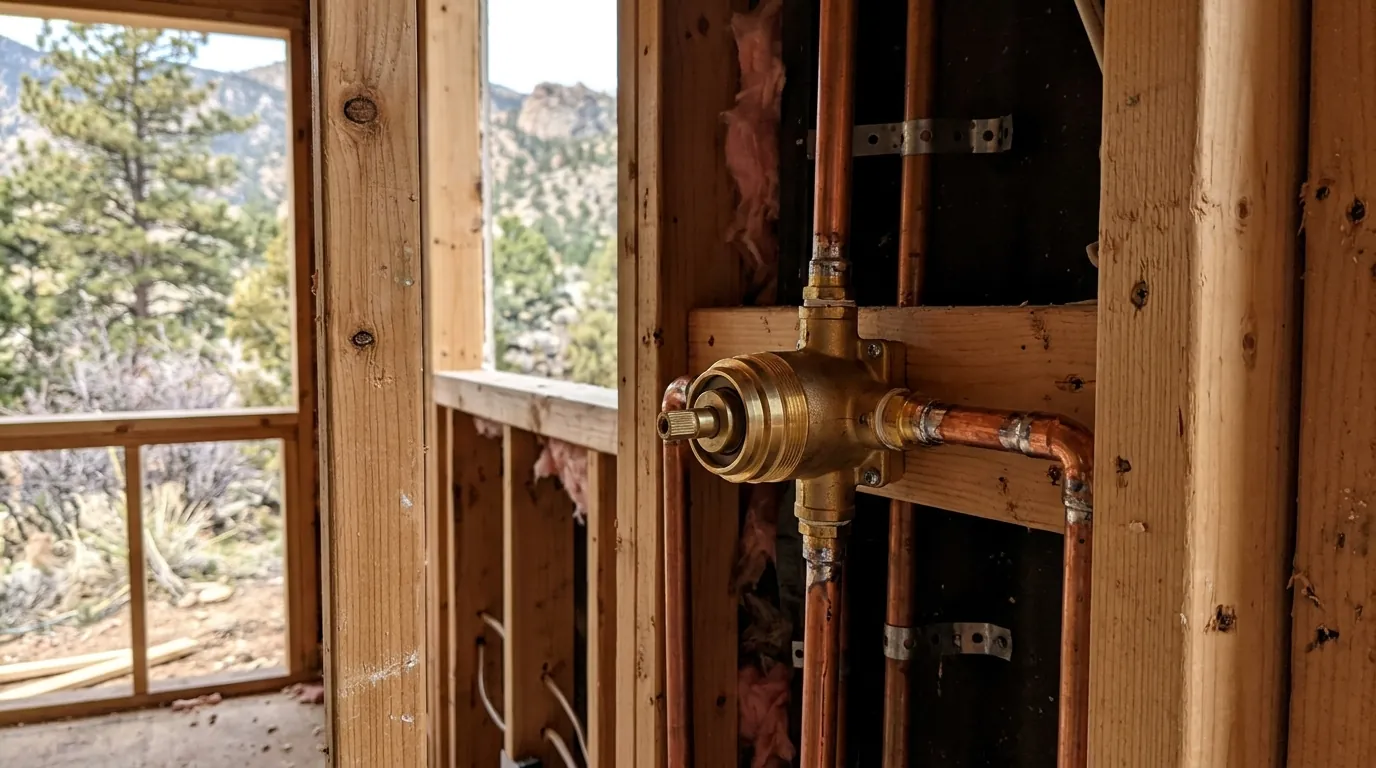
Replacing the body means reaching the pipes. The best access is from behind, through a closet or bedroom wall, where drywall is cheap to patch. If the back is not reachable, we cut the tile around the valve and finish with an oversized trim or cover plate that hides the opening, which avoids hunting for matching tile. The new valve is set to the right depth for the wall finish, connected, and pressure tested before anything is closed. We leave an access panel behind it whenever the wall allows.
Local conditions
Shower walls in Colorado Springs bathrooms
Colorado Springs bathrooms range from older tiled showers with two-handle valves to newer builds with single-handle pressure-balance valves behind fiberglass surrounds. That mix changes a valve call. A worn two-handle valve is often a stem and seat repair. A one-piece fiberglass surround cannot be patched, so its valve is reached from the room behind it. A tiled wall with nothing behind it needs a plan before the first cut, so we look at both sides of the wall before we talk price.
Warning signs
Signs a shower valve is wearing out
Drip after shut-off
Worn cartridge seals or stem washers.
Stiff or grinding handle
Debris or buildup on the cartridge.
Temperature jumps
Stuck pressure-balancing spool.
Never gets fully hot
Limit stop too low or a blocked hot inlet.
Handle spins past the stop
Broken stem or stripped splines.
Stain on the ceiling below
A leak at the valve body or its connections.
How the job runs
How we repair a shower valve
Identify the valve
Brand and series from the handle, trim and escutcheon.
Shut off and drain
Integral stops if present, otherwise the main, then open a low tap.
Pull trim and cartridge
Handle, sleeve and clip off, cartridge out with a puller.
Inspect the body
Cracks, worn seats and debris in the inlet ports.
Install and adjust
New cartridge with greased O-rings, limit stop set.
Test hot, cold and flush
Run the shower and flush a nearby toilet to confirm the temperature holds.
Brands we service
We replace cartridges and valves for Moen Posi-Temp, Delta Monitor, Kohler Rite-Temp and American Standard pressure-balance valves.
- Rheem
- A. O. Smith
- Bradford White
- Navien
- Rinnai
- Noritz
- Moen
- Delta
- Kohler
- American Standard
- InSinkErator
- Uponor
- Watts
- Zurn
FAQ
Shower valve questions from homeowners
The cartridge seals or stem washers are worn and water slips past. On a single-handle valve a new cartridge fixes it. On older two-handle valves the stems need new washers, and sometimes the seats need replacing too.
Yes, if the valve is meant to be pressure-balancing; its spool is stuck or worn. If it is an older valve without pressure balancing, it is behaving as designed, and replacing it is the real fix.
Often, if a closet or bedroom wall backs onto the shower. If not, we cut the minimum and use a larger trim or cover plate so the opening is hidden. We look at both sides of the wall before deciding.
No. A cartridge swap keeps your existing handle and plate. A full valve replacement usually means new trim, since trim kits fit a specific valve, though the same brand often offers a similar look.
The limit stop on the valve should cap the hottest mix at a level that is safe for the people in your home. We set it with a thermometer at the shower head during the repair, and water heater temperature plays a part too.

