Replacing the main water line to a Colorado Springs home
When the pipe from the street is rusted through, lead or too small for the house, we replace it end to end below the frost line, with a new main valve inside.
- Below the 30-inch frost line
- Lead service lines replaced
- Phones answered 24/7
Updated October 2026Phones answered 24/7
Want a price on this job?
Call and describe the job. We answer 24/7 and set a visit.
Quick answer
Replacing a main water line in Colorado Springs means new pipe from the right-of-way line to your foundation, buried below El Paso County's 30-inch frost line. Old galvanized, lead and undersized lines are the usual reasons. The public side and the curb stop stay with the utility, so we coordinate the tie-in point with them.
Replace it once instead of fixing it every winter
One leak on sound copper is a spot repair. A line that has leaked twice, galvanized steel rusting from the outside in, or lead anywhere on the private side is a replacement. Before recommending it, we check the material at the meter end and at the foundation and measure flow at an open hose bib.
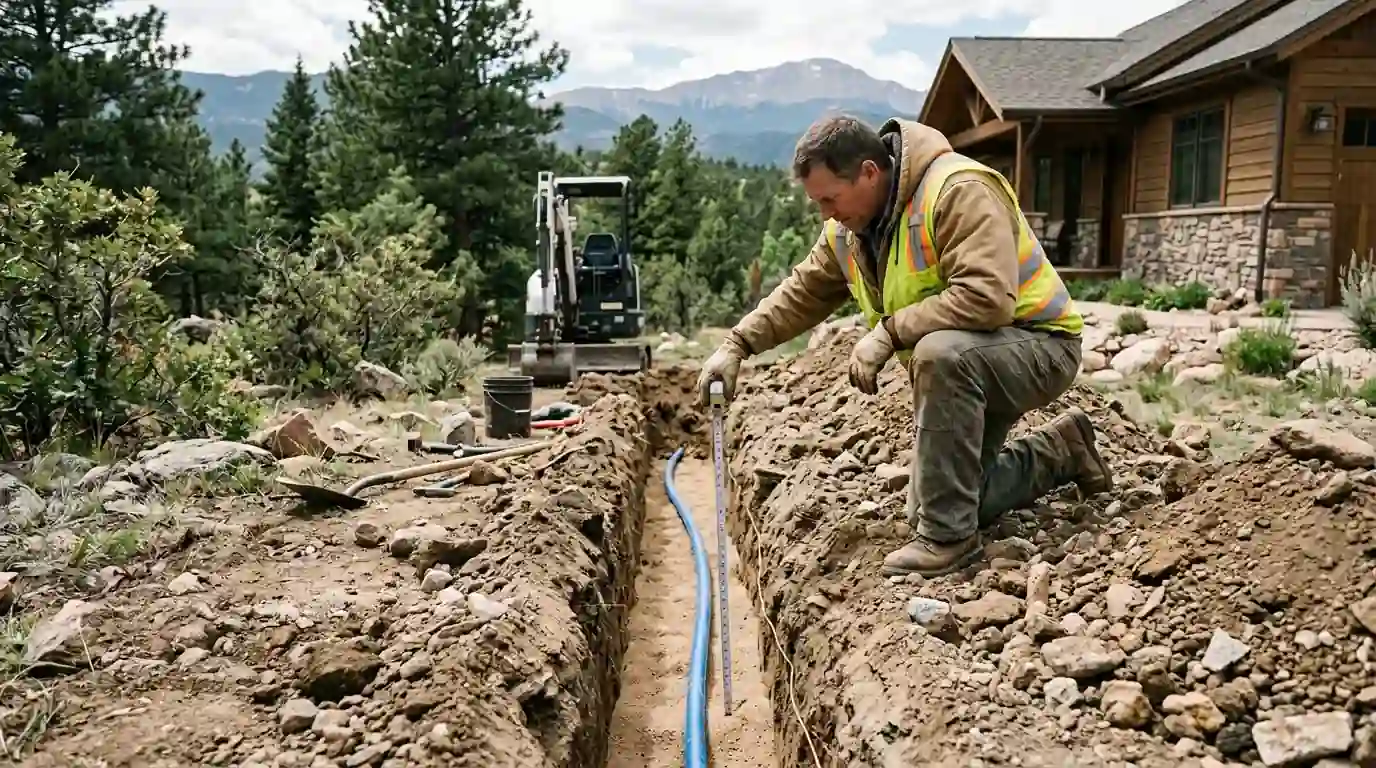
The new line is type K copper or polyethylene rated for water service, sized for the house, laid on bedding sand with tracer wire so it can be found later. Inside, it ends at a new full-port main valve and, where street pressure calls for it, a pressure reducing valve.
Cost
What main line replacement costs
Length, depth and what sits on top of the line drive this price. A short run across open lawn is a different job from a line under a driveway and mature trees. HomeAdvisor's national figures give the scale; our number comes after we measure the run.
What moves the price
- Run length from the right-of-way to the house
- Depth, soil and rock in the trench
- Open trench or boring under concrete
- Pipe size and material
- Lead line coordination with the utility
- Lawn, landscape or concrete restoration
Ranges are published market figures for planning, not a quote. We price your job after we see it.
Your options
Repair the line or replace it?
The pipe decides, not just the leak.
| Spot repair | Full replacement | |
|---|---|---|
| Best when | One leak on sound pipe | Repeat leaks, galvanized, lead, undersized |
| Digging | One hole at the leak | Trench or bore the full run |
| Lead | Leaves the lead in place | Removes it from the private side |
| Flow | No change | Can upsize for more flow |
Old copper or galvanized yard lines
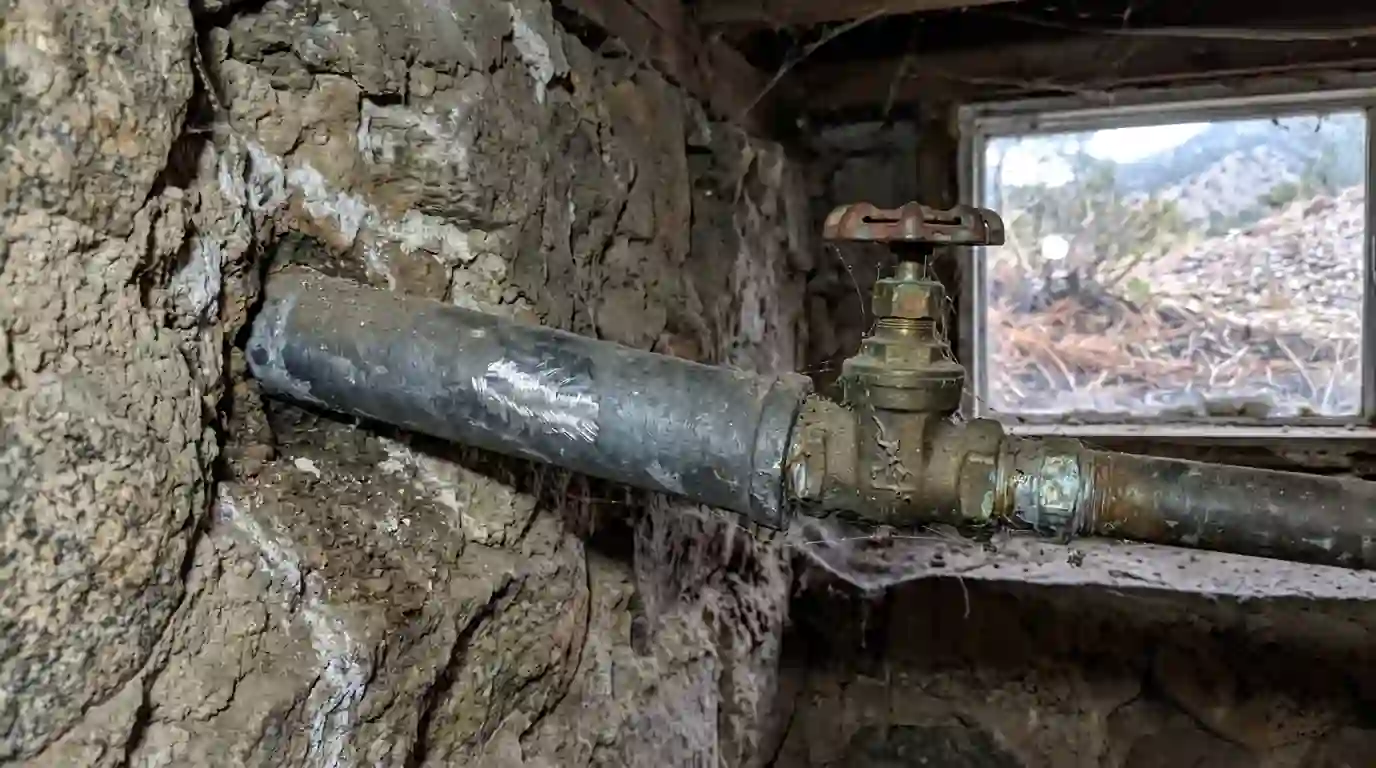
Galvanized yard lines fail from the outside in. Wet soil strips the zinc, the steel rusts, and pinholes open along the whole length, so a repair in one spot only moves the next leak a few feet. Old soft copper lasts longer but can thin where it rubs rock in the trench. When a line has leaked more than once, or the pipe we expose for a repair crumbles at the wrench, we price replacement. The new pipe goes on fresh sand, clear of rock, and through a sleeve in the foundation.
Lead service line replacement
Lead service pipe is dull gray, soft enough to scratch with a key to bright metal, does not attract a magnet, and often bulges at joints. If you are unsure what you have, we check where the line enters the house. Colorado Springs code does not let lead lines stay connected, and replacing only part of one leaves lead in the ground, so we replace the full private section and coordinate with the utility on its side. Afterward we flush the house lines to clear anything the work disturbed.
Upsizing for low flow
If pressure reads fine at a hose bib with nothing running, but the shower collapses when the sprinklers start, the bottleneck may be the service line itself. A three-quarter-inch line on a long run, feeding a house that has added bathrooms, can simply run out of flow. Moving up to a 1-inch line helps, most on long runs. The utility's tap and meter size also limit flow, so we check those before promising a difference. Paired with a new interior supply, upsizing often ends a house's chronic low-flow complaints.
Local conditions
Frost depth, ownership and lead rules in Colorado Springs
El Paso County's frost line is 30 inches below grade, and a new service line has to run below it or it will freeze. Colorado Springs code makes the owner solely responsible for replacing the line from the right-of-way or easement line to the building, while only the utility may operate or repair the curb stop. The same code does not permit lead service lines to be connected; when the utility finds one, it records a notice every year with the El Paso County Recorder until the whole line is replaced.
What is included
What our line replacement includes
Quotes differ in what they leave out. Ours covers:
- Utility locates before digging
- New line from the right-of-way to the house
- Burial below the 30-inch frost line
- Bedding sand and tracer wire
- Foundation sleeve and seal
- New full-port main valve
- Pressure test and house flush
- Backfill compacted in lifts
Timing
How long the house is without water
Most of the work happens with your old line still in service. The trench or bore, the new pipe and its bedding all go in first. Water goes off only for the cutover: disconnecting the old line, connecting the new one at both ends, and testing. That is normally one work session, and you get the window ahead of time. Restoring the yard takes longer than the plumbing.
How the job runs
How a service line gets replaced
Measure the run
Path, length, depth and material at both ends.
Locates and coordination
Utilities marked; tie-in arranged with the utility.
Trench or bore
Open trench across lawn, or a bore under concrete and roots.
Lay the line
Bedding sand, below frost depth, tracer wire on top.
Into the house
Through a foundation sleeve to a new main valve.
Test and backfill
Pressure test, flush the house, compact the trench in lifts.
FAQ
Questions about replacing a water service line
Look where the line comes through the foundation, before the main valve. Lead is dull gray, soft, ignores a magnet and shows shiny metal when scratched. Galvanized steel grabs a magnet. Copper is penny-colored. If you are unsure, we check it on any visit.
Often. A boring machine can carry the new line under driveways, walks and landscaping, with a pit at each end instead of a continuous trench. Rock and soil decide whether boring works, and we tell you after seeing the site.
Water above the frost line can freeze and split the pipe. The new line goes below the county's 30-inch frost line, with extra cover under driveways, where cleared pavement lets frost drive deeper.
Not necessarily. If the interior is copper or PEX in good shape, a new service line may solve the problem. If the inside is galvanized, the narrow interior pipe still limits flow, and doing both makes sense.
Under city code the utility handles the public right-of-way, and the owner is responsible from the right-of-way or easement line to the house. Our ownership guide explains the split for water and sewer.
Related services

