Installing and repairing backflow preventers in Colorado Springs
The assembly on your sprinkler line sits outside through every cold snap. We set new ones at the right height, rebuild the ones that failed a test, and replace bodies that split when water froze inside them.
- Phones answered 24/7
- PVB, double check and RP
- Retest after every rebuild
Updated October 2026Phones answered 24/7
Want a price on this job?
Call and describe the job. We answer 24/7 and set a visit.
Quick answer
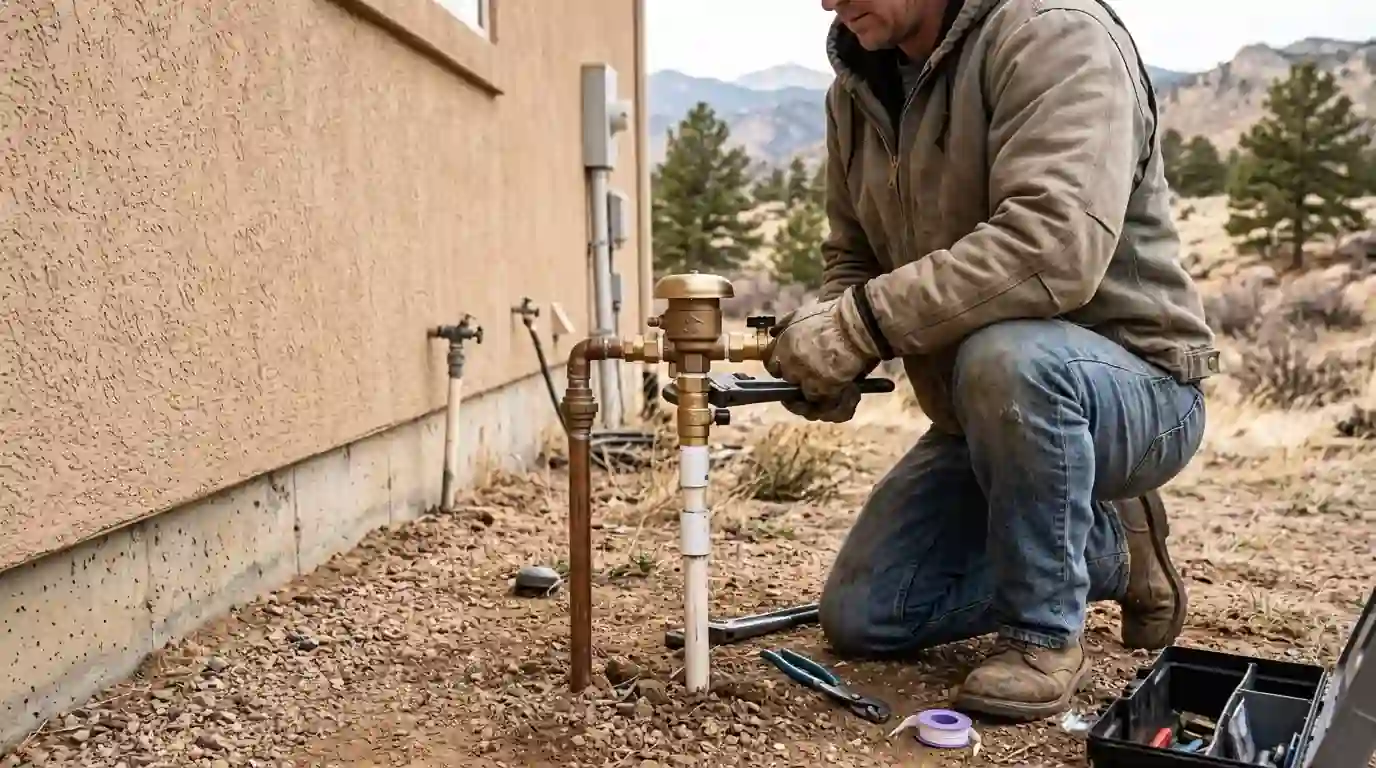
Backflow preventer work in Colorado Springs is mostly sprinkler work: a pressure vacuum breaker has to sit at least 12 inches above the highest sprinkler head it serves, and it has to be drained before a hard freeze. We install new assemblies, rebuild ones that fail their annual test, and replace bodies cracked by ice.
Choosing the assembly and where it goes
Most residential sprinkler lines use a PVB because it is simple and testable. Its weakness is height: it only works when it stands above every head downstream, so a yard that climbs uphill from the house may need a double check or an RP instead, depending on what the utility's program accepts for that setup.
Placement decides how the assembly survives winter. We tie in after the main shutoff with a dedicated irrigation valve and drain inside the house, fit unions so the body can come off, and leave the test cocks reachable. That inside valve is what lets you isolate and drain the line, the same habit that protects a frost-free sillcock from splitting.
Repair or replace comes down to the body. Rubber, springs and poppets can be rebuilt; cracked brass cannot. Every new or rebuilt assembly then needs a passing backflow test on record, and lines that keep freezing may need insulation or rerouting.
Cost
What a new backflow assembly runs
The assembly itself is a modest part of the price. Height, the inside shutoff and drain, unions, and the required test on installation make up the rest. National figures only, not our price.
What moves the price
- PVB, double check or RP, and its size
- Height needed above the highest head
- Distance from the house tie-in
- Inside isolation valve and drain
- Rebuild kit vs a new body
- Riser or feed pipe damaged by freezing
Ranges are published market figures for planning, not a quote. We price your job after we see it.
Your options
PVB or double check for a sprinkler line?
Both protect the house supply from the yard. They suit different lots.
| Pressure vacuum breaker | Double check assembly | |
|---|---|---|
| Placement | Above ground, 12 inches over the highest head | In a valve box where the program allows it |
| Freeze exposure | Fully exposed, drained every fall | Less exposed, still drained |
| Water discharge | Can spit briefly at start-up | Does not discharge |
| Sloped yards | Struggles when heads sit above the house | Height does not matter |
| Testing | Check valve and air inlet readings | Two check valves read on the gauge |
New irrigation backflow assemblies
New sprinkler systems need one, and older yards sometimes still run a non-testable anti-siphon valve or nothing at all. We size the assembly to the irrigation line, set it at the height the type requires, add an isolation valve and drain inside, and use unions and a short riser so a future rebuild does not mean cutting pipe. The test on installation is part of the job, so the assembly goes on record from day one.
HomeAdvisor puts national backflow preventer installation at $150 to $450, with an average of $350.
Repairing a failed test
A tester's report will say which part let go: the first check would not hold, the air inlet would not open, or an RP relief valve dumped water. Sometimes the only sign before the test is a PVB that drips from the bonnet or never stops spitting once the zones start. Most are fixed with a rubber kit, a new poppet or spring, a bonnet O-ring, or grit cleaned off a seat. Then it gets retested, because a rebuild without a passing number does not satisfy the program.
Freeze damage to assemblies
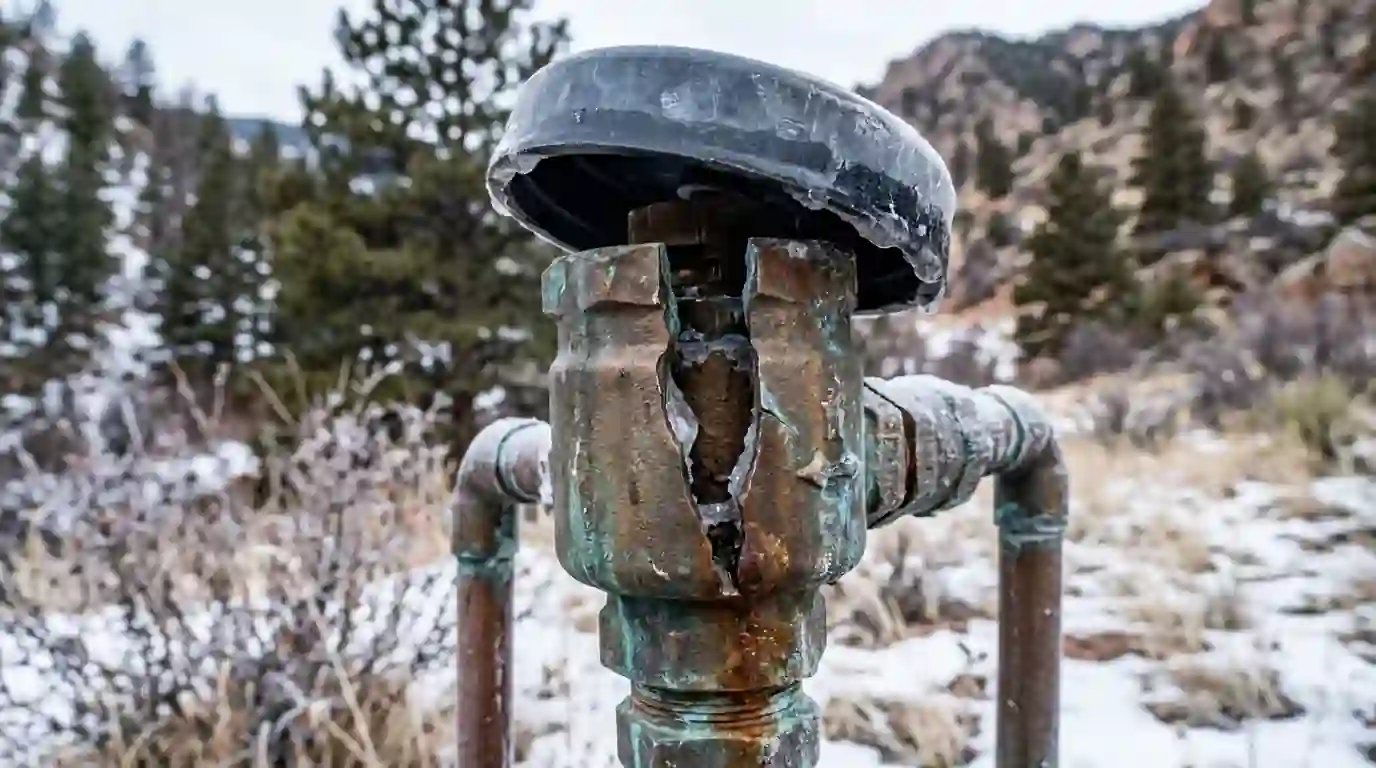
Spring start-up tells the story: you open the irrigation valve and water sprays from the PVB body, the bonnet lifts, or a test cock is split. Water left in the assembly expanded as it froze. A cracked bronze body is replaced with a new assembly of the same size, often with unions added so next fall's drain-down is easier. If the riser or the copper feeding it split too, that gets cut out and replaced at the same visit.
Local conditions
Why late spring freezes crack sprinkler backflows here
The National Weather Service office in Pueblo puts the mean last spring freeze for Colorado Springs at May 8, and the latest on record came June 18, 1912. Pueblo's mean last freeze is April 29. That gap is why we tell owners in town not to charge the sprinkler line on the first warm April weekend: a PVB full of water through one more hard night can split. Colorado Springs Utilities also requires a test when an assembly is installed, so a replacement goes on record with a fresh result.
Do it yourself?
Fall and spring: your part and ours
Draining a PVB is a reasonable owner job. Anything holding pressure is not.
| Task | Homeowner | Plumber |
|---|---|---|
| Fall drain-down | Close the inside valve, open test cocks partway | Drain the line and set up an inside drain if missing |
| Insulated cover | Fit a cover once it is drained | Size a cover to the assembly |
| Spring start-up | Open the supply slowly after the last freeze | Diagnose any spray or leak |
| Dripping bonnet | Close the supply and note where it drips | Rebuild or replace and retest |
How the job runs
How we replace a cracked or failed assembly
Shut off and drain
Irrigation valve closed inside, assembly and riser drained.
Read the failure
Test report, visible cracks, or a dripping bonnet tell us what failed.
Rebuild or replace
Internals for a sound body; a new assembly for cracked bronze.
Set it right
Correct height, unions, test cocks facing out where they can be reached.
Charge slowly, then test
Water back on gradually, leaks checked, test run and recorded.
FAQ
Backflow repair questions
No. Epoxy or tape on a split body will not hold line pressure or pass a test. The body is replaced, usually with the same size so it fits the existing riser, and we check the riser for splits while it is off.
A short burst while the poppet seats is normal. A steady drip or spray from the canopy after the zones are running means the air inlet poppet or its seal is worn and needs a rebuild.
A PVB cannot; it must stand above the highest head. A double check can sit in a valve box where the program allows it, though it still has to be drained each fall.
Close the irrigation valve inside, open the drain, then open both test cocks partway and leave the ball valve handles at a half-open angle so no water is trapped behind them.
Usually not. Most failures are rubber, springs or debris. Replacement makes sense when the body is cracked or the parts are no longer made.
Related services

