Drain cleaning for Colorado Springs sinks, tubs and showers
A slow fixture is usually one clog in one branch line. We pick the cable that fits that pipe, clear it without scarring the trap or the tub, and tell you what caused it.
- Sinks, tubs, showers, laundry
- Cable sized to the line
- Phones answered 24/7
Updated October 2026Phones answered 24/7
Water running right now?
Close the main shut-off, then call. A person answers 24/7.
Quick answer
Drain cleaning in Colorado Springs for one fixture is usually a short visit: we open the trap or the tub overflow, run a cable sized for the 1-1/4 to 2-inch branch, and test at full flow. If two or more fixtures back up together, the clog is further down in the main line, which is a different job.
Warning signs
Signs a branch drain is clogging
Water standing after a shower
Hair and soap in the trap.
Gurgling as the sink empties
A partial clog pulling air through the trap.
One side of a double sink filling
Clog past the tee in the kitchen branch.
Washer overflowing at the standpipe
Lint in the trap, or a standpipe too short.
Sour smell from one drain
Buildup coating the trap and pipe walls.
One slow drain or the whole house?
First we work out how far down the clog sits. One slow sink or tub almost always means its trap or the branch behind the wall. When a toilet gurgles as the tub drains, or the basement floor drain rises during laundry, the blockage is in the shared line, and clearing the main sewer is the right call, not another sink snake.
Each branch clogs for its own reasons, so the tools change. Kitchen lines get a cutting head and sometimes jetting once grease coats the whole run. Bath lines get a smaller cable or a hair tool. We avoid chemical openers, which sit hot in the trap and attack old brass, cast iron and glue joints.
How the job runs
How we clear a fixture drain
Ask about the pattern
Which fixtures are slow, since when, and what happens when others drain.
Choose the access
Trap, overflow or cleanout, whichever gives the cable a straight path.
Cable with the right head
Small cables for bath lines, cutting heads for grease and lint.
Flush and test
Full flow from the fixture and a check of others on the branch.
Name the cause
Hair, grease, lint or pipe condition, and how to keep it away.
Kitchen sink drains
Kitchen lines clog slowly with grease, coffee grounds and starch, then all at once. A double sink that fills on one side while the other drains, or a dishwasher that leaves water in its tub, usually means a clog past the trap arm. We go in at the trap or a cleanout, run a cable with a cutting head toward the stack and flush with hot water. If it clogs again within months, the pipe walls are coated and jetting will last longer.
Bathroom sink and tub drains
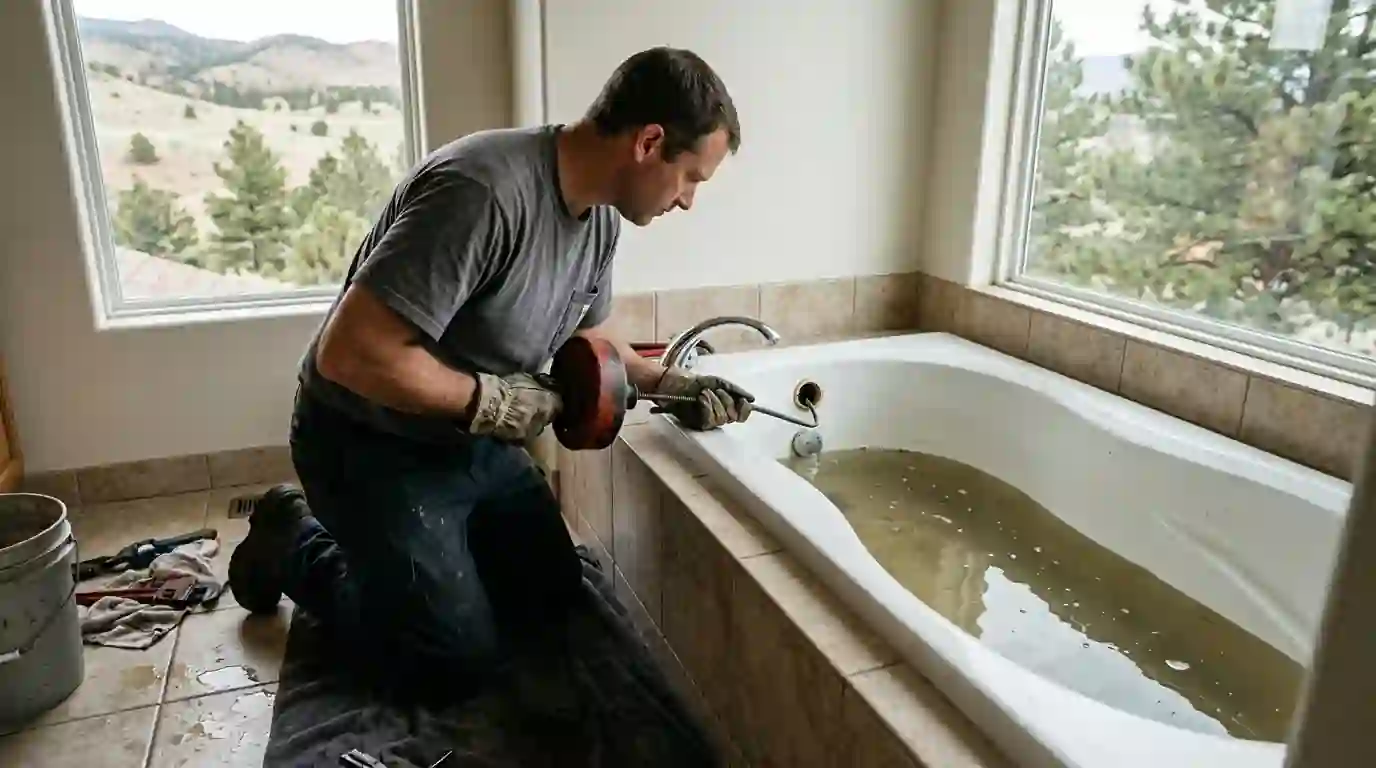
Bathroom sinks clog at the pop-up stopper first, where hair and soap wrap around the pivot rod, and pulling the stopper fixes plenty of them. If not, the clog is in the trap or drain arm. Tubs clog in the trap below the floor, which we reach through the overflow plate rather than the drain opening so the cable never scratches the finish. We also check the trip lever linkage, which can hold water on its own.
Shower drains and hair clogs
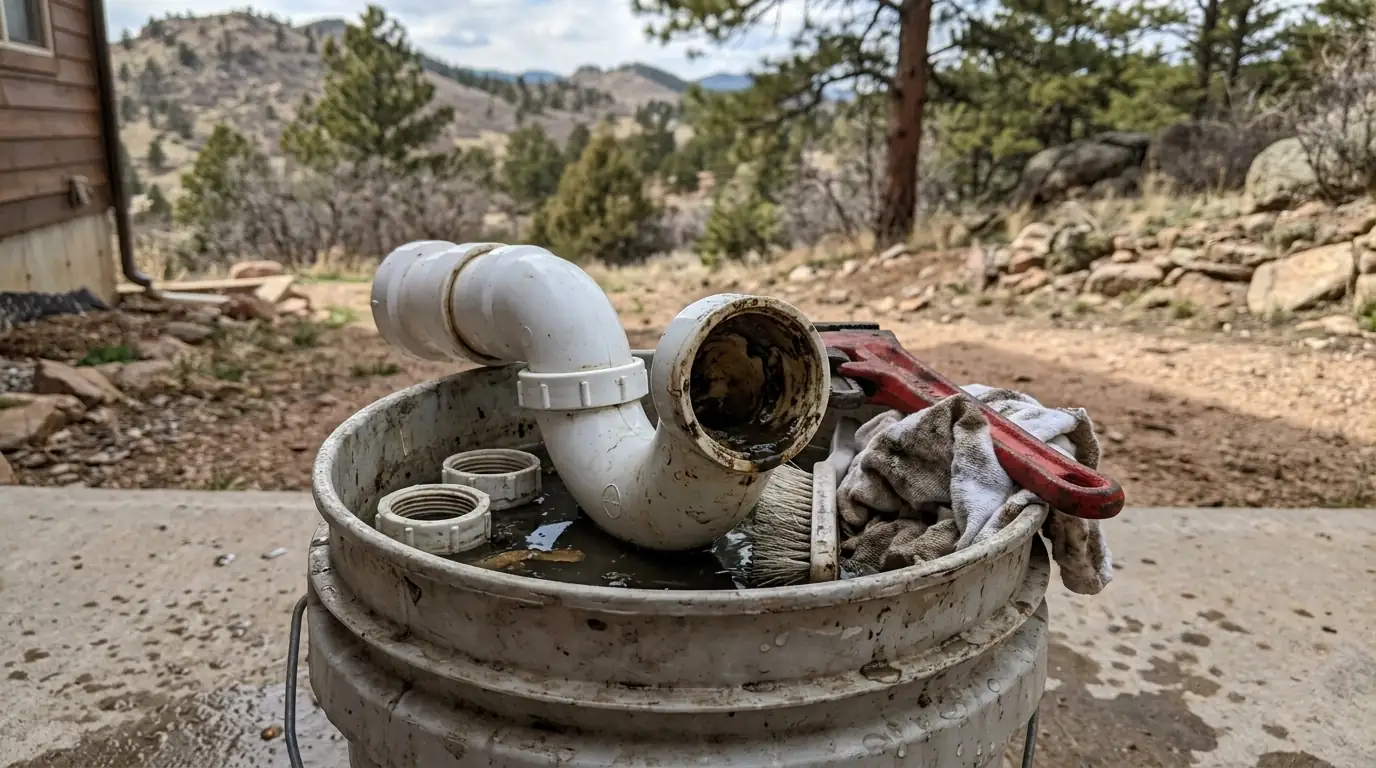
Shower clogs are mostly a rope of hair and conditioner residue just below the strainer, often within a foot of the opening, and a plastic barbed tool pulls many of them. Deeper ones sit in the trap under the shower base, which usually cannot be reached without opening the ceiling below, so we clear them from above with a small cable. If water pools on tile even with a clear drain, the pan slope or drain body is the problem.
Laundry standpipe overflows
Washers pump water out fast, and a standpipe that drains slowly overflows within seconds of the drain cycle starting. Lint is the usual cause, packed into the trap and branch line, especially in older homes where that line has never been cleaned. A standpipe that is too short can overflow even when clear. We cable from the standpipe or a nearby cleanout, check the height and trap, and suggest a lint catcher on the discharge hose.
Local conditions
Old branch lines in historic homes clog differently
The Manitou Springs Historic District, on the National Register since 1983, holds about 1,001 buildings, 752 of them contributing, from a late 19th and early 20th century resort town. Houses that old may still drain through galvanized or cast iron branch lines, where rust and scale have narrowed the bore for decades. Those lines clog more easily, and a cable run too fast can catch a rough joint. In homes of that age we choose the head and speed carefully and bring a camera when a line keeps clogging.
Do it yourself?
What to try first, and what to skip
Plenty of clogs are a homeowner fix. Some popular methods do more harm than the clog.
| Task | Homeowner | Plumber |
|---|---|---|
| Bathroom sink | Pull the pop-up stopper and clean it | Clear the trap and drain arm |
| Tub or shower | Barbed hair tool; plunge with the overflow covered | Cable through the overflow |
| Chemical openers | Skip them; they are hazardous if the trap is opened later | Clear the clog mechanically |
| Laundry standpipe | Clean the lint catcher on the washer hose | Cable the trap and branch |
Cost
Drain cleaning costs for a single fixture
Clearing one sink, tub or shower is among the smaller plumbing bills. These are third-party estimates, not our prices; a main line clog is priced separately.
What moves the price
- Sink, tub, shower or standpipe
- Access through trap, overflow or cleanout
- How far down the branch the clog sits
- Grease coating versus a single plug
- Old cast iron or galvanized branches
- After-hours timing
Ranges are published market figures for planning, not a quote. We price your job after we see it.
FAQ
Drain questions from sinks, tubs and laundry rooms
Either the clog was pushed through instead of removed, or the pipe walls are coated so new debris catches. A camera look tells us which, and jetting cleans coated walls.
They are gentle on pipes and help with slow buildup over weeks. They will not open a hard clog quickly.
The wrong cable or too much speed can. Old cast iron and thin-wall pipe need the right head and patience.
It means air is being pulled through the trap by a partial clog or a blocked vent. If the drain is also slow, start with the drain; if it runs fine but gurgles, suspect the vent.
Most single-fixture clogs are cleared on the first visit. Lines that need jetting or a camera may take a second step.

