Main sewer line cleaning for Colorado Springs homes
When the lowest drain in the house fills with dirty water, the clog is in the main, not the fixture. We clear it from a cleanout with a sewer machine, cut out roots, and camera the line when backups keep returning.
- Cleared from the cleanout
- Root cutting
- Phones answered 24/7
Updated October 2026Phones answered 24/7
Water running right now?
Close the main shut-off, then call. A person answers 24/7.
Quick answer
Main sewer line cleaning in Colorado Springs means clearing the line, usually 4-inch, that carries every drain in the house to the utility main, with a sewer machine fed through a cleanout. When roots or grease caused the backup, a camera run afterward shows whether a cleaning will hold or the pipe itself needs repair.
Warning signs
Signs the main is the problem, not one drain
Lowest drain backs up
The floor drain or lower shower fills when others drain.
Several fixtures slow at once
The blockage is past where the branches join.
Toilet bubbles while the washer empties
Water and air are pushing back up the line.
Wet ground at the outside cleanout
The line may be overflowing at its access cap.
Backups every few months
Roots or a sag that cleaning only partly fixes.
Why the basement floor drain overflows first
Sewage follows gravity to the lowest opening. When the main plugs somewhere between the house and the street, water from every toilet, sink and washer backs up until it reaches the lowest drain, usually a basement floor drain, a lower-level shower or a basement toilet. That is why the backup downstairs so often follows a load of laundry upstairs.
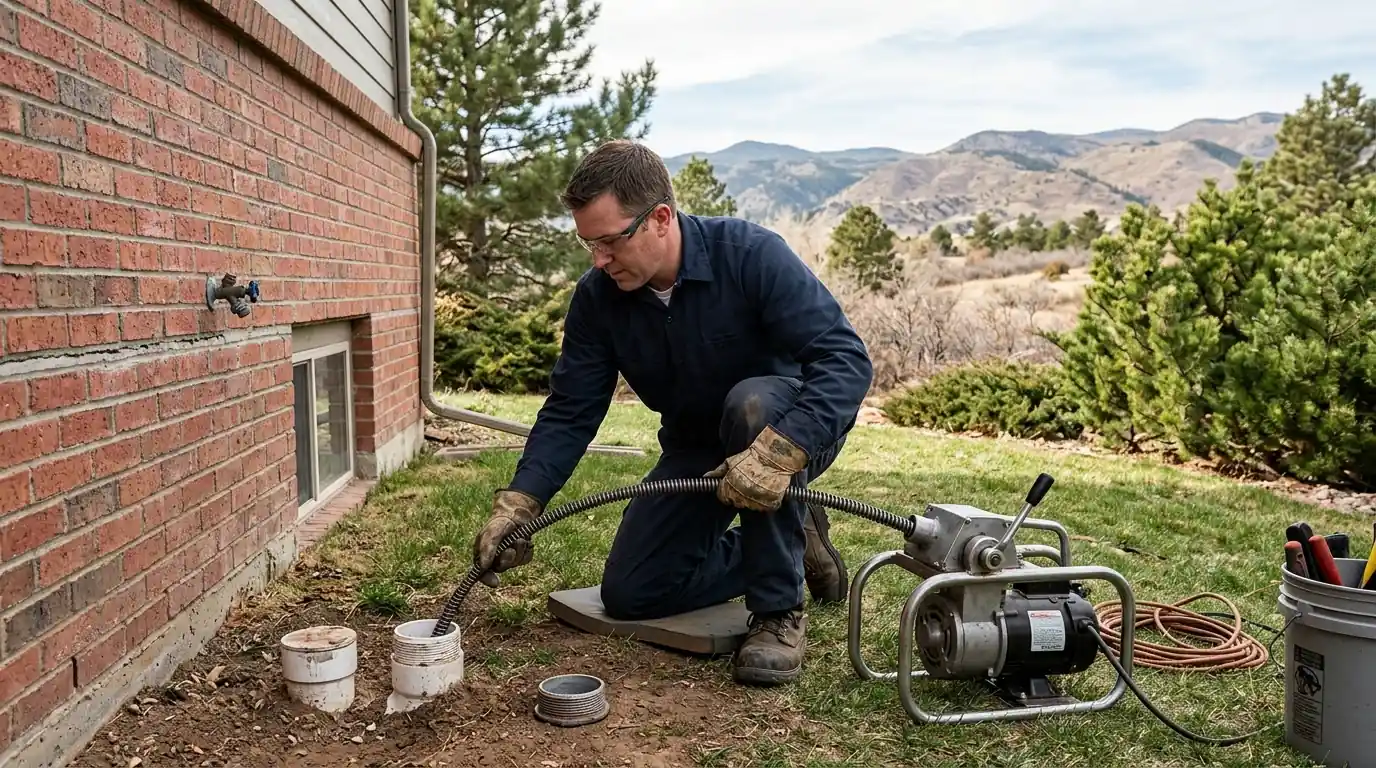
Doing it right takes a sectional or drum sewer machine with a heavy cable, fed from a cleanout rather than forced through a toilet. Roots, grease and so-called flushable wipes are the usual suspects. If a line needs clearing more than once a year, a camera inspection and possibly a sectional repair end the cycle.
How the job runs
Clearing a main line, start to finish
Stop the water
Nobody runs water while the backup is relieved.
Open the cleanout
We find it and let the standing water down in a controlled way.
Run the machine
Cable to the utility main with a blade sized for roots or debris.
Flush and confirm
Water from upper fixtures to prove full flow at the cleanout.
Camera repeat offenders
Roots, bellies and joints on screen, so you know if it will hold.
Basement floor drain backing up
Dirty water rising through the floor drain, often with a sewage smell and bits of paper, means the main is blocked downstream of it. Stop using water anywhere in the house. We open the main cleanout, which is often near that floor drain or outside by the foundation, let the backup down carefully, and run the machine through to the street. If the drain only rises during heavy rain, the cause may be groundwater or a problem in the utility main rather than your line, and we will tell you so.
Tree roots in the main line
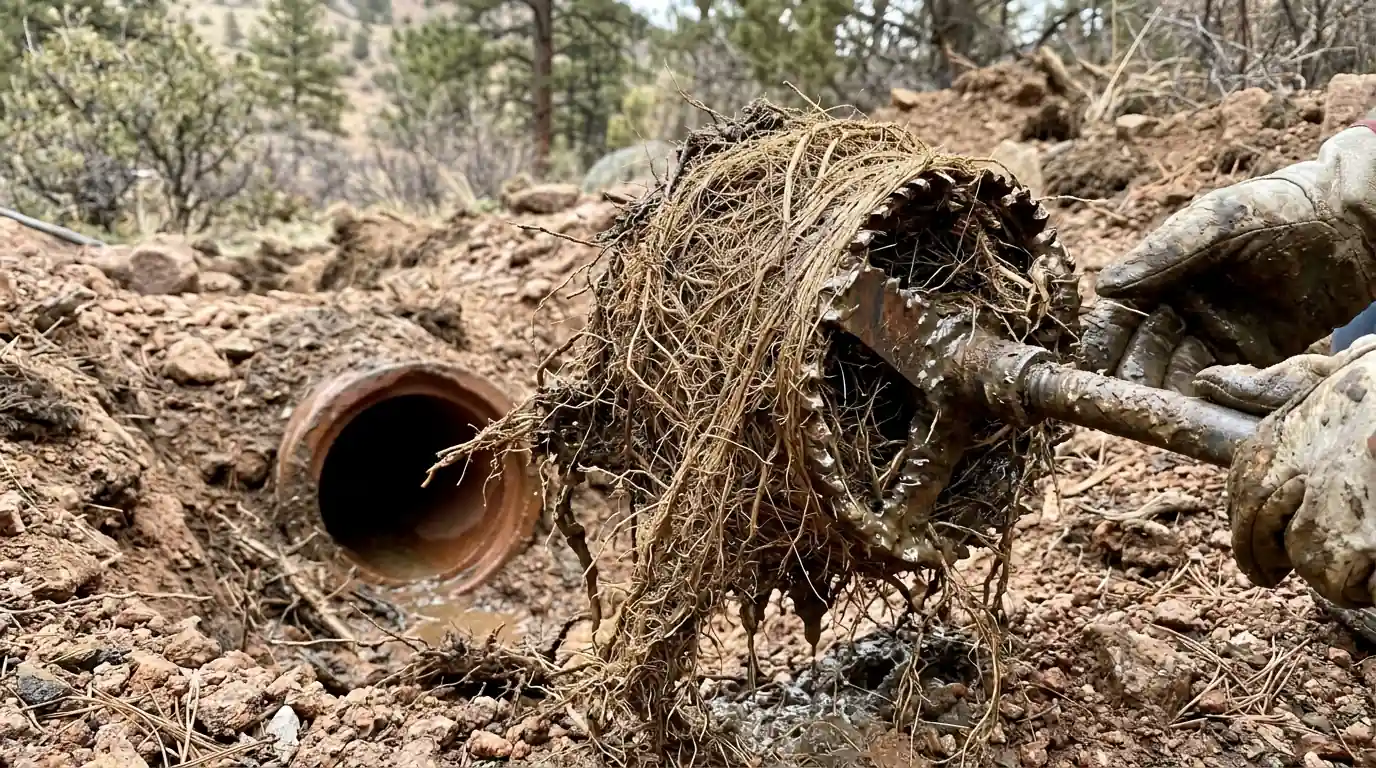
Roots find sewer lines through joints. Clay tile has a joint every few feet, and cast iron hubs and Orangeburg fiber pipe let roots in too. They feed on the moisture inside, grow into a mat and catch paper until the line closes. A root-cutting blade on the sewer machine shears them back to the pipe wall and restores flow. They grow back, often within a year, because the joint is still open, so a camera run after cutting shows how many joints are involved.
Adding or opening a cleanout
Many older homes have no usable cleanout, or one buried under a finished basement floor, painted shut or hidden behind drywall. Running a machine through a toilet flange or roof vent works but risks damage and gives the cable a poor path. We free seized cleanout plugs, and where none exists we can add a two-way cleanout outside at the foundation. That gives clean access for every future cleaning and camera run, and it is one of the most useful small upgrades on an older sewer.
Timing
How long the drains are out of use
Most main line clears take a couple of hours from opening the cleanout to the test flush. Plan on no water use in the house during that window, toilets and dishwasher included.
Root-heavy lines and homes with no cleanout take longer, because the cable has to chew through a mat or temporary access has to be made. A camera run afterward adds a little more time but tells you whether you will be calling again next year.
Local conditions
In Colorado Springs, the sewer lateral is yours
Colorado Springs Utilities says the wastewater service line, running from your home to the utility's main, is the customer's to maintain, and that damage caused by blockages in that line is the customer's responsibility as well. The utility recommends hiring a business that specializes in sewer line cleaning. In practice, a root mat under the front lawn or grease built up near the street is the homeowner's to clear, and so is the cost when it backs up into the basement.
Cost
Main sewer cleaning costs
Clearing a main costs more than one fixture because of the machine, the access and the length of line. Treat these national averages as a yardstick, not our pricing.
What moves the price
- Cleanout access, or entry through a toilet or vent
- Distance from the house to the street main
- Roots versus grease, wipes or debris
- Clay, cast iron, Orangeburg or PVC
- Camera inspection added afterward
- Night or weekend timing
Ranges are published market figures for planning, not a quote. We price your job after we see it.
FAQ
Main line backup questions
You can, but rental machines kink cables and get stuck in root mats, and the backup water is contaminated. If you try, wear gloves and eye protection, and go in through a cleanout, never the toilet.
A sound line does not need routine cleaning. If roots force a yearly visit, the pipe has open joints, and lining or repair can end that recurring cost.
Copper sulfate and foaming root products can slow regrowth after the roots are cut. They will not remove an existing mat or seal the joint the roots came through.
Colorado Springs Utilities puts the line from the house to its main on the customer. If the utility main itself is blocked, that is the utility's problem, and what we find at the cleanout usually shows which it is.
Treat it as contaminated. Keep children and pets away, ventilate, and disinfect hard surfaces once the line is clear.
Related services

