Tracking down a sewer smell in your Colorado Springs home
A sewer smell inside means gas is getting past a seal that should stop it. Usually that is a trap, a vent or a toilet base, and finding which one takes a methodical search, not air freshener.
- Traps, vents and wax rings
- Smoke testing for hidden cracks
- Phones answered 24/7
Updated October 2026Phones answered 24/7
Want a price on this job?
Call and describe the job. We answer 24/7 and set a visit.
Quick answer
A sewer smell in a Colorado Springs home almost always traces to one of three failures: a dried-out trap holding its last inch or two of water, a blocked or cracked vent, or a toilet seal that has let go. If the odor is closer to rotten eggs near a gas appliance, leave and call the gas utility first.
Where the smell gets in, and how we find it
Every drain has a water seal, the trap, that blocks sewer gas, and a vent system that lets the drains breathe so those seals are not siphoned dry. Gas reaches the living space when either side fails. We start with unused drains, floor drains and toilets, then the vent stack, then smoke in the stack to expose a hidden crack.
Some smells are not sewer at all. Rotten egg odor from the hot tap only is usually the anode reacting in the tank, handled with an anode change and flush. A sulfur smell near the range or furnace may be natural gas, which calls for a gas leak check before anything else.
Cost
What a sewer smell repair tends to cost
Most smell repairs are small once found. Cost climbs when the source is a cracked pipe inside a wall. These published figures are context, not our price.
What moves the price
- Visible source or one inside a wall
- Roof access to the vent
- Smoke or camera testing
- Flange repair under a toilet
- Drywall opened to reach a crack
Ranges are published market figures for planning, not a quote. We price your job after we see it.
Dry traps in unused drains
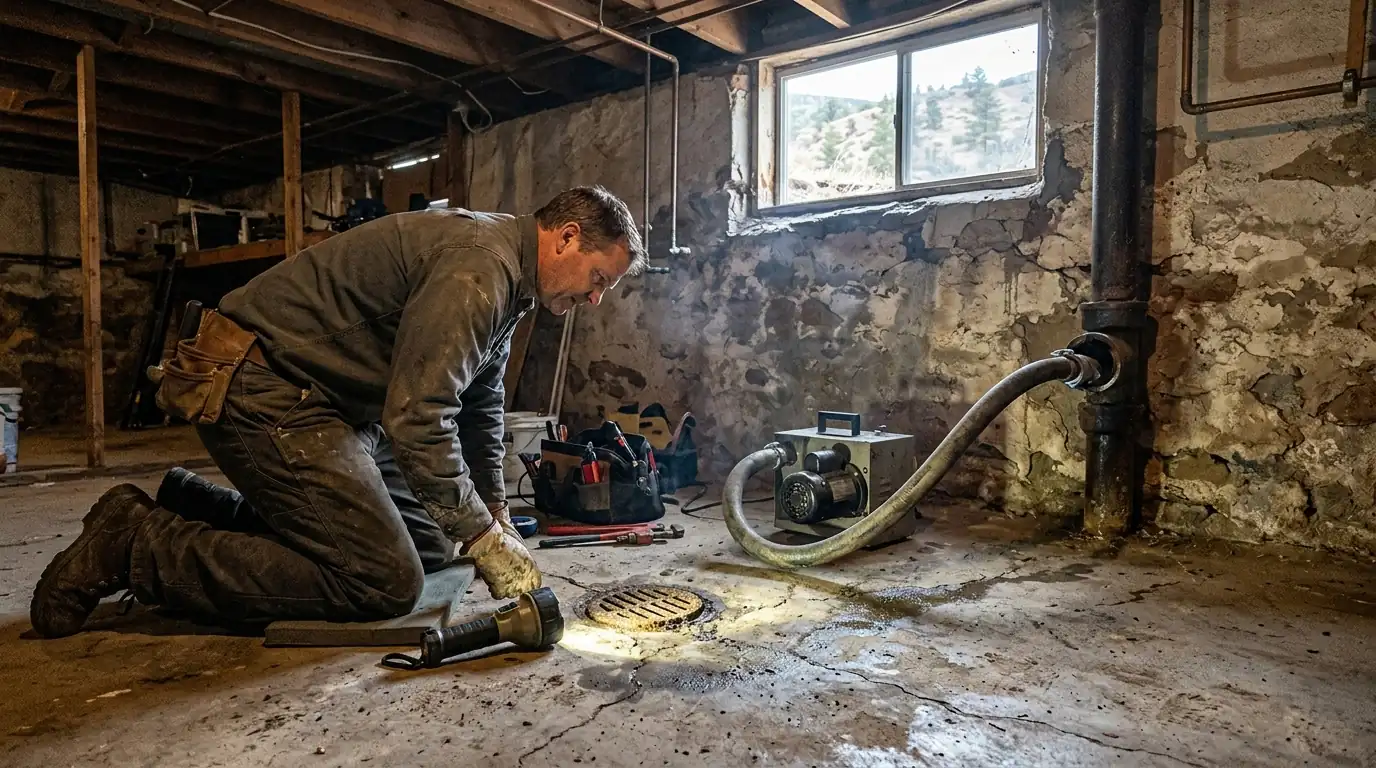
The trap under a basement floor drain, a guest shower or a laundry sink only works while it holds water. With the furnace running all winter, that water can evaporate in weeks, and the smell shows up in a room nobody uses. A gallon of water down the drain is the first test. For drains that sit dry, we fit a trap primer or a trap seal insert. A cracked floor drain trap or a missing cleanout plug needs the part replaced.
Blocked or cracked vent stacks
Vents carry gas out through the roof and let air into the drains so traps are not pulled dry. A vent capped by a nest, closed with frost or packed with debris shows up as gurgling and traps that empty when a tub drains. A crack in a cast iron or ABS stack inside a wall leaks gas where you can smell it but not see it. We check the roof termination, smoke test the stack, and clear the blockage or replace the cracked section. A sticking air admittance valve gets replaced.
Failed toilet wax rings
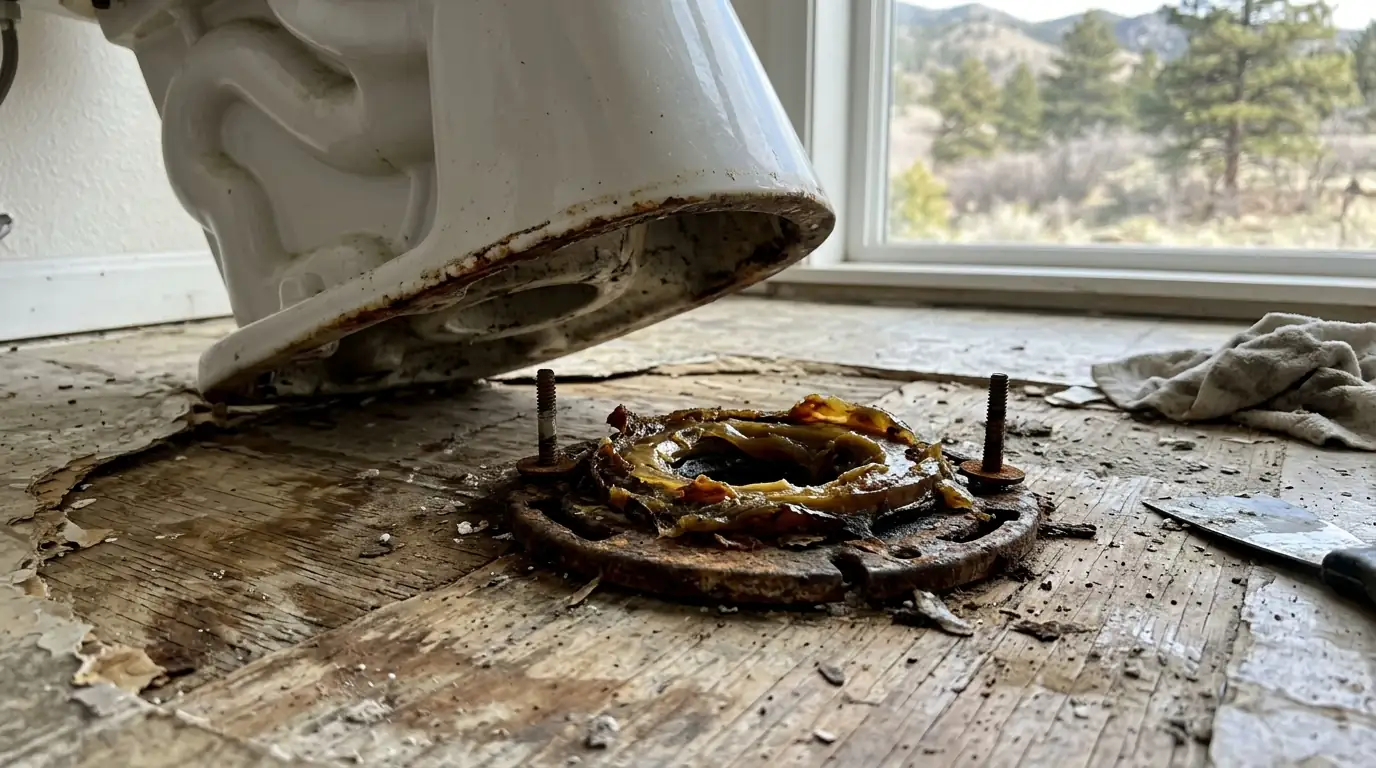
A toilet that rocks, a stain around the base, or a smell strongest in one bathroom points to the wax ring. Once the seal between the toilet horn and the closet flange breaks, gas escapes and water seeps into the subfloor. We pull the toilet, repair or replace a cracked flange, and reset on a new ring and bolts, shimmed so it cannot rock. A broken flange is the usual reason a fresh ring fails within months, so it gets the same attention as the ring in any toilet repair we do.
Local conditions
Older stacks in the Old North End
The Old North End Historic District holds homes in architectural styles popular from 1885 to 1965, and it was expanded on the National Register in 2015. Houses from those decades often still have cast iron vent stacks and drains, patched over the years, and later remodels added fixtures that were not always vented the way the original stack was. When we chase a smell in an older Colorado Springs house, the piping inside the walls gets more attention than it would in a newer home.
Do it yourself?
What you can check before you call
A few quick checks solve a good share of smells. Stop at the roof or at pulling a toilet unless you are comfortable with it.
| Task | Homeowner | Plumber |
|---|---|---|
| Dry trap | Run water in every unused drain for a minute | Fit a trap primer or seal insert on drains that stay dry |
| Floor drain | Check that the cleanout plug is in place | Replace a cracked trap or broken plug |
| Toilet seal | See whether the toilet rocks or the bolts are loose | Pull the toilet, repair the flange, reset on a new ring |
| Gas smell | Leave the house and call the gas utility | Repair gas piping once the utility clears it |
Warning signs
Signs the smell is coming from the plumbing
Odor in a rarely used room
A guest bath or basement that smells after weeks of disuse points to a dry trap.
Gurgling as a tub drains
Air pulled through a nearby trap means the vent is not doing its job.
Smell strongest at one toilet
Often with a slight rock, which points to the wax ring.
Odor after windy days
Wind at the roof vent is overpowering a weak seal.
Smell near the ejector or sump
An unsealed basin lid lets gas straight into the basement.
How the job runs
How we trace a sewer smell
Ask where and when
The room, the time of day and whether it follows showers or wind narrow the search.
Refill every trap
Floor drains and unused fixtures included, then we see if it clears.
Check toilets
Rocking bowls, loose closet bolts and stains at the base.
Inspect the vents
Roof terminations, air admittance valves and exposed stack piping.
Test the hidden piping
Smoke or peppermint oil in the stack shows where gas escapes inside walls.
Fix and confirm
Repair the source, then recheck after the drains are used.
FAQ
Sewer smell questions we hear often
At household levels it is mostly an odor problem, but it carries hydrogen sulfide and methane, and a strong, persistent smell should not be lived with. Open windows in the affected room and get the source found.
Wind across the roof can push or pull air in the vent and overpower a weak trap seal. A short vent or one near a window is the usual cause.
Pour water into the floor drain and any unused shower or sink. If that does not clear it within a day, check the floor drain plug and the lid on any ejector basin, which must be sealed.
Sometimes. Grease, soap and hair coating the inside of a sink or tub line can smell on their own. If the traps are full and the vents are clear, cleaning that drain is the next step.
Natural gas carries an odorant that smells like rotten eggs or sulfur. Near a gas appliance or line, leave and call the gas utility from outside. Sewer gas smells like a drain and is strongest at fixtures.
Related services

