Running, clogged or leaking toilet repair in Colorado Springs
A toilet that runs, clogs every week or leaks at the floor is fixable. We work out which of those three problems you have and fix it without guessing at parts.
- We answer 24/7
- Fill valves and flappers
- Wax ring and flange repairs
Updated October 2026Phones answered 24/7
Want a price on this job?
Call and describe the job. We answer 24/7 and set a visit.
Quick answer
Toilet repair in Colorado Springs is mostly three jobs: a running tank fixed with a flapper or fill valve, a recurring clog cleared with a closet auger and traced to its cause, or a leak at the base fixed by pulling the toilet, replacing the wax ring and repairing the flange. Most are finished on the first visit.
What is actually wrong when a toilet misbehaves
A toilet has two halves. The tank fills, holds and dumps water through the fill valve, flapper, overflow tube and chain. The bowl carries waste through a trapway cast into the china, down through the wax ring into the closet flange and drain. Running and phantom flushes live in the tank. Clogs and floor leaks live in the bowl.
We repair standard gravity toilets, pressure-assist tanks and dual flush valves. When the china is cracked, or an old high-volume tank keeps eating parts, we will talk about replacing the toilet instead. A smell with no visible leak is often a failing wax ring, one of several causes covered on our sewer smell page.
Cost
What toilet repairs usually cost
Tank parts are inexpensive, so most of the cost is the visit and the labor. Pulling a toilet to reset it, or repairing a broken flange under tile, takes longer and lands toward the top of these ranges.
What moves the price
- Tank parts only, or pulling the toilet
- Flange condition and floor material
- Pressure-assist or dual flush parts
- An object stuck in the trapway
- Corroded tank bolts that must be cut
- Soft subfloor around the flange
Ranges are published market figures for planning, not a quote. We price your job after we see it.
Running toilets
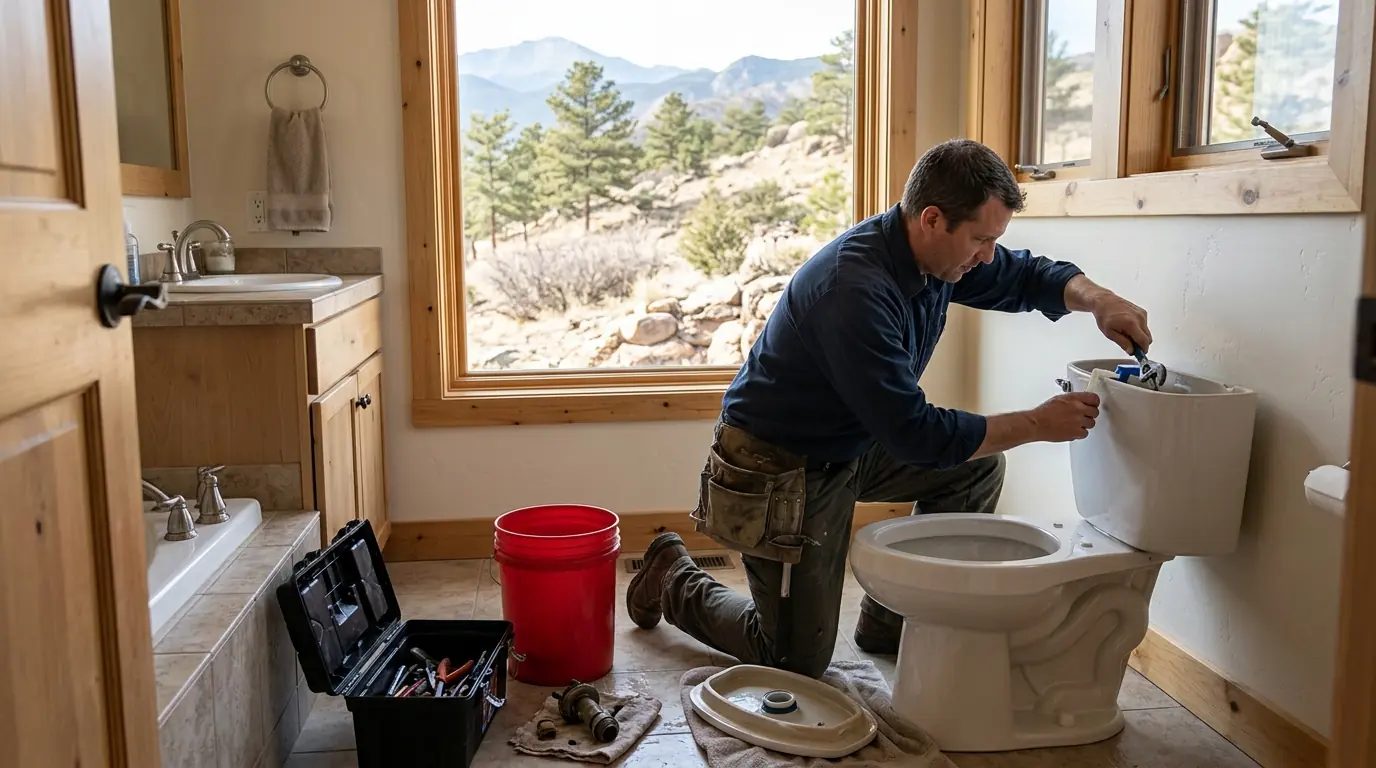
Listen first. A hiss that never stops usually means the fill valve is not shutting off, or water is spilling into the overflow tube because the float sits too high. A refill every so often with nobody touching it is a phantom flush: the flapper or flush valve seal lets water seep into the bowl. Food coloring in the tank shows a slow leak within minutes. We replace the flapper or seal to fit the flush valve size, set the water line and adjust the chain so it cannot catch.
Clogged toilets that keep coming back
One clog is usually something that should not have been flushed. A toilet that clogs every week has a reason. Often a small object, a bottle cap or a toy, is lodged in the trapway where a plunger moves water around it but never clears it. We run a closet auger and, if needed, pull the toilet to push it out from below. If the toilet is clear and still slow, the blockage is downstream, especially when a tub gurgles or backs up as the toilet flushes, and that points to clearing the main line.
Leaks at the base and loose toilets
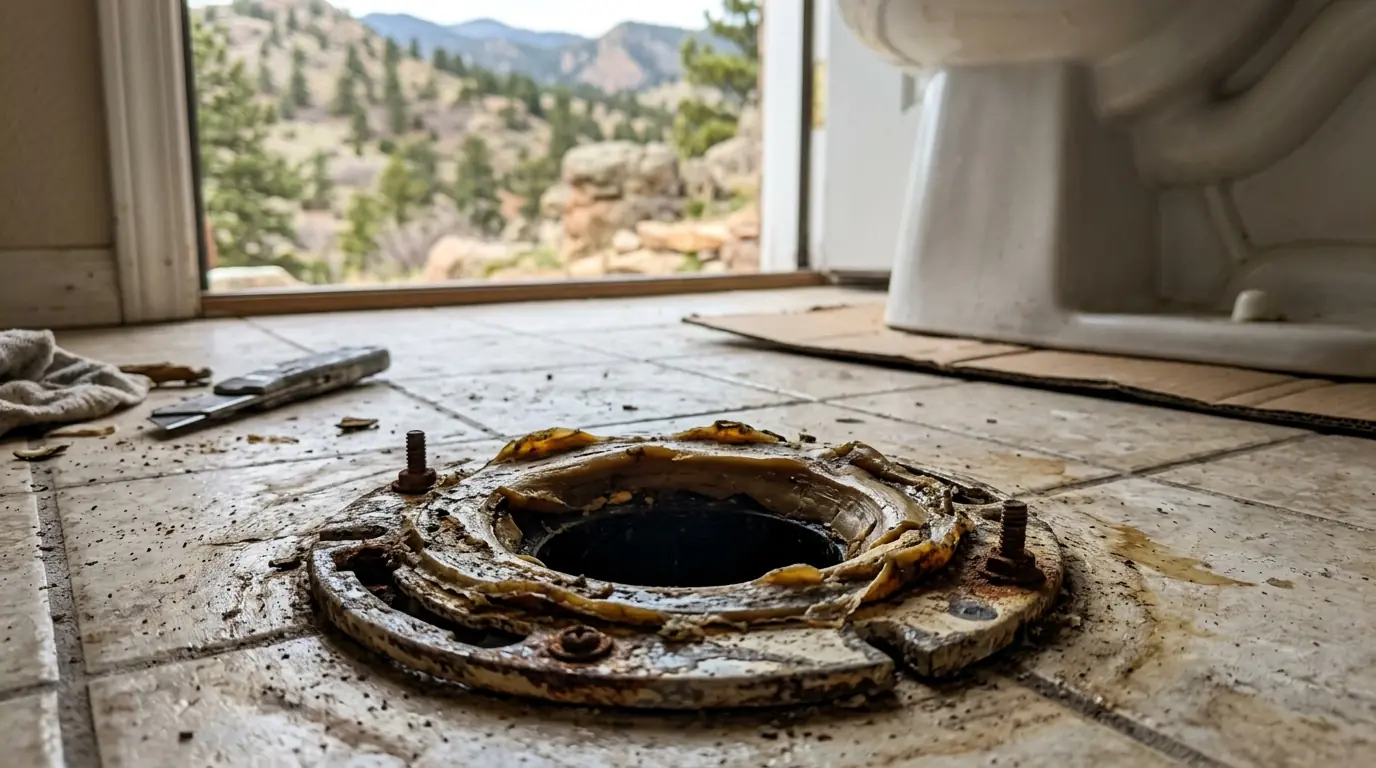
Water at the base after a flush, a stain on the ceiling below and a toilet that rocks are one problem seen from different angles. Rocking breaks the wax seal, and a broken seal pushes a little water and sewer gas out with every flush. We rule out tank bolts and condensation first, then pull the toilet, scrape the old wax and inspect the closet flange. A cracked or rusted flange gets a repair ring or replacement, and a flange left low under new tile gets an extender. Shims and new bolts stop the rocking.
Local conditions
West side pressure work and running fill valves
Fill valves are touchy about pressure, which matters on the west side right now. Near Garden of the Gods, the utility is moving a pressure zone boundary to hold a steady 60 psi, with its own pressure reducing valves going in during a first phase that runs from fall 2025 into 2026. A fill valve that sealed fine before can start to creep after a shift like that, so when we find several running toilets in one west side house, we put a gauge on a hose bib before we replace any parts.
Do it yourself?
What to try before you call, and what to leave to us
Some toilet fixes are fair game for a homeowner. Others turn a small problem into a wet subfloor.
| Task | Homeowner | Plumber |
|---|---|---|
| Running tank | Adjust the float and chain, try a new flapper | Fill valves and flush valve seals that will not hold |
| Clog | A flange plunger with a good seal | Auger the trapway or pull the toilet |
| Loose toilet | Snug the bolts gently, never hard on china | Reset with a new seal and repair the flange |
| Drain cleaner | Skip it in toilets | Clear the clog mechanically |
Warning signs
Toilet problems you can hear or see
Constant hiss from the tank
Fill valve not shutting off, or water spilling into the overflow.
Refills with no one flushing
A slow leak from tank to bowl.
Weekly clogs
Something lodged in the trapway or trouble downstream.
Rocking on the floor
Loose bolts or a broken seal.
Stain on the ceiling below
A seal leak that has been running a while.
How the job runs
How we work through a toilet repair
Find which half
Tank, bowl or floor, based on what you hear and see.
Dye and pressure checks
Dye for silent leaks, a gauge for house pressure.
Shut off and drain
Close the stop, flush and sponge the tank dry.
Replace the worn parts
Tank parts sized to the flush valve, or a full pull for wax and flange work.
Reset and level
New bolts, a fresh seal and shims where the floor is uneven.
Test several flushes
Refill, water line and base checked each time.
Brands we service
We repair toilets from American Standard, Kohler, Delta and Zurn, and match flappers and seals to 2-inch or 3-inch flush valves.
- Rheem
- A. O. Smith
- Bradford White
- Navien
- Rinnai
- Noritz
- Moen
- Delta
- Kohler
- American Standard
- InSinkErator
- Uponor
- Watts
- Zurn
FAQ
Answers for running, clogging and leaking toilets
That is a phantom flush. Water seeps from the tank into the bowl past a worn flapper or flush valve seal until the fill valve tops it up. A new flapper usually fixes it, and a scratched seat may need a seal kit.
You can, but every rock weakens the wax seal, and a broken seal lets water and sewer gas into the subfloor. Shimming a rocking toilet before the seal fails costs far less than replacing rotted floor later.
A narrow trapway on some low-volume toilets, a partly lodged object, or a blockage farther down the drain. We auger the trapway and check whether other drains are slow before blaming the toilet itself.
Condensation forms on the outside of the tank in humid weather and drips evenly. A wax ring leak appears at the base after flushes, often with a smell. We dry everything and flush with dye in the bowl to tell them apart.
Yes. They use a sealed vessel inside the tank, and the flush valve cartridge is the usual wear part. If yours runs constantly, the cartridge or house pressure is where we look first.

