Replacing a stuck main water shut-off in Colorado Springs
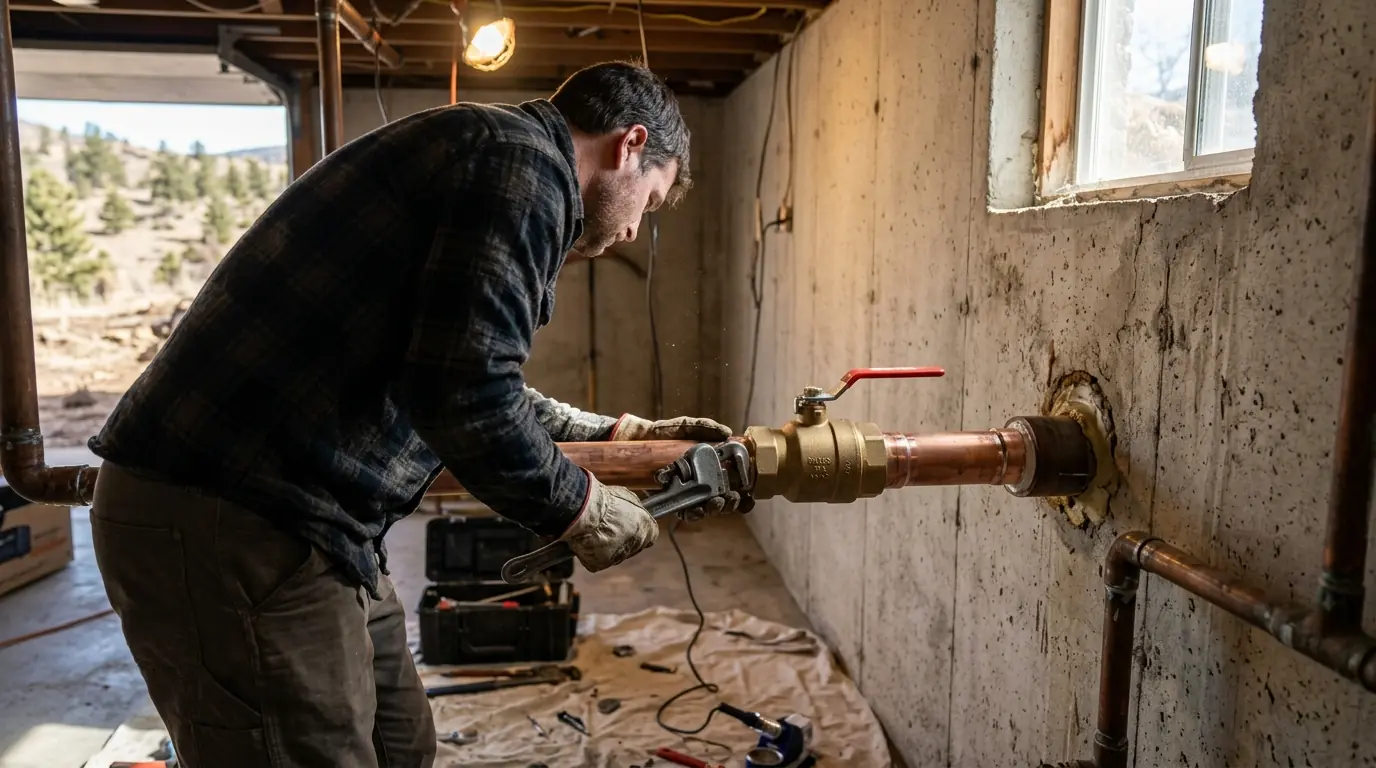
The main shut-off is the one valve you need in an emergency, and the one most likely to have seized from years of sitting open. We replace old gate valves with a full-port ball valve.
- Full-port ball valves
- Tested under full pressure
- Phones answered 24/7
Updated October 2026Phones answered 24/7
Want a price on this job?
Call and describe the job. We answer 24/7 and set a visit.
Quick answer
Replacing a main water shut-off in Colorado Springs swaps an old multi-turn gate valve for a full-port ball valve that closes with a 90-degree turn. The water has to be stopped upstream first, so the job is planned, not rushed. We test the new valve closed and open under full pressure before we leave.
Why the valve you never touch fails when you need it
A gate valve drops a brass wedge into the flow when you turn the handle. Left open for years, the packing dries, scale builds in the guides and the wedge corrodes in place. The first time someone cranks on it, usually during a burst pipe, the handle spins free because the stem has let go of the wedge, or the valve closes most of the way and still passes water. A ball valve has one moving part and closes in a quarter turn.
Because the water has to be stopped upstream of the main valve, we plan the shutdown ahead and keep the time the house is dry short. While it is off, it is the right moment to look at the PRV beside it, or to swap a dripping outdoor sillcock on the same visit.
Cost
What a main valve replacement costs
The valve itself is a small part of the bill. Access, the pipe on each side and how the water gets stopped upstream decide the rest. These national figures are published averages, not our price.
What moves the price
- Pipe material and size at the valve
- Crawlspace or tight closet access
- Stopping the water upstream
- Soldered, threaded or press joints
- New nipples on each side
- Adding a drain port or union
Ranges are published market figures for planning, not a quote. We price your job after we see it.
Seized gate valves
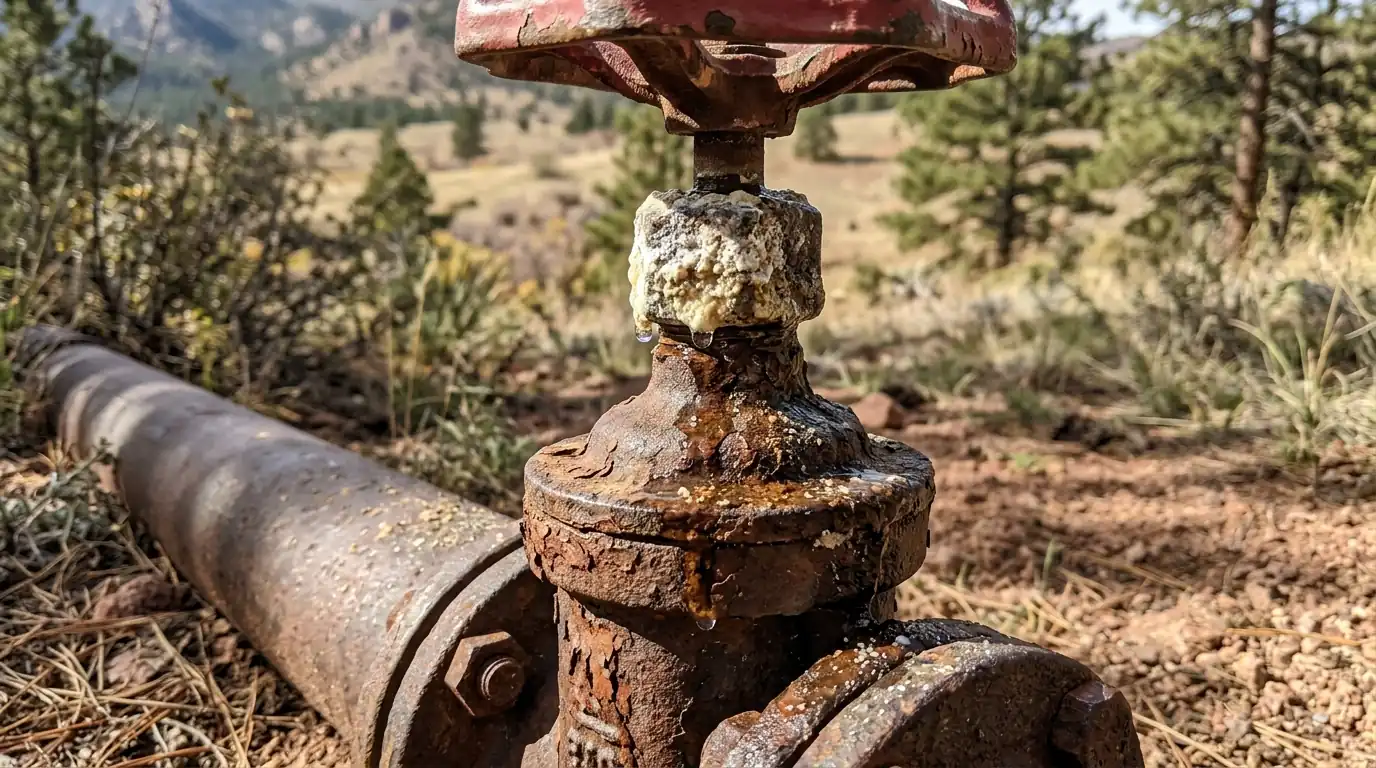
If the handle will not budge, or it turns and nothing changes, the gate is frozen in its seat or the stem has broken. Forcing it with a pipe wrench usually makes things worse, because the stem snaps and the valve can no longer be opened or closed properly. We cut the old valve out, prepare the pipe and install a full-port ball valve with the same or better flow. On threaded galvanized, we replace the nipples on each side too, since old threads tend to crack when the valve comes off.
Leaking packing nuts
A valve that drips from under the handle when it is turned is leaking at the packing. Sometimes a gentle snug on the packing nut stops it. If the packing has dried out, the valve can be repacked, but on an old, stiff valve we usually recommend replacement, because a valve that leaks every time you touch it is a valve nobody wants to touch. White or green crust on the pipe below the handle means that drip has been going a while, and the stem threads are probably worn too.
Upgrading to a ball valve
Even a gate valve that still works is worth replacing if other work has the water off. A full-port ball valve closes in a quarter turn, shows at a glance whether it is open or closed, and does not narrow the flow. We fit one with a drain port and a union where space allows, and turn the lever so it can be reached without moving shelving. If the pipe feeding the valve is old galvanized or lead, the bigger fix is replacing the service line, and the new valve goes in at the end of that job.
Angi reports most homeowners pay $375 to $600 nationally to replace a main shut-off valve.
Local conditions
Try the main valve before the first freeze
NWS Pueblo lists October 2 as the mean date of the first fall freeze in Colorado Springs, and it has arrived as early as September 1, 1911. That makes late summer the time to test your main shut-off, not a December night when a pipe has split in a garage wall. Turn it slowly closed and open again. If it will not move, drips at the stem or does not stop the water, have it replaced before the cold arrives, while the job can be scheduled instead of rushed.
Warning signs
Signs the main valve needs replacing
Handle will not turn
The stem or gate has seized in place.
Handle spins freely
The stem has separated from the gate inside.
Water still flows when closed
The gate or seat no longer seals.
Drip from the stem
The packing has dried out or loosened.
Crust on the valve body
White or green deposits from a slow, long-running leak.
Timing
How long the water is off for a valve swap
The plumbing itself is short. Most of the time goes into arranging the upstream shutdown and draining the pipe near the valve. Once water is stopped, cutting out the old valve and fitting the new one takes an hour or two in an open basement, longer in a tight crawlspace. We give you the window ahead of time so you can fill a few pitchers and run the dishwasher first, then run water through the house afterward to clear the air.
How the job runs
How we swap a main shut-off
Look first
Valve type, pipe material and the upstream shut-off point.
Plan the shutdown
A set time for the water to go off, and how long.
Drain down
A low fixture opened to empty the lines near the valve.
Cut out and install
Old valve out, pipe prepared, new full-port ball valve in.
Prove it
Water on, joints checked, valve closed and reopened under pressure.
FAQ
Main shut-off valve questions
Usually where the water line enters the house: on the basement wall facing the street, in a crawlspace near the foundation, or in a utility closet near the water heater on slab homes. Find it now, clear a path to it, and make sure everyone at home knows where it is.
Yes, a couple of times a year: close it slowly and open it again. Be gentle with an old gate valve that has not moved in years. If it feels like it might break, stop and have it replaced rather than forcing it.
The gate or its seat is worn or scaled and no longer seals, which is common in old gate valves. There is no reliable adjustment for that. Replacing it with a ball valve is the fix.
The hole through the ball is the same size as the pipe, so the valve does not restrict flow when open. Standard-port valves have a smaller bore and can cost you flow on a long service line.
It means stopping water upstream, cutting live pipe and making joints that must hold full street pressure. If any of those go wrong, you have no way to shut the water off. Most homeowners are better served calling.
Related services

