Dishwasher, ice maker and washer hookups in Colorado Springs
New dishwasher, a fridge with a dry ice maker, a washer moving upstairs: we run the supply, drain and shut-off it needs to connect to.
- Phones answered 24/7
- Supply, drain and shut-off
- Washer boxes and drain pans
Updated October 2026Phones answered 24/7
Want a price on this job?
Call and describe the job. We answer 24/7 and set a visit.
Quick answer
Hooking up a dishwasher in Colorado Springs comes down to two connections done right: a 3/8-inch supply off its own angle stop, and a drain that rises in a high loop or passes through an air gap before it meets the disposal. Ice makers want a real valve, not a saddle tap. Washers want valves you can reach.
Where appliance hookups actually leak
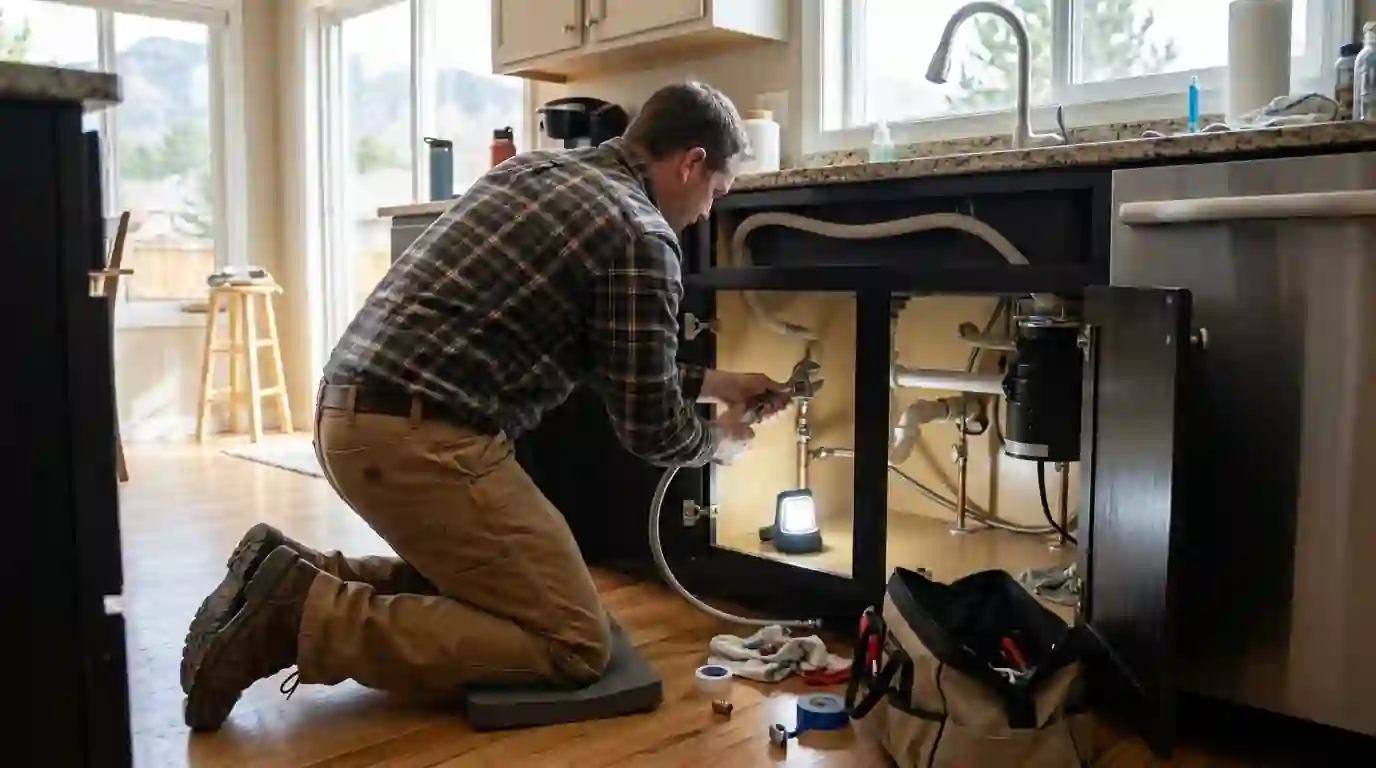
Most leaks behind appliances were not caused by the appliance. They come from whatever got improvised on install day: a saddle valve punched into copper for the ice maker, a dishwasher hose pushed straight into the tailpiece with no loop, a washer on rubber hoses gone brittle. Those parts work for a while. Then they fail when nobody is home.
We treat each hookup as a small piece of plumbing: a shut-off you can reach, the right fitting for the pipe, PEX or copper inside a wall, and a drain that cannot pull dirty water back. If the sink drain is already sluggish, we clear it with a proper drain cleaning first, because a new dishwasher exposes a partial clog fast.
Cost
Hookup prices: a short line versus a new run
A hookup where the valve and drain already exist is a short visit. A first dishwasher in a kitchen that never had one, or an ice maker 20 feet from the nearest cold line, is a small project with wall access. Published national figures, not our prices.
What moves the price
- Whether a shut-off and drain already exist
- Distance to the nearest hot or cold line
- Opening drywall or cabinet backs
- Replacing a seized washer box
- Pan and pan drain for an upstairs laundry
- Air gap or high loop at the sink
Ranges are published market figures for planning, not a quote. We price your job after we see it.
Dishwasher supply and drain
Water on the floor after the first cycle is almost always a cross-threaded compression nut or a dishwasher elbow buried in tape. Gray water left in the bottom is drainage: no high loop, a hose kinked behind the toe kick, or a disposal with its knockout plug still in the inlet. We run a braided supply from a dedicated or dual-outlet stop, fasten the drain up under the counter or through an air gap, and cycle the machine with the kick plate off. If the faucet is due too, the faucet swap is easiest while the cabinet is empty.
Refrigerator ice maker lines
An ice maker that quits filling, small hollow cubes, or a damp spot in front of the fridge usually traces back to the line. Saddle valves crust shut or weep where they pierce the pipe, and thin plastic tubing gets pinched when the fridge is shoved back. We tie in with a proper tee and quarter-turn valve, often in a recessed outlet box so the fridge sits close to the wall, and leave enough braided line to roll it out. If you have a reverse osmosis unit, it can feed the ice maker.
Washer boxes and valves
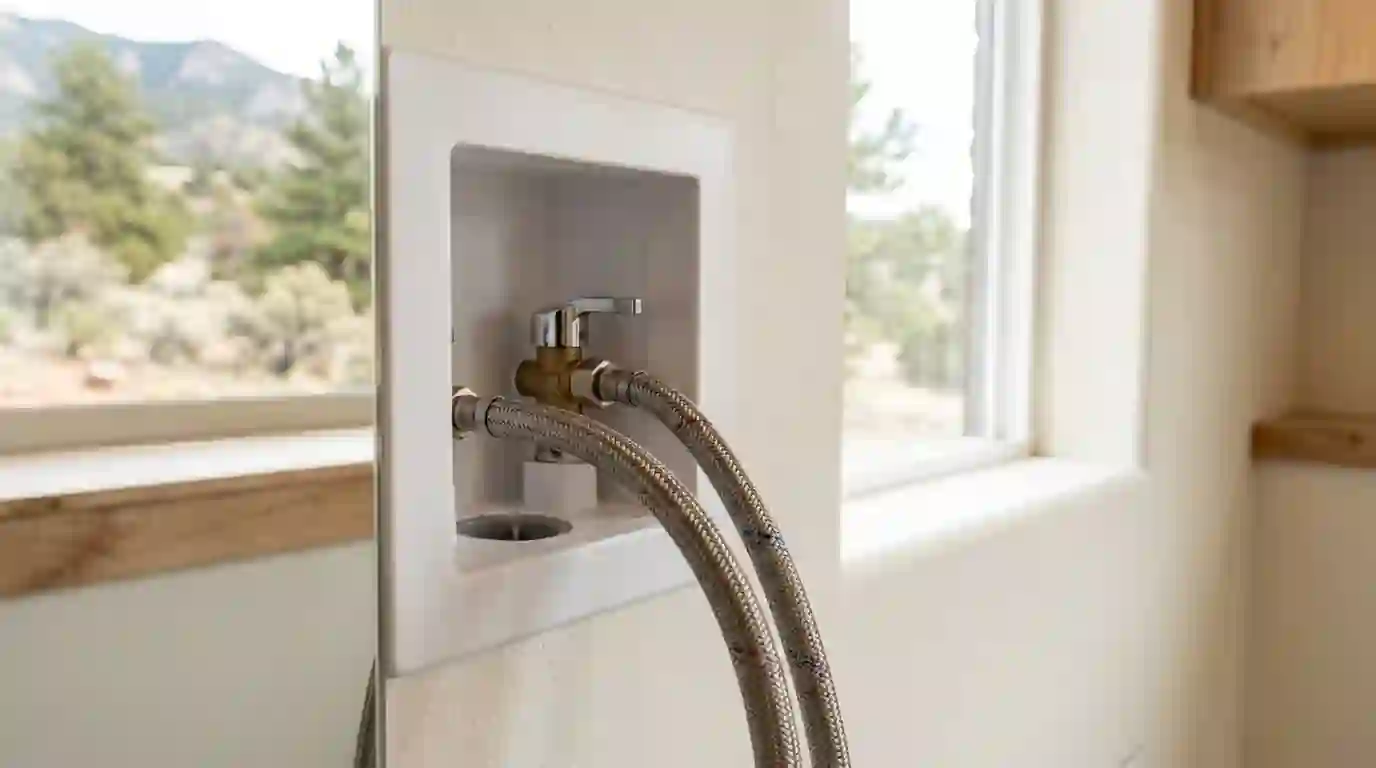
A box valve dripping from its stem, a standpipe that overflows when the washer pumps out, or hoses bulging near the ends are what we see most. Old boxes often carry two multi-turn valves seized open; we replace them with quarter-turn valves or a single lever that closes hot and cold together. The standpipe needs a trap and enough height to stop siphoning, and an upstairs washer belongs in a pan piped to a drain. If the standpipe backs up along with other fixtures, the trouble is further down and main line cleaning is the fix.
Local conditions
Laundry rooms and garages around Colorado Springs
Colorado Springs houses put the laundry almost anywhere: a basement corner by the water heater, a mudroom off the garage, a closet on the bedroom floor. Each spot fails its own way. A washer box on a garage wall can freeze on a hard winter night, so we keep valves and lines on the heated side. An upstairs washer that leaks lands on a ceiling, so it gets a piped pan. A basement standpipe often shares a line with the floor drain, so we check it before blaming the washer.
What is included
What a finished hookup includes
Compare this with any other bid.
- A reachable shut-off per appliance
- No saddle valves
- Braided or rigid supply, never vinyl tubing
- High loop or air gap on the dishwasher
- Disposal knockout removed
- Trapped washer standpipe
- Piped pan under an upstairs washer
- A full test run with panels off
Do it yourself?
What you can connect yourself, and where it goes wrong
Swapping a washer hose or fridge line is fair game, if the valve behind it works.
| Task | Homeowner | Plumber |
|---|---|---|
| Washer hoses | Close both valves, fit new braided hoses | Replace a box whose valves will not close |
| Fridge line | Swap pinched tubing for braided line | Remove saddle valves, add a tee and valve |
| Dishwasher drain | Clip the hose high under the counter | Air gap, disposal knockout, drain slope |
| Weeping angle stop | Snug the packing nut slightly | Replace a stop that still drips |
How the job runs
How we set a hookup so it stays dry
Check the tie-in
Stop valve, pipe material and drain path, before anything connects.
Fit a shut-off
Each appliance gets a valve you can reach without moving it.
Run the line
Braided, PEX or copper, with slack for service.
Set the drain
High loop, air gap or trapped standpipe.
Run a full cycle
Panels off, every joint watched under flow.
Brands we service
We fit and replace Watts and Zurn washer boxes and valves, run Uponor PEX to new hookups, and connect dishwasher drains to InSinkErator disposals.
- Rheem
- A. O. Smith
- Bradford White
- Navien
- Rinnai
- Noritz
- Moen
- Delta
- Kohler
- American Standard
- InSinkErator
- Uponor
- Watts
- Zurn
FAQ
Questions about dishwasher, fridge and washer lines
We would not. It clamps on and pierces the pipe with a needle; the rubber seal dries, the hole scales over, and the valve either stops flowing or weeps. A proper tee and quarter-turn valve costs little more and does not rely on a gasket staying soft.
Dirty water from the sink or disposal is draining back into the tub. The hose has to rise to the underside of the counter, or pass through an air gap, before it drops to the disposal.
They resist bursting better because the braid keeps the hose from ballooning, but they are not permanent. A valve you can close matters more. A single-lever box lets you shut both lines before a trip, the cheapest leak protection there is.
Yes. It takes new hot and cold supply, a trapped and vented standpipe, and a drain route with enough fall to an existing line. We trace the route first and tell you what has to open.
We find the nearest cold line, often in the basement below, and come up through the floor with PEX into a recessed box. That beats long tubing hidden behind cabinets, where a slow leak can run for weeks.
Related services

