New gas lines for Colorado Springs kitchens, patios and garages
Every new gas appliance needs a line sized for its load, a shut-off within reach and a pressure test before it is lit. We run black iron or CSST to ranges, dryers, fireplaces, grills and generators.
- Black iron and CSST
- Pressure-tested before lighting
- Phones answered 24/7
Updated October 2026Phones answered 24/7
Want a price on this job?
Call and describe the job. We answer 24/7 and set a visit.
Quick answer
A new gas line in Colorado Springs is sized for the total BTU load on it and the length of the run, not just the new appliance. The appliance at the end needs high-altitude setup too, since a manufacturer bulletin calls for burner orifices about 4 percent smaller per 1,000 feet of elevation.
Sizing a gas line for everything on it
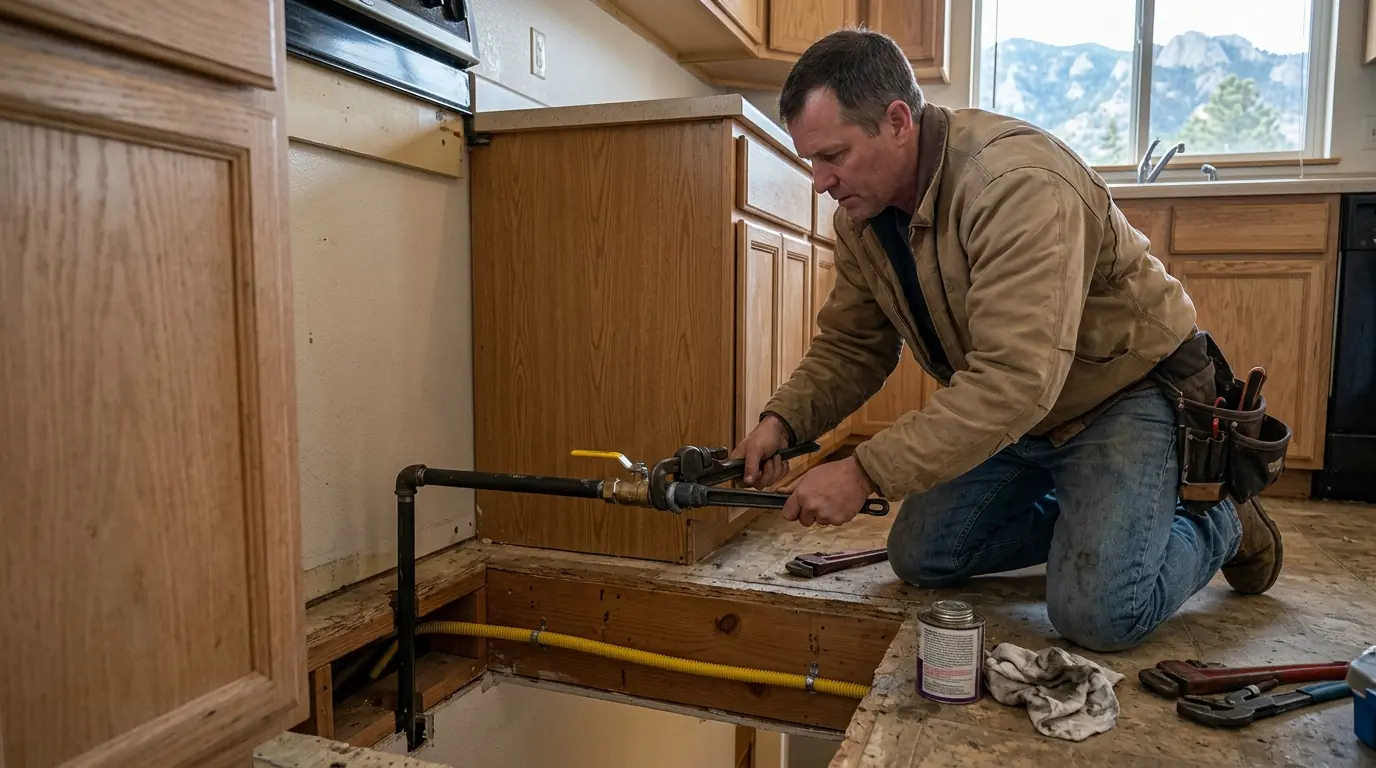
Gas pipe sizing is a table lookup, but the inputs decide everything. We add up the BTU rating of every appliance that will share the line, measure the longest run from the meter, and size from there. The common mistake is teeing a new range or fireplace into a half-inch branch that already feeds a furnace and water heater. Everything lights. Then on a cold morning with all of it firing, burners starve and pilots drop out.
Material comes next. Black iron is rigid, tough and threaded joint by joint. CSST, the yellow-jacketed flexible stainless line, snakes through framing with few joints but needs bonding to the electrical grounding system. Big loads like a tankless water heater often need a larger line all the way back toward the meter.
Cost
What a new gas line costs
Most gas line jobs are priced by run length, fittings and how hard it is to get from the meter to the appliance. HomeAdvisor's national range is below. It is a published figure, not our price; ours comes after we total the load and walk the route.
What moves the price
- Run length from the meter or manifold
- Total BTU load and pipe size
- Black iron or CSST
- Indoor, outdoor or buried run
- Number of appliances and shut-offs
- Finished walls or ceilings in the way
- CSST bonding
Ranges are published market figures for planning, not a quote. We price your job after we see it.
Your options
Black iron or CSST for your run?
Both are listed gas piping. The house and the route decide.
| Black iron | CSST | |
|---|---|---|
| Install | Cut and threaded joint by joint | Flexible runs, few fittings |
| Through framing | More holes and fittings | Pulls through like cable |
| Exposed spots | Stands up to impact | Needs protection near damage points |
| Best fit | Basements, outdoor stubs, short runs | Long runs through finished walls |
Ranges, dryers and fireplaces
Switching an electric range or dryer to gas means a new branch, a shut-off valve behind the appliance and a listed flexible connector that is never kinked or reused. A gas fireplace insert needs a valve you can reach without pulling the logs, often a key valve in the wall or floor nearby. We route new pipe through the basement or attic and away from outside walls where we can, pressure-test it before anything connects, then check every joint with the appliance running and look at the flame before we call it done.
Grills and patio heaters
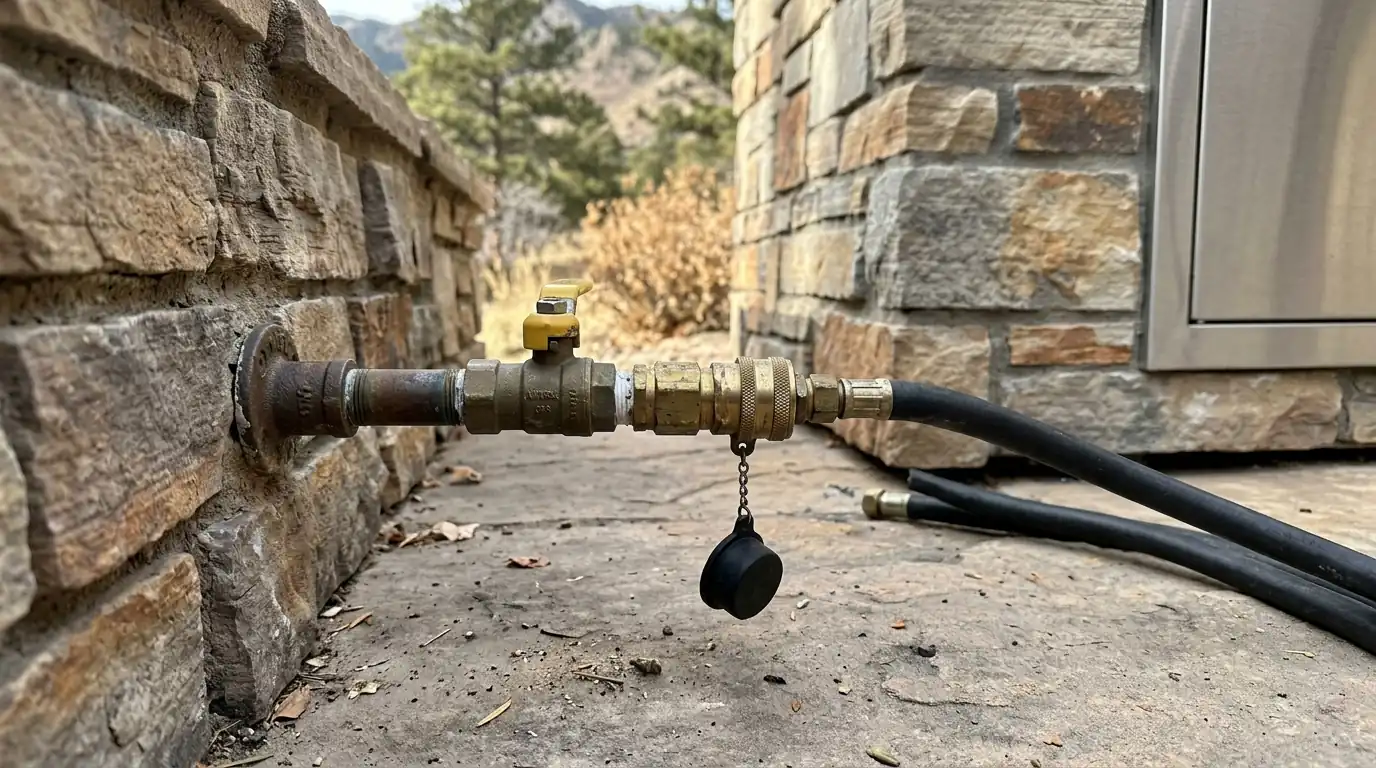
A natural gas grill or patio heater ends the propane tank swaps, but the line has to leave the house safely. We bring it out through the rim joist or slab edge in a sleeve, add a shut-off and a quick-disconnect at the patio, and use pipe rated for outdoor exposure or burial. Buried runs get proper depth and tracer wire. Before tying in, we confirm the existing piping can carry the added load, and if it cannot, we upsize the section that would starve.
Generator and water heater lines
Standby generators and tankless water heaters pull more gas than anything else in most houses, so they usually need the largest line, sometimes a dedicated run from the meter. A generator also needs a sediment trap, a shut-off beside the unit, and a line that can cover start-up demand. For a tankless or high-input heater, we size for the heater at full fire with the furnace running too. If an older line shows corrosion or a leak during this work, that becomes gas line repair before anything new connects.
Local conditions
What altitude changes at the end of the gas line
A water heater technical service bulletin notes that altitude effects on gas water heaters normally start at or above 2,000 feet, and that the main burner orifice size must be reduced by four percent for every 1,000 feet. Colorado Springs sits far above that threshold. The pipe is sized the same as anywhere, but the appliances it feeds need high-altitude setup, through a factory model, an orifice change or a control setting. When we run a line for a new water heater, we check that setup before the burner is lit.
What is included
What a new gas line includes with us
Gas line quotes differ in what they cover. Ours includes:
- Load calculation for every appliance on the line
- Pipe sized for load and length
- Proper supports and nail plates
- CSST bonding to the grounding system
- A shut-off at each appliance
- Sediment trap where required
- Pressure test before gas goes in
- Leak and flame check at startup
Adding a gas appliance?
Call before it arrives so the line is sized and tested in time.
How the job runs
How a new gas line goes in
Load and route
Total the BTU loads, measure the run, choose the path.
Size the pipe
From load and length, using the sizing tables.
Run and support
Pipe installed, strapped and protected through framing.
Pressure test
New piping capped and held under test before gas goes in.
Connect and purge
Shut-off, listed connector, air purged from the line.
Leak and flame check
Joints checked with the appliance running, flame inspected.
FAQ
Gas line questions before you add an appliance
Only if that branch is big enough for both, and often it is not. A small branch sized for one appliance cannot carry a second large load without starving both. We size back toward the meter and tee in where the pipe can handle it.
CSST is listed for gas piping and widely used. It has to be installed by the maker's rules, including bonding to the electrical grounding system. Black iron is still our pick where pipe is exposed to impact or needs rigid support.
Sometimes. A large generator or several big appliances can exceed what the existing meter delivers, and the gas utility decides meter size. We calculate the total load first and tell you if the utility needs to be involved.
Thinner air means a burner set for sea level runs rich. Gas appliances here need the high-altitude configuration the maker specifies, whether that is a dedicated model, an orifice change or a control setting.
Leave the house, call the gas utility's emergency line from outside, then call us. We pressure-test every new line before connecting, but any gas smell is treated as a leak until proven otherwise.
Related services

