Plumbers for every corner of Colorado Springs
From Old North End houses to Flying Horse tract homes, we fix leaks, drains, water heaters and yard lines across Colorado Springs, with the altitude, the cold and city code in mind. Phones are answered 24/7.
- Phones answered 24/7
- Every part of the city
Plumbing problem in Colorado Springs?
Call any hour. A person answers and gets a plumber moving.
Quick answer
Plumbing in Colorado Springs runs at 6,035 feet, with an average last spring freeze of May 8 and first fall freeze near October 2, so gas water heaters need altitude setup and exposed pipes need protection for about seven months a year. City code also makes you responsible for the water line from the right-of-way to your house.
What 6,035 feet does to a water heater burner
Colorado Springs sits at 6,035 feet, well above the 2,000-foot mark where one water heater service bulletin says altitude starts to affect gas burners. The same bulletin calls for a burner orifice about four percent smaller for every 1,000 feet. A burner set up for sea level runs rich up here, soots the flue and trips its safeties, so on every water heater swap we confirm the unit and its gas setup are rated for this elevation before we light it.
Water also boils cooler. Colorado State University Extension puts the boiling point near 203 F at 5,000 feet, against 212 F at sea level, which narrows the gap between a hot tank and steam. So we test the temperature and pressure relief valve on every heater we touch.
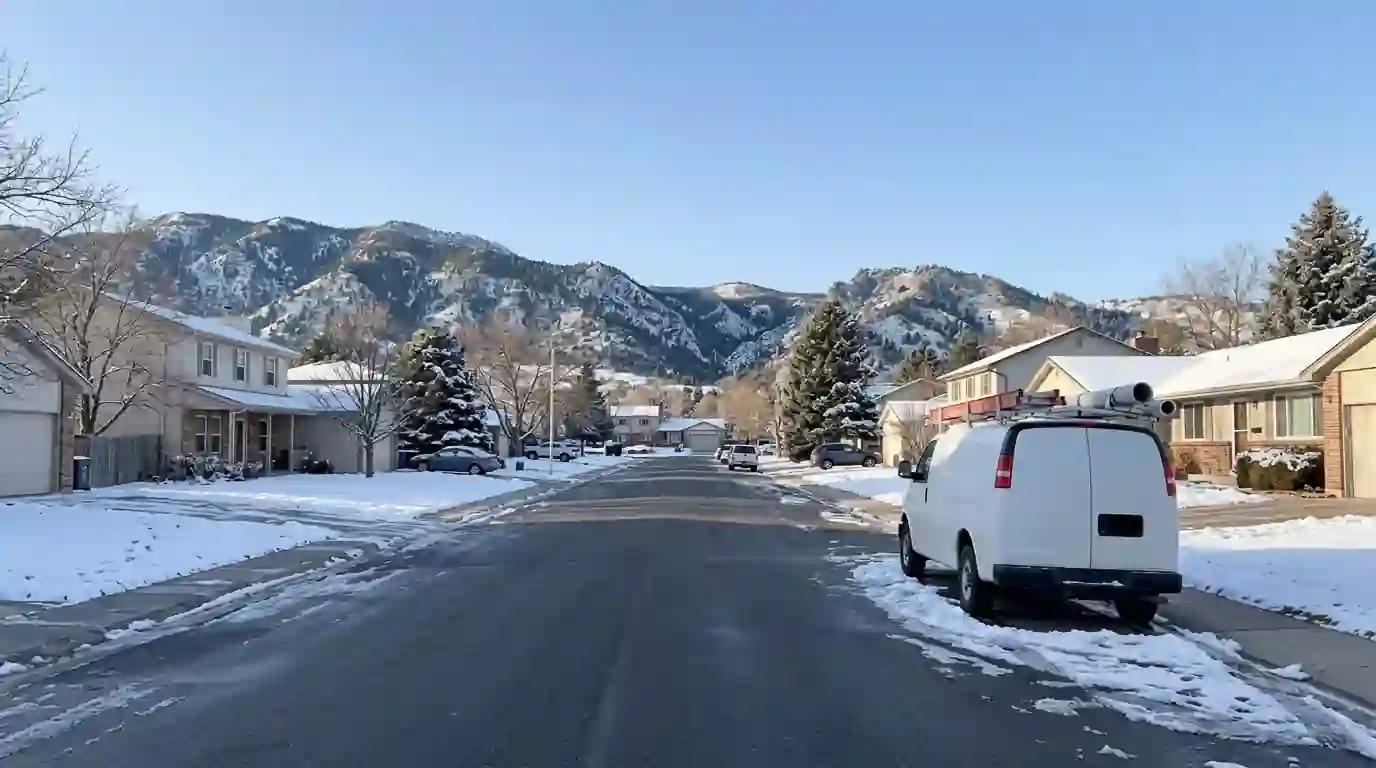
Seven months of freeze risk and a record of minus 27
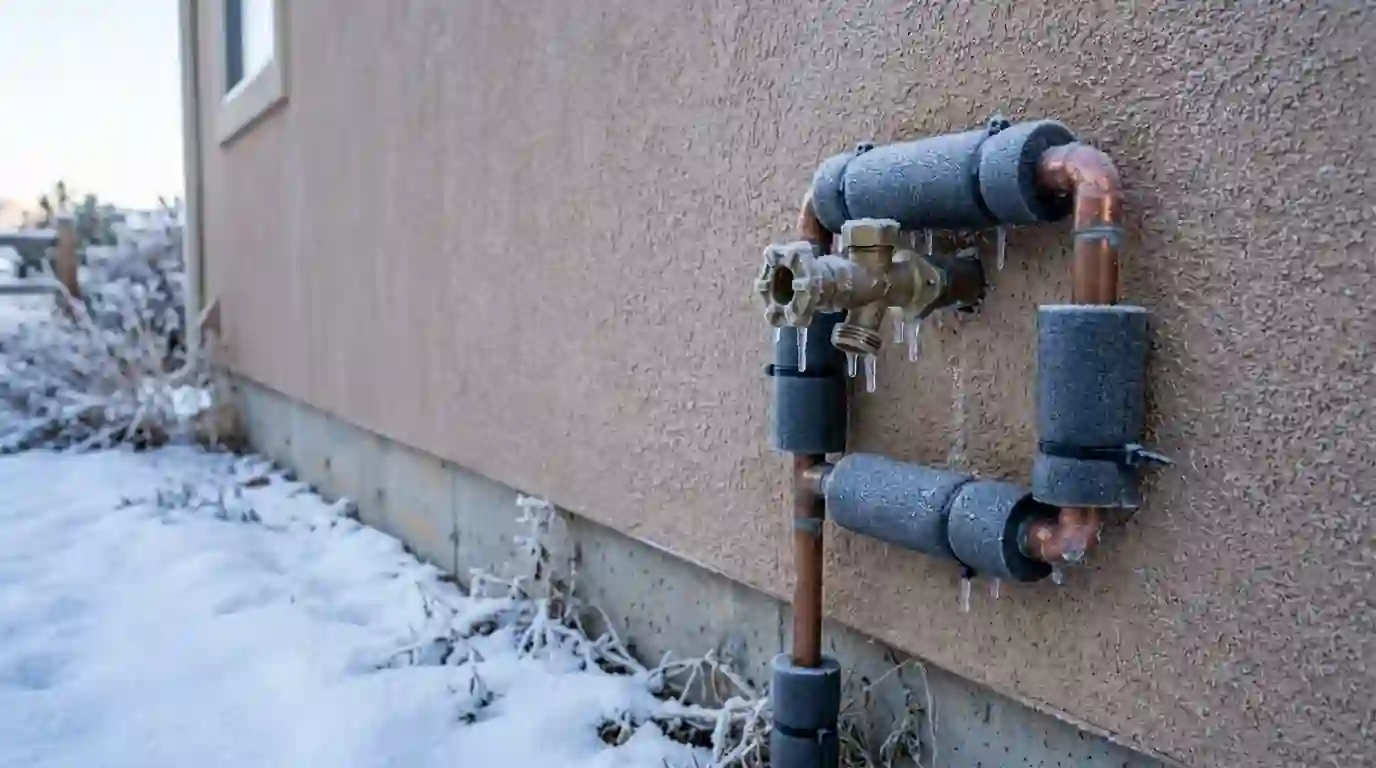
NWS Pueblo lists May 8 as the average last spring freeze in Colorado Springs and October 2 as the average first fall freeze, with freezes on record as late as June 18 and as early as September 1. The normal January low is 18.5 F, the city averages about five nights a year below zero, and the record is minus 27. Pipes on outside walls, in garages and over crawlspaces are the ones that split.
Code in El Paso County treats 30 inches as the frost line, which is why yard water lines are buried below it. Most winter calls are above ground: a frozen or burst line in a cold wall, or a sillcock left with a hose on. Houses in the Old North End, a historic district with styles from 1885 to 1965, and the 1960s homes of Knob Hill tend to have more plumbing in exterior walls than newer builds.
Common jobs
The plumbing calls we get most in Colorado Springs
Water Heater Replacement in Colorado Springs
Every gas heater in the city has to be set up for 6,035 feet.
How we handle frozen & burst pipe repair
Freezes run from early October into May, with about five nights a year below zero.
Main Water Line Repair in Colorado Springs
City code puts the yard line from the right-of-way to the house on the owner.
Sewer Camera Inspection: what it costs and how it runs
The sewer lateral to the utility main is the owner's to maintain.
Commercial assembly tests
Irrigation backflow assemblies need a yearly test before winterizing.
Soft mountain water, and the yard line you own
Colorado Springs Utilities says almost 75 percent of its water comes from mountain streams, with local supply off the north and south slopes of Pikes Peak. Utility-reported hardness is about 2.1 grains per gallon, which is soft, and the utility found no PFAS above reporting limits when it tested for 29 compounds in late 2024 and early 2025. On the west side near Garden of the Gods, the utility is moving a pressure zone toward a 60 psi standard, so a house pressure reducing valve there is worth checking.
City code 12.4.409 splits the water service line: the utility handles the part in the public right-of-way, and the owner is solely responsible from that line to the building. A leak must be reported within 24 hours, and on a line 1 inch or smaller it must be fixed within 45 days or service can be suspended. The utility also puts the sewer lateral, from your house to its main, on the owner, which is why we camera the line before quoting any sewer work.
Housing age changes the job from Briargate to Knob Hill
Half of Colorado Springs homes were built after 1990, a decade newer than the national median, but the spread is wide. Pikes Peak Park filled in during the 1970s and early 1980s, Village Seven has a median home age near 43 years, and Pulpit Rock and Austin Bluffs, the largest owner-occupied part of the city, sits near 38. Deerfield Hills is close behind at about 33.
The north and east sides are younger. About half the homes in Briargate went up in 2000 or later, the median home in Flying Horse and Northgate is about 18 years old, Stetson Hills and Springs Ranch about 20, and Stetson Ridge about 16. Out west, Rockrimmon and Mountain Shadows includes homes rebuilt after the 2012 Waldo Canyon fire, and the Broadmoor area was first laid out in large lots after 1885 and annexed in 1980.
Next door
Nearby places we also work
FAQ
Plumbing questions from Colorado Springs
For most homes on Colorado Springs Utilities, no. Utility-reported hardness is about 2.1 grains per gallon, which is classed as soft. Homes on district wells outside the city, or in Fountain and Pueblo, see much harder water and are a different conversation.
Under city code 12.4.409, the utility handles the line in the public right-of-way and the owner is responsible from there to the house. The curb stop is jointly owned, but only the utility may operate or repair it. Report a leak within 24 hours of finding it.
Colorado Springs Utilities requires backflow assemblies to be tested when installed and every year after by a certified backflow tester, and irrigation customers must test before the system is winterized. In 2019, records were due October 1.
No. Colorado Springs Utilities states that the wastewater service line from your home to its main is the customer's to maintain, including damage from blockages. A camera inspection shows what is wrong before anyone digs.
Plumber needed in Colorado Springs?
Call any hour. We answer, help you stop the water and get a plumber moving.
American Plumbing Service service area, Colorado Springs, CO
Map loads only when you ask for it.
