Heat pump water heaters installed in Colorado Springs homes
A heat pump water heater can cut what you pay to heat water, but only in the right room. We check air volume, drainage and the panel before anything is ordered.
- Phones answered 24/7
- Hybrid electric tanks
- Room and drain checked first
Updated October 2026Phones answered 24/7
Want a price on this job?
Call and describe the job. We answer 24/7 and set a visit.
Quick answer
Heat pump water heater installation in Colorado Springs starts with the room: the unit pulls heat from the surrounding air, so it needs enough space, a drain for condensate and usually a 240-volt circuit. In a cramped closet or cold garage it leans on its electric elements and most of the savings disappear.
What a heat pump water heater needs from your house
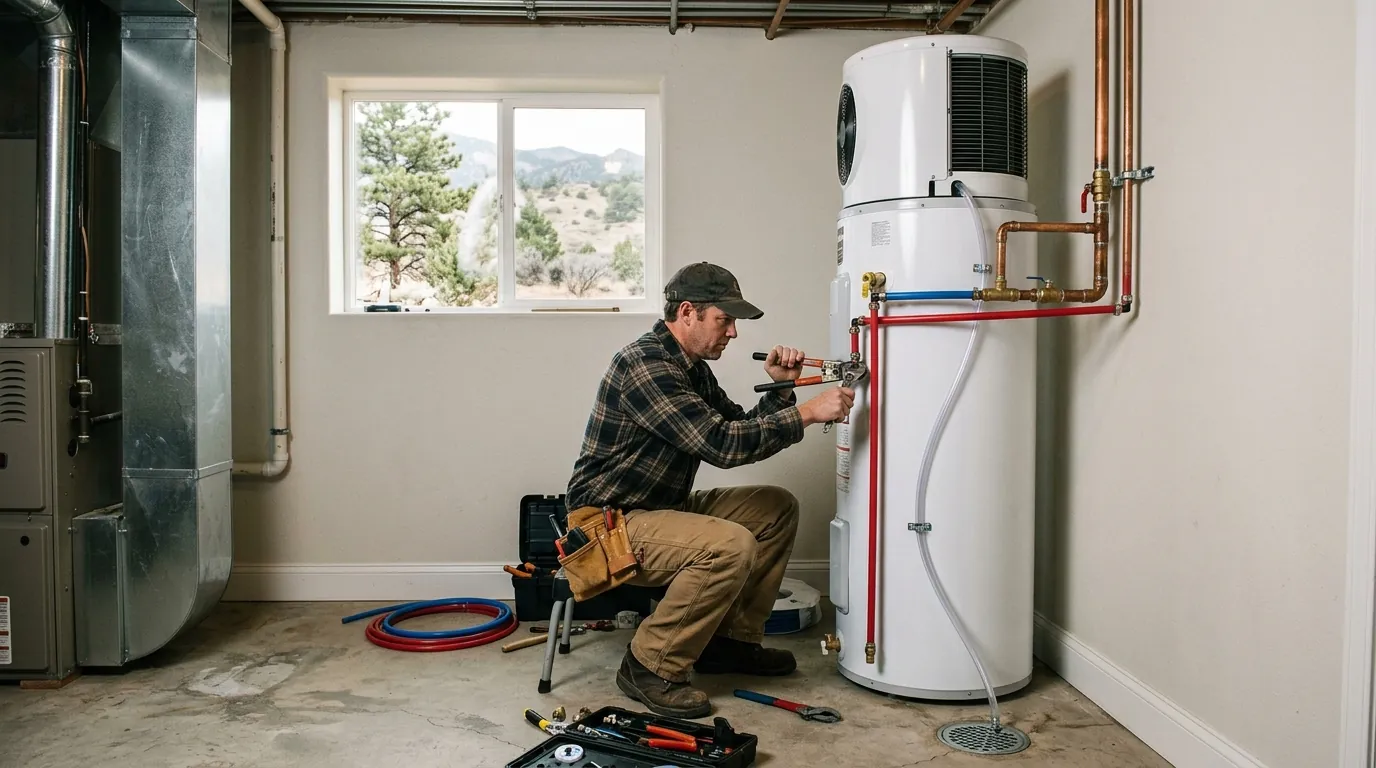
A heat pump water heater is an electric tank with a small compressor on top. A fan pulls room air across an evaporator coil, refrigerant moves that heat into the water, and cooler, drier air blows out. Backup elements kick in when demand outruns the compressor. So the install is mostly about the space around the tank, and we walk the basement or utility room before we talk about models.
If the room will not support one, we say so and price a straight tank swap instead, or talk through tank versus tankless if gas is staying. A heat pump unit is the right call when there is air to work with, somewhere for water to drain and room in the panel. Expect a taller tank, a hum like a dehumidifier and a cooler room around it.
Cost
What a heat pump water heater install runs
This national figure is a starting point, not our price. The unit is the larger share, and the house decides the rest: a new circuit, a condensate pump or flue work can each move the total.
What moves the price
- Tank size, 50 versus 65 or 80 gallons
- Whether a 240-volt circuit already exists at the heater
- Gravity drain or condensate pump
- Gas cap-off and flue check when a gas tank comes out
- Door louvers or ducting for a small room
- Expansion tank and relief piping
Ranges are published market figures for planning, not a quote. We price your job after we see it.
Your options
Heat pump tank or another gas tank?
With gas already at the heater, this is the real choice.
| Heat pump water heater | Gas tank | |
|---|---|---|
| Running cost | Lower while the room stays mild | Steady, tied to gas prices |
| Recovery speed | Slower in heat pump mode | Faster burner recovery |
| Venting | None, but it needs room air | Flue or power vent required |
| Space | Taller, needs volume around it | Fits a standard closet |
| Power outage | No heating without power | Standing-pilot models keep heating |
Sizing and location
Heat pump mode recovers more slowly than a gas burner, so a family that got by on a 40-gallon gas tank often moves to a 50 or 65-gallon heat pump unit. We size from the morning shower rush and the first-hour rating, not the old tank label. Location matters as much as size. Each install manual sets a minimum room volume or calls for a louvered door or ducting in a small space. A basement mechanical room usually works. A hallway closet usually does not, unless the door can be vented.
Condensate drains
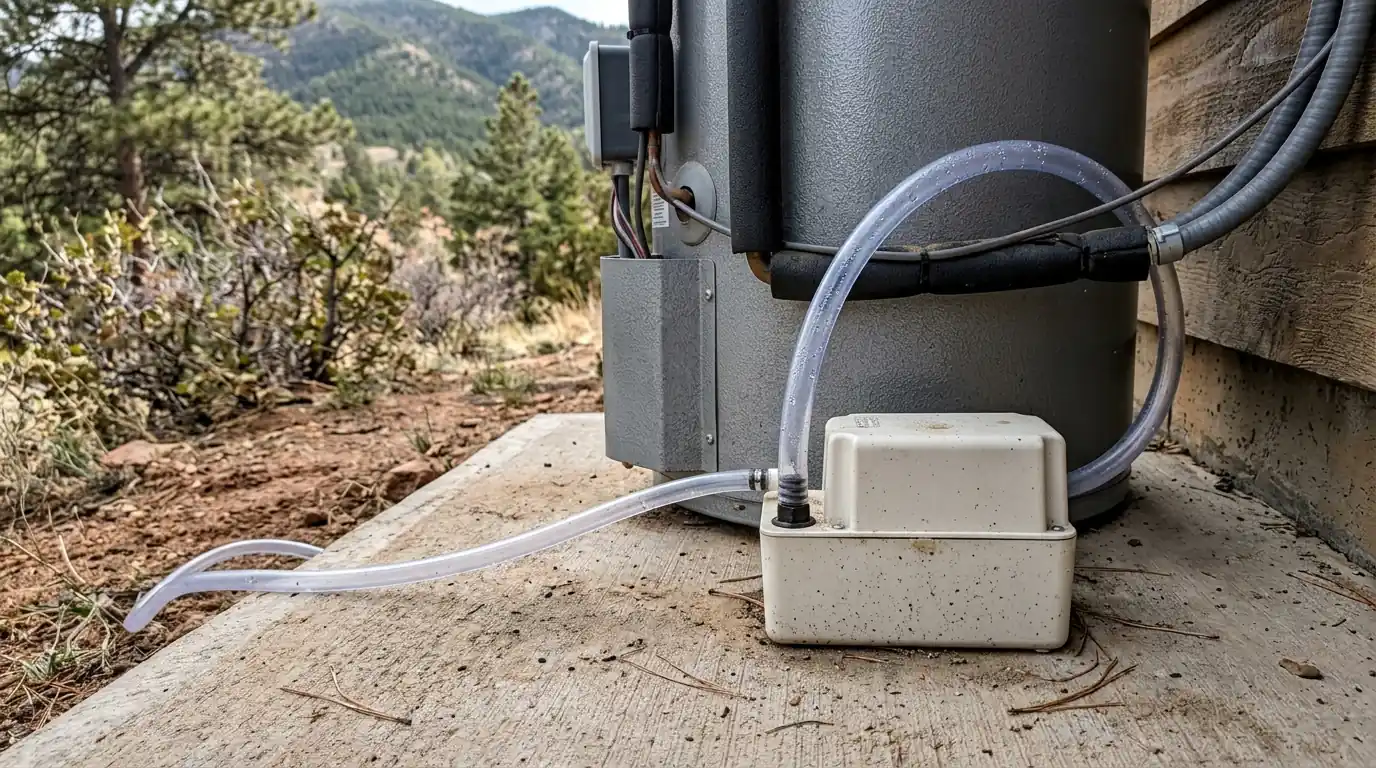
The evaporator coil pulls moisture out of the air every day the unit runs, and that water needs somewhere to go. The cleanest setup is a short gravity line to a floor drain or a laundry standpipe with an air gap. Where the tank sits below any usable drain, a small condensate pump lifts it. The T&P relief discharge stays a separate line. If the floor drain already gurgles, we clear that drain first, and no condensate line runs through a space that freezes.
Electrical and space needs
Most units want a dedicated 240-volt circuit, typically 30 amps, in place before install day. A gas tank spot usually has no 240, so the panel needs a spare slot and capacity. Some newer models run on a dedicated 120-volt outlet, trading panel work for slower recovery. The compressor sits on top, so the tank stands taller and its air filter needs clearance. When gas comes out, the branch is capped and pressure tested, and a flue shared with the furnace gets checked so the furnace is not left alone in a vent sized for two.
Local conditions
Why January air decides where the unit goes
The normal January low in Colorado Springs is 18.5 F, based on 1991 to 2020 climate normals. A heat pump water heater in an unheated garage spends those months breathing cold air, and below its operating range the controls hand the work to the resistance elements, at plain electric-tank cost. So we steer most Colorado Springs installs toward basements and utility rooms inside the heated house.
What is included
What our heat pump install includes
Quotes vary because some leave out the work around the tank. Ours covers each item.
- Room volume and air path check
- Circuit confirmed at the heater location
- Old tank drained, disconnected and hauled away
- Thermal expansion tank where the system is closed
- Relief valve discharge piped to an approved point
- Condensate routed by gravity or pump
- Gas branch capped and leak tested on gas swaps
- Tank filled and purged before power goes on
How the job runs
How a heat pump install day runs
Measure the room
Height, volume and air path, before a model is picked.
Confirm the circuit
The circuit is verified at the heater location before install day.
Drain and remove the old tank
Water and fuel off, tank drained, supply capped or disconnected.
Set and pipe the new unit
New connections, an expansion tank where the system is closed, a relief line to a safe point and condensate to a proper receptor.
Fill, purge and start
The tank is filled before power goes on so the elements never fire dry, then we set the mode with you.
Brands we service
We install heat pump water heaters from Rheem, A. O. Smith and Bradford White, piped with Watts expansion tanks and relief valves.
- Rheem
- A. O. Smith
- Bradford White
- Navien
- Rinnai
- Noritz
- Moen
- Delta
- Kohler
- American Standard
- InSinkErator
- Uponor
- Watts
- Zurn
FAQ
Heat pump water heater questions from Colorado Springs owners
It will make hot water, but on cold nights it runs on its electric elements at about the cost of a standard electric tank. We usually recommend a basement or utility room inside the heated space instead.
A little. It moves heat from the air into the water, so the room cools and dries while it runs. That helps a damp basement in summer. In winter your furnace makes up some of that heat, trimming the savings.
We cap and pressure test the branch that fed the old heater, so it can stay if you may want gas back later. A flue shared with the furnace gets checked once the heater is gone.
Clean the air filter on top every few months, keep the condensate line running free, and flush the tank and check the anode rod like any other tank. A clogged filter is the usual reason these units slow down.
Hybrid for everyday use. Heat pump only saves the most but recovers slowly, so it suits small households. Electric or high demand mode covers houseguests or a cold snap, and switching takes a few button presses.
Related services

