Sewage ejector pump service for Colorado Springs basements
When a basement bathroom sits below the sewer line, everything it drains collects in a sealed basin and gets pumped up. We service the pump, float, alarm, check valve and vent that make that work.
- Phones answered 24/7
- Floats, alarms and check valves
- Sealed basin replacement
Updated October 2026Phones answered 24/7
Water running right now?
Close the main shut-off, then call. A person answers 24/7.
Quick answer
A sewage ejector in a Colorado Springs basement lifts toilet, shower and sink waste up to a drain that sits higher than those fixtures, using a pump built to pass solids up to about 2 inches. When the alarm sounds, stop using every basement fixture, including a washer that drains there. Most calls trace to the float, the check valve or the pump.
Warning signs
Warning signs from an ejector system
High-water alarm
The pump is not keeping up or not starting.
Gurgling in basement drains
Slow flow into the basin or a vent problem.
Sewage odor near the lid
A failed gasket, grommet or vent.
A clunk every time the pump stops
The check valve slamming shut.
Breaker tripping on the pump circuit
A failing motor or water in the wiring.
Inside a sealed ejector basin
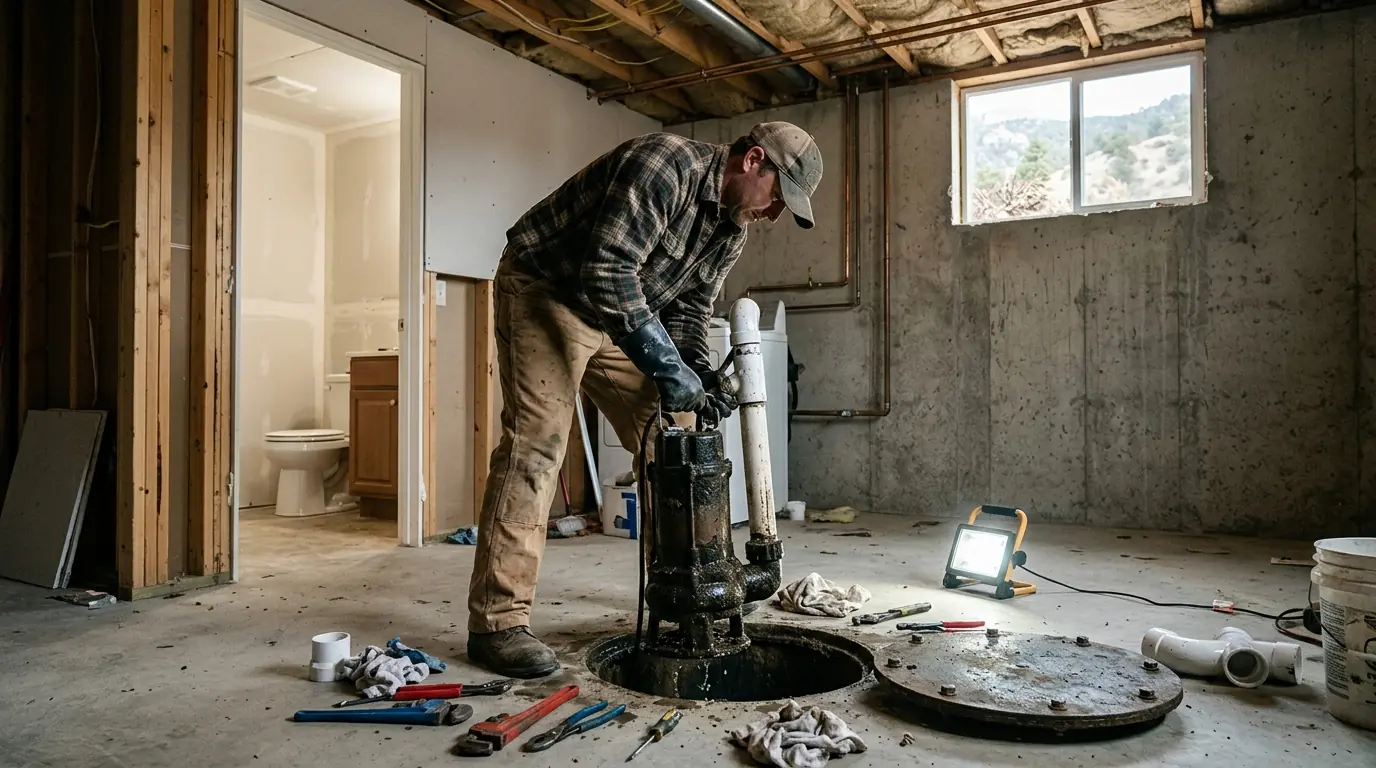
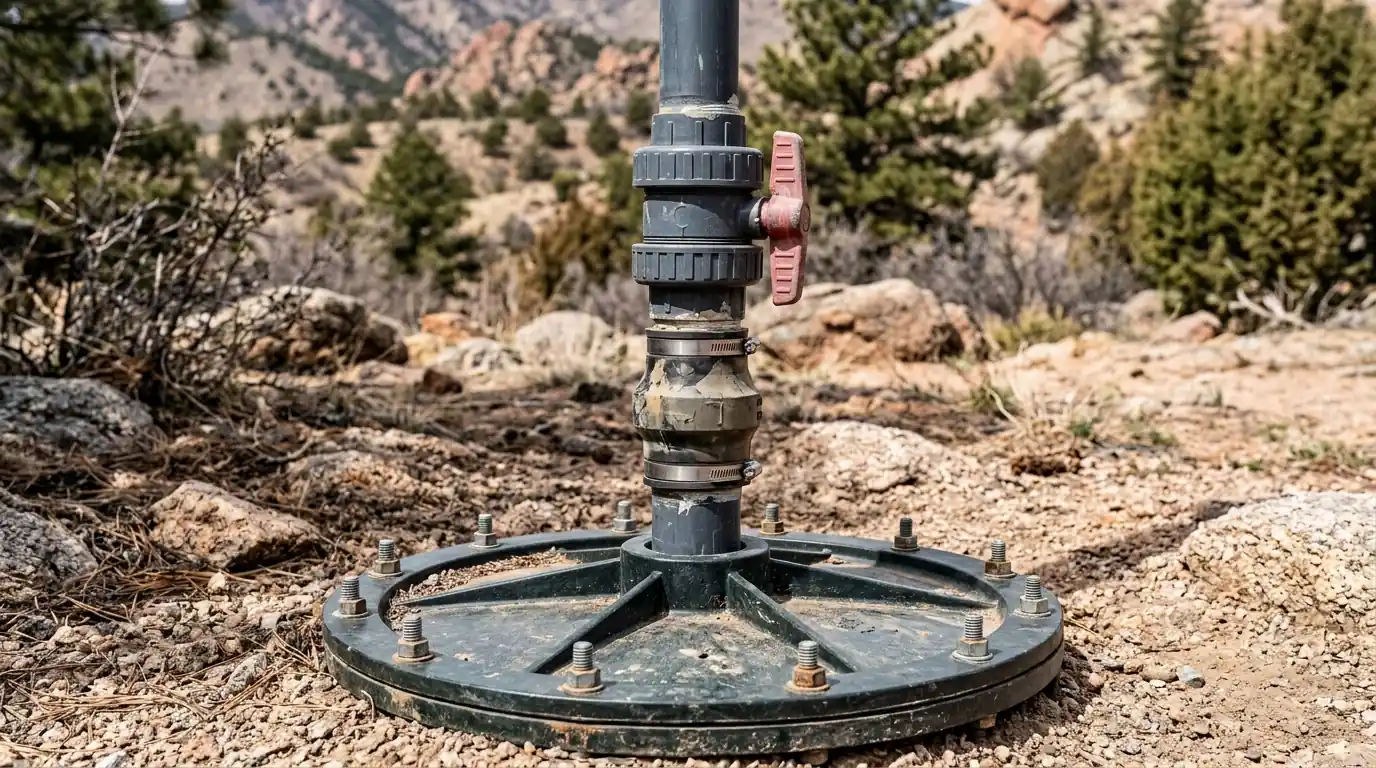
The system is a sealed basin set in the slab, a solids-handling pump, a float or switch, a discharge pipe with a check valve and a full-port shutoff, a vent to the outdoors, and a high-water alarm. The lid is gasketed and bolted because the basin holds sewage and sewer gas.
Trouble usually starts with what goes in. Wipes, even ones sold as flushable, wrap impellers and snag floats. Grease from a basement bar sink coats the switch. A leaking check valve lets the discharge pipe drain back after every cycle, so the pump runs far more often than it should and wears out early.
Finishing a basement? The ejector gets planned with the basement bathroom rough-in. A smell near the basin often points to the lid gasket or vent, covered under sewer gas and vent repair.
How the job runs
How we service an ejector basin
Stop the inflow
Basement fixtures and the washer off-limits while we work.
Pump down and isolate
Basin emptied, discharge shutoff closed.
Open and pull
Lid unbolted, pump lifted out with its float.
Clean and inspect
Intake, impeller, switch, check valve and vent.
Reseal and test
New lid gasket where needed, alarm tested, full cycle watched.
Basement bathroom ejectors
These serve the toilet, shower and lavatory below the main drain, often a wet bar or laundry too. Owners notice a basement toilet that flushes slowly, gurgling in the shower drain, or the pump starting more often than seems right. On a service visit we pump the basin down, pull the pump, clear rags and debris from the intake, check the impeller and seal, and watch the float travel. We also confirm the vent is open, since a blocked vent can slow drainage into the basin.
Alarm and float problems
An alarm with water rising means the pump is not starting: a tangled or waterlogged float, a failed mechanical switch, or a tripped breaker or GFCI on the pump circuit. An alarm with the basin at a normal level usually means the alarm float itself has stuck. Either way, the alarm is doing its job, so we fix the cause rather than silencing it. A pump whose float is fouled by grease gets a switch type suited to that basin.
Pump and basin replacement
Pumps wear out: the impeller erodes, the shaft seal lets water into the motor, or the motor trips its thermal protection and finally quits. We match the replacement to the discharge size and the height it lifts, and change the check valve and union at the same time. Basins get replaced when they crack, when the lid no longer seals, or when an old undersized basin makes the pump cycle constantly. That means breaking out concrete around it and patching afterward.
Angi reports sewer ejector pump replacement from $630 all the way up to $4,300 nationally, including labor and parts.
Timing
How long the basement bathroom is out of service
Most float, switch and check valve repairs are finished in one visit, and the basement fixtures can go back into use once the basin is resealed and the pump has cycled under test. A pump swap runs similarly when the new pump matches the old one's discharge size. Basin replacement takes longer: the old basin is pumped out, cleaned and broken out of the slab, the new one is set, connected and tested, and the concrete is patched around it.
Local conditions
Ejectors on septic properties in El Paso County
El Paso County Public Health estimates 30,000 operating septic systems in the county, serving properties without municipal sewer. On those lots, a basement bathroom ejector does not lift waste to a city main; it lifts it to the building drain that runs to the septic tank. A full septic tank and a failed ejector can look the same from the basement, so before pulling the pump we confirm the building drain past the discharge is actually flowing.
Cost
What ejector work tends to cost
A float or check valve repair costs far less than a new pump, and a new basin costs the most because of the concrete work. National figures below, not our price.
What moves the price
- Float or switch repair vs a full pump
- Horsepower and the height it lifts
- Check valve, shutoff and union replacement
- Alarm replacement
- Cleaning a basin full of debris
- Breaking slab for a new basin
Ranges are published market figures for planning, not a quote. We price your job after we see it.
Brands we service
We set Zurn and Watts check valves and fittings on ejector discharge lines, and service the Kohler and American Standard basement toilets and fixtures that drain into the basin.
- Rheem
- A. O. Smith
- Bradford White
- Navien
- Rinnai
- Noritz
- Moen
- Delta
- Kohler
- American Standard
- InSinkErator
- Uponor
- Watts
- Zurn
FAQ
Ejector pump questions
Usually yes. Upstairs fixtures drain by gravity to the main and do not pass through the basin. Only fixtures that drain into the ejector need to stop.
Toilet paper and waste only. Wipes, paper towels, floss and feminine products wrap the impeller or hang up the float, and they are behind a large share of ejector calls.
Common causes are a running toilet feeding the basin, a leaking check valve draining the discharge back, or a float switch whose on and off points sit too close together. Each one wears the pump faster.
No. A sump pump moves groundwater from an open pit. An ejector moves sewage from a sealed, vented basin and uses a pump built to pass solids.
A dried or torn lid gasket, an unsealed cord or pipe grommet, or a blocked vent. All of those are fixable without replacing the pump.
Related services

