Hydro jetting drains and sewer lines in Colorado Springs
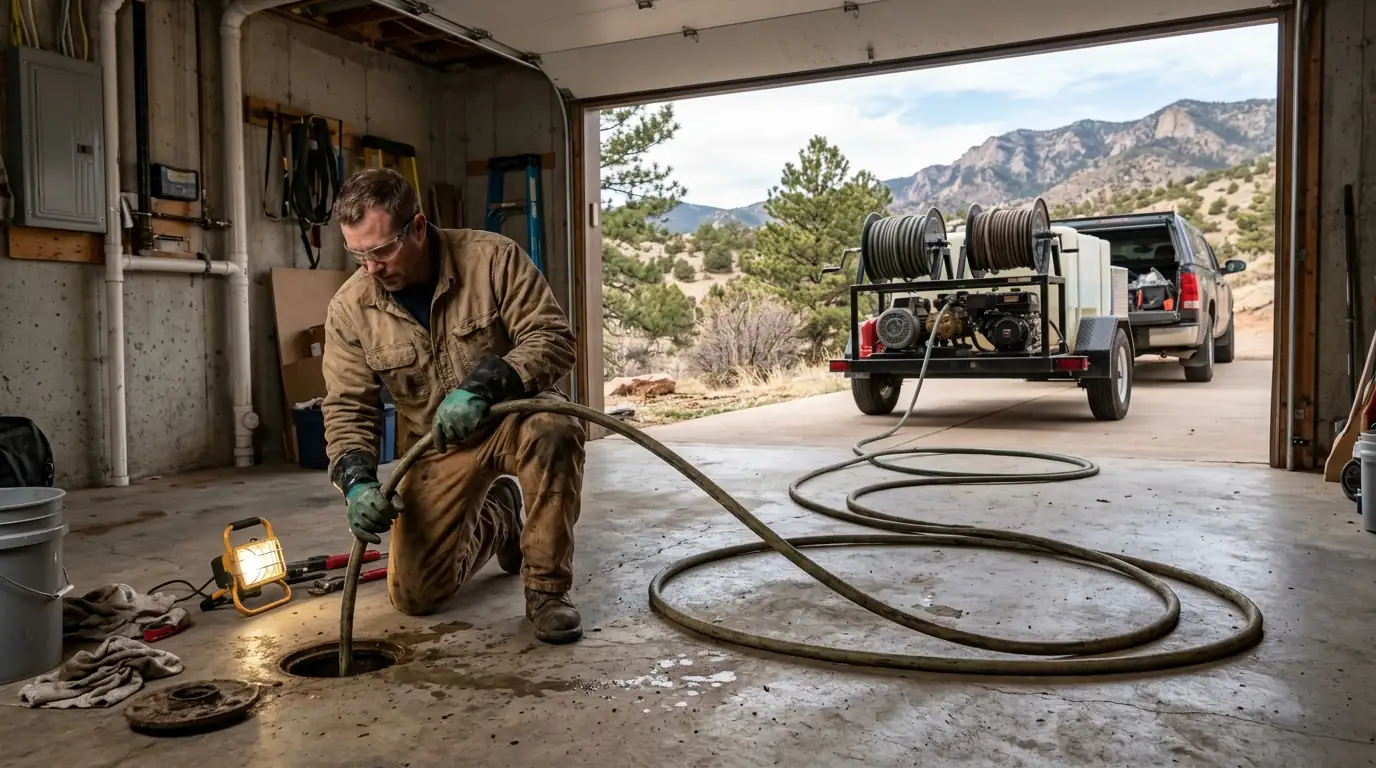
A cable punches a hole through a clog. A jetter scours the pipe wall back to bare material, which is why it works on grease, root regrowth and scale. We camera the line first so the pressure only goes into pipe that can take it.
- Camera before we jet
- Kitchen branches to main sewers
- Grease, roots and scale
Updated October 2026Phones answered 24/7
Want a price on this job?
Call and describe the job. We answer 24/7 and set a visit.
Quick answer
Hydro jetting in Colorado Springs sends water at thousands of PSI through a nozzle that pulls itself up the line, scouring the full pipe wall instead of opening one channel through the clog. It suits coated kitchen lines and root regrowth, and it is the wrong tool for cracked or separated pipe, which is why inspection comes first.
When jetting beats a cable, and when it does not
A sewer cable is quick and fine for a one-time clog. Its weakness is that it bores a path about the size of its cutter, leaving the rest of the buildup stuck to the walls, so the next debris snags in the same place. A jetting nozzle has rear-facing jets that drive the hose forward and a front jet that breaks the blockage, and the whole diameter gets washed as the hose is pulled back.
Pressure is the risk. Jetting clay with an open joint, or cast iron with a rotted bottom, can make a bad pipe worse. We run a camera inspection before any main-line jetting, and if it shows a break, the talk turns to repairing that section or lining the line instead.
Cost
Hydro jetting costs compared with cabling
Jetting costs more per visit than cabling because of the equipment and time, and the published spread is wide. Both figures below are national averages, not what we charge.
What moves the price
- Branch line or full main sewer
- Cleanout access and distance to the main
- Grease, roots or scale
- Camera runs before and after
- Pipe material and condition
- Commercial kitchen or household volume
Ranges are published market figures for planning, not a quote. We price your job after we see it.
Your options
Cable machine or hydro jetter?
Both clear lines. They leave the pipe in very different shape.
| Cable machine | Hydro jetter | |
|---|---|---|
| What it does | Bores a path through the clog | Scours the full pipe wall |
| Best for | One-off clogs, objects, light roots | Grease coating, root regrowth, scale |
| Risk to weak pipe | Lower | Higher on cracked or thin pipe |
| Cost per visit | Lower | Higher |
Grease buildup in kitchen lines
Kitchen grease leaves the sink warm and liquid, cools in the pipe and sticks. Layer by layer it squeezes a 2-inch line down to a pencil-size channel, and a cable only reopens that channel for a few weeks. Jetting with a smaller hose and a branch-size nozzle strips the coating out of the horizontal run, usually from a cleanout under the sink or in the basement. Busy kitchens and rentals with frequent turnover see this most. Jetting resets the pipe, not the habit, so we also talk about keeping grease out of the sink.
Root regrowth after cabling
If a root cutter has opened your main more than once, the roots keep returning because cutting leaves stubs in every joint. A jetter with a root nozzle shreds the mat and flushes the fibers out of the line instead of leaving them to catch paper. That usually buys more time between cleanings than cabling, but it does not seal anything. On a line with many open joints, jetting followed by a repair-or-replace decision is the honest path.
Scale in older cast iron
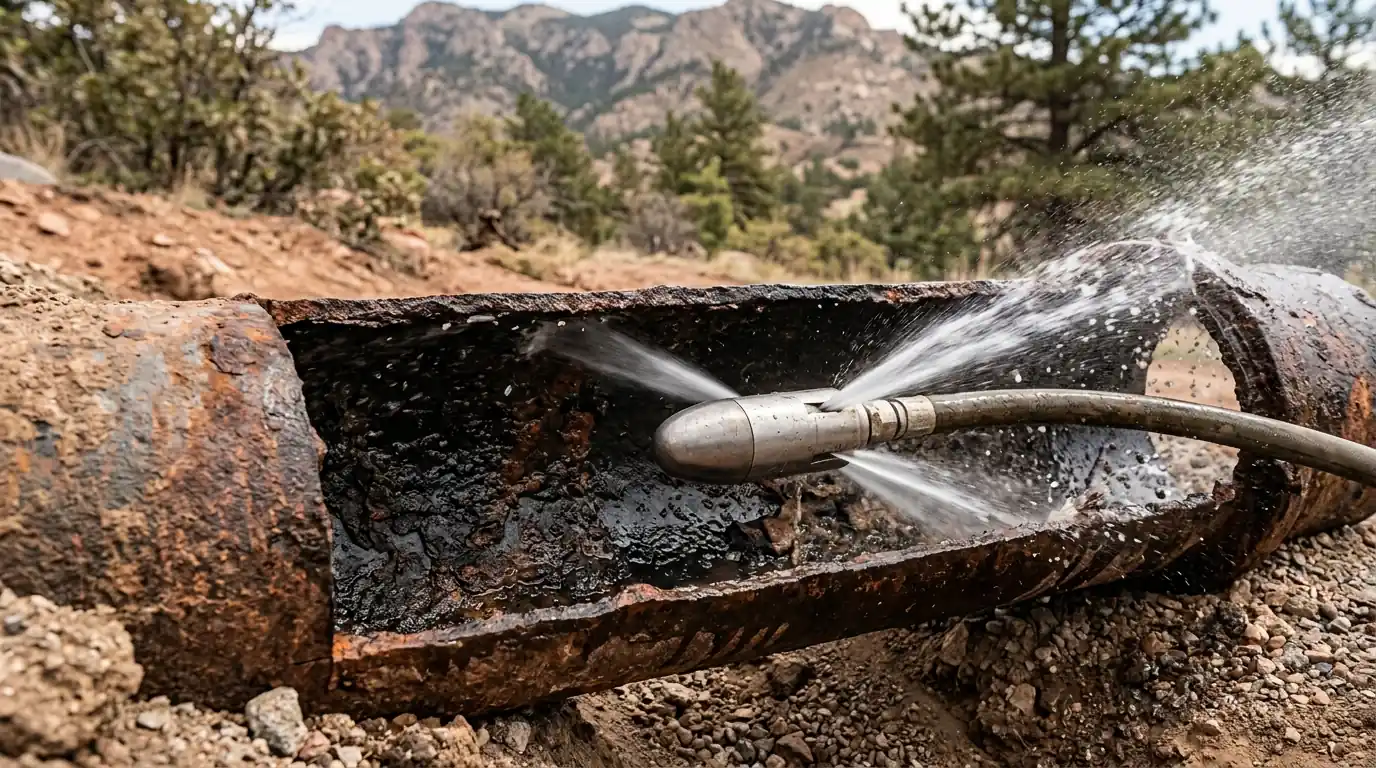
Cast iron drains rust from the inside, building hard tuberculation and scale ridges along the bottom of the pipe. Flow slows, paper snags and clogs come more often every year. A rotating descaling nozzle on the jetter can knock that scale back and recover much of the original bore. The catch is that some old cast iron is thinner under the scale than it looks, and cleaning can expose a hole. We watch it on camera, judge the wall as best we can and set pressure to match.
Local conditions
Jetting a century-old line takes judgment
About 752 of the roughly 1,001 buildings in the Manitou Springs Historic District count as contributing to a district the National Register listed in 1983, a record of its late 19th and early 20th century resort years. On houses that age the sewer may still be clay tile or early cast iron, the two materials that gain the most from jetting and are also the easiest to hurt with it. Before jetting any line that old, we look at it on camera and choose nozzle and pressure for the pipe actually there.
What is included
What to ask before anyone jets your line
Jetting quality varies a lot. These questions sort it out, and we answer every one before we start.
- Will the line be on camera first?
- What pressure and nozzle for this pipe?
- Is access a real cleanout or a toilet?
- Is the hose sized for a branch or the main?
- Will I see the line afterward?
- What did the buildup hide?
- How do I slow it from coming back?
How the job runs
What a jetting visit looks like
Camera first
We confirm the line is sound enough for pressure.
Pick the nozzle
Grease, root and descaling nozzles each do a different job.
Jet from the cleanout
The hose pulls itself up the line while rear jets scour the walls.
Flush the debris
Loosened grease, roots and scale wash down to the utility main.
Camera again
A second look confirms clean walls and shows defects the buildup hid.
FAQ
Hydro jetting questions before the hose goes in
Sound pipe, no. Cracked clay, separated joints or rotted cast iron can get worse under high pressure, which is why the camera goes in first and pressure is set to the pipe, or jetting is skipped.
A healthy line rarely does. Kitchen branches in heavy-cooking households might need it every couple of years; root-prone mains vary with how many joints are open.
Yes, at the right pressure with the right nozzle. PVC is smooth and usually needs less pressure than cast iron or clay.
No. It clears roots more thoroughly than cutting, but the joint they came through is still open. Lining or repairing that section is the lasting fix.
Both. Smaller hoses and nozzles are made for 1-1/2 and 2-inch kitchen and laundry branches.
Related services

