PRV repair and water pressure setting in Colorado Springs
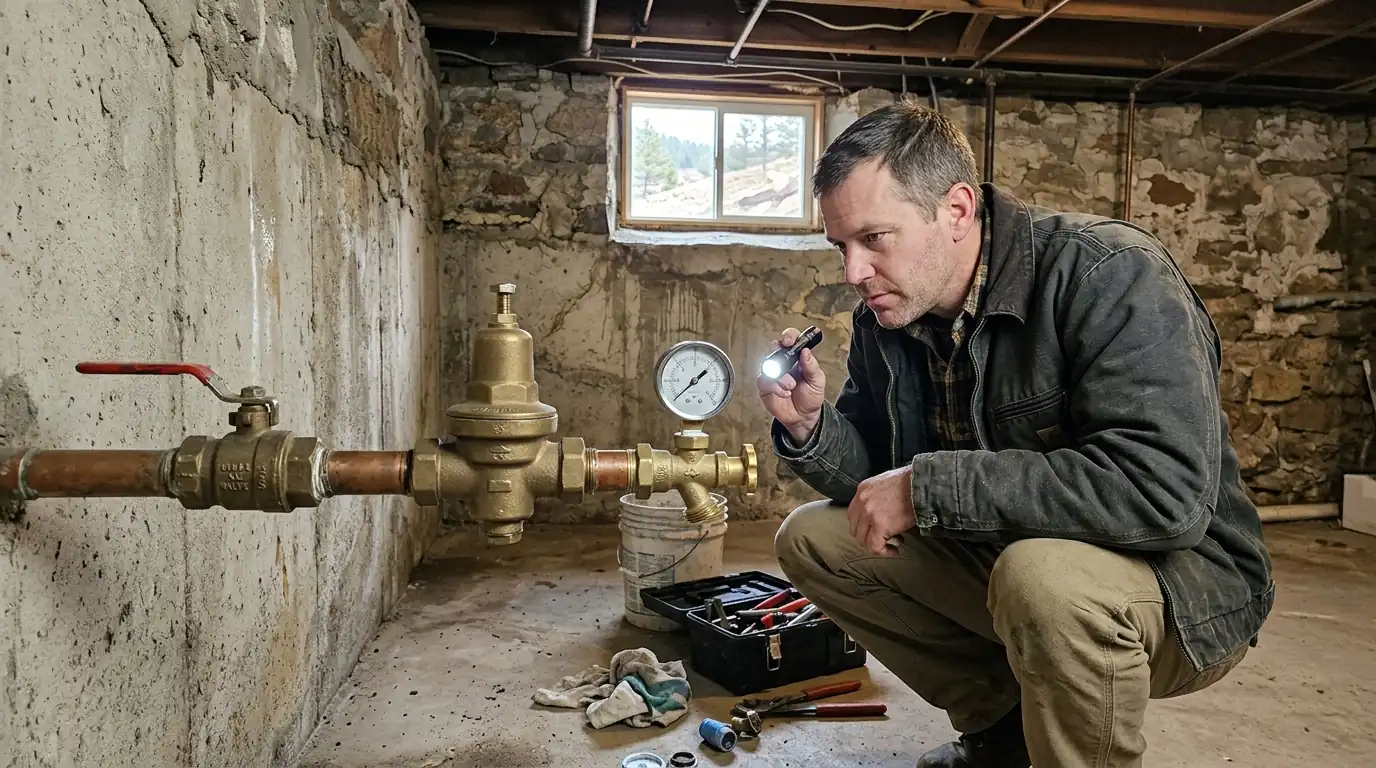
The bell-shaped valve beside your main shut-off sets pressure for the whole house. When it sticks, you get banging pipes and running toilets, or a trickle at every tap. We test it with a gauge and fix it.
- Gauge-tested pressure
- Rebuild or replace
- Phones answered 24/7
Updated October 2026Phones answered 24/7
Want a price on this job?
Call and describe the job. We answer 24/7 and set a visit.
Quick answer
A pressure reducing valve in Colorado Springs gets set with a gauge, not by feel, and a static reading above 80 psi means it needs attention. Most homes run well between about 50 and 70. When a PRV wears out, pressure creeps toward whatever the street delivers; when it clogs, every fixture in the house goes weak at once.
What a PRV does, and how it wears out
A PRV takes street pressure and drops it to a steady level for the house. Inside are a spring, a diaphragm and a seat. Over time, scale and grit keep the seat from closing, the diaphragm stiffens and the spring weakens. Stuck partly open, the valve lets street pressure creep in overnight. Stuck partly closed, it starves the house. Both look like fixture trouble until a gauge goes on a hose bib.
High pressure wears everything downstream. Fill valves hiss, faucets drip, washer hoses balloon and the relief valve on the water heater weeps. If your toilet keeps running after a new fill valve, or your water heater relief valve drips, check pressure before buying more parts. A house with a PRV is also a closed system, so it needs a working expansion tank at the heater.
Cost
PRV replacement costs
A PRV swap is short when the valve has unions and sits in the open. An old valve soldered into a tight spot beside the main takes longer. These are published national numbers, not our price.
What moves the price
- Pipe size and valve model
- Access near the main shut-off
- Soldered or threaded connections
- Adding unions and a gauge port
- Expansion tank replacement
- Rebuild kit or a full valve
Ranges are published market figures for planning, not a quote. We price your job after we see it.
Banging pipes and high pressure
Pipes that bang when a valve snaps shut, a gauge that reads above 80 psi at the hose bib, or pressure that is normal at noon and high at 2 a.m. all point at the PRV. That overnight climb is the classic sign: with no demand, a worn seat lets pressure leak past toward street level. We read static pressure, leave the gauge on to watch for creep, and check the expansion tank. A worn seat gets a rebuild kit or a new valve; a waterlogged expansion tank gets replaced on the same visit.
Low pressure after a valve fails
Sometimes the valve fails the other way. Every fixture drops at once, often after street work or a spell of dirty water. Debris has packed the inlet strainer, or the valve has stuck nearly closed. We isolate it, clean the screen and see whether pressure recovers. If the body is corroded or the adjusting screw has seized, we replace the valve, sized to the pipe and fitted with unions so the next service is easy. If pressure is low upstream of the valve too, the PRV is innocent and the service line is the next suspect.
Setting and testing the pressure
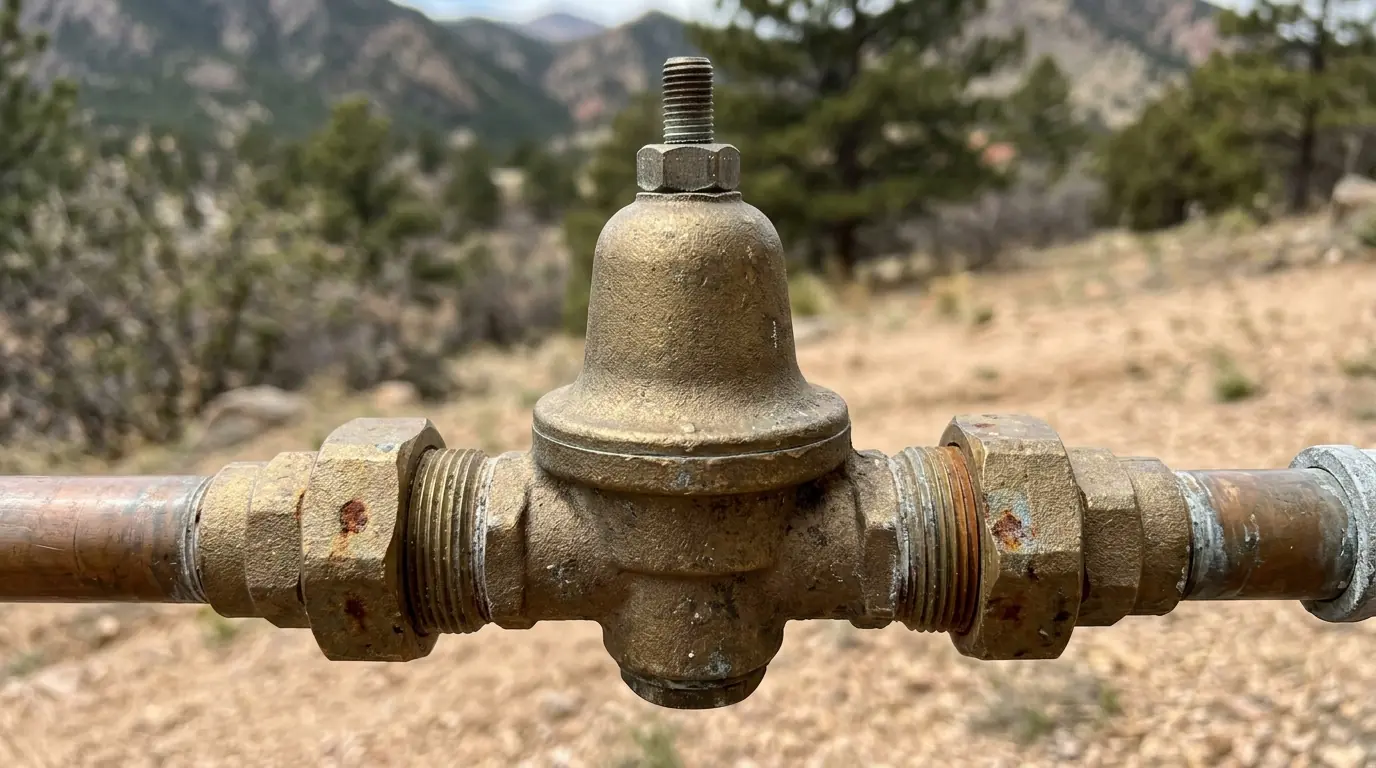
Setting a PRV takes a gauge on a hose bib or test port, every fixture closed, and patience. We loosen the lock nut, turn the adjusting screw a little at a time, open a faucet to let the valve settle, then read static pressure again. We leave it at a pressure that protects fixtures and still gives a good shower, tighten the lock nut, and write the reading on a tag hung from the valve so the next person knows where it was set and when.
HomeAdvisor lists water pressure regulator replacement at $250 to $350 nationally.
Local conditions
The west-side pressure zone near Garden of the Gods
Colorado Springs Utilities is adjusting a water pressure zone boundary on the west side near Garden of the Gods to deliver a consistent 60 psi standard to customers. Phase 1, running from fall 2025 into 2026, covers evaluating and installing pressure reducing valves. That is utility work on the public system, not a replacement for the PRV in your house. If you live in that part of the west side and notice a change in how your fixtures behave, a gauge reading at the hose bib tells us whether your own valve needs attention.
Do it yourself?
PRV checks you can do with a hose bib gauge
A gauge that threads onto a hose bib is the most useful tool here.
| Task | Homeowner | Plumber |
|---|---|---|
| Read pressure | Thread on a gauge with every fixture closed | Track creep and test at the valve |
| Adjust the screw | Small turns with the lock nut loosened; clockwise raises | Replace a valve that will not hold a setting |
| Strainer | Leave it unless the valve has shut-offs on both sides | Isolate, clean and reassemble |
| Expansion tank | Tap the top: hollow is good, solid means waterlogged | Check the air charge and replace if needed |
Warning signs
How a failing PRV shows up
Water hammer
Pipes bang or shudder when a faucet or washer valve closes.
Running toilets
Fill valves cannot hold back high pressure.
Dripping relief valve
The water heater T&P valve weeps or discharges.
Pressure that climbs overnight
A gauge reads higher after hours of no use.
Weak flow everywhere at once
Every fixture drops together.
How the job runs
How we service a pressure reducing valve
Read static pressure
Gauge on a hose bib, every fixture closed.
Watch for creep
The gauge stays on to see whether pressure climbs.
Check the expansion tank
Air charge and waterlogging at the heater.
Rebuild or replace
Clean the strainer, rebuild the cartridge or fit a new valve.
Set and tag
Adjust, lock the screw, tag the reading.
FAQ
Water pressure and PRV questions
Usually just after the main shut-off where the water line enters the house, in a basement, crawlspace or utility closet. It is bell-shaped, often brass, with a bolt and lock nut on top. Some homes on lower-pressure streets do not have one.
Often because house pressure is too high, or because the expansion tank has failed and heated water has nowhere to expand. Many PRVs act like a check valve, closing the system. We check pressure and the tank before replacing the relief valve.
Only up to a point. Past a moderate setting you mostly gain wear on fixtures, toilets and appliances. A weak shower at normal pressure usually means a scaled showerhead, an aging valve or narrowed pipe, not the PRV setting.
If the PRV makes the system closed, yes. The tank absorbs water that expands as the heater warms it. Without one, pressure spikes every heating cycle, which is hard on the relief valve, supply lines and fill valves.
Not automatically. Utility valves manage the public system; your PRV manages your house. A gauge reading at your hose bib, with a check for overnight creep, tells us whether your valve is still doing its job.

