Repiping a Colorado Springs house, start to finish
When galvanized steel has rusted nearly shut or polybutylene keeps letting go at the fittings, one more patch stops making sense. We replace the supply piping throughout, in copper or PEX.
- Galvanized and polybutylene out
- Copper or PEX-A
- Phones answered 24/7
Updated October 2026Phones answered 24/7
Want a price on this job?
Call and describe the job. We answer 24/7 and set a visit.
Quick answer
Repiping a Colorado Springs house, a job Bob Vila puts at a $7,500 national average, replaces every hot and cold supply line from the main shut-off to each fixture stop. Galvanized steel and polybutylene are the usual reasons. The old system stays live while new pipe goes in, so water is off only for tie-ins.
When repairs stop being the cheaper option
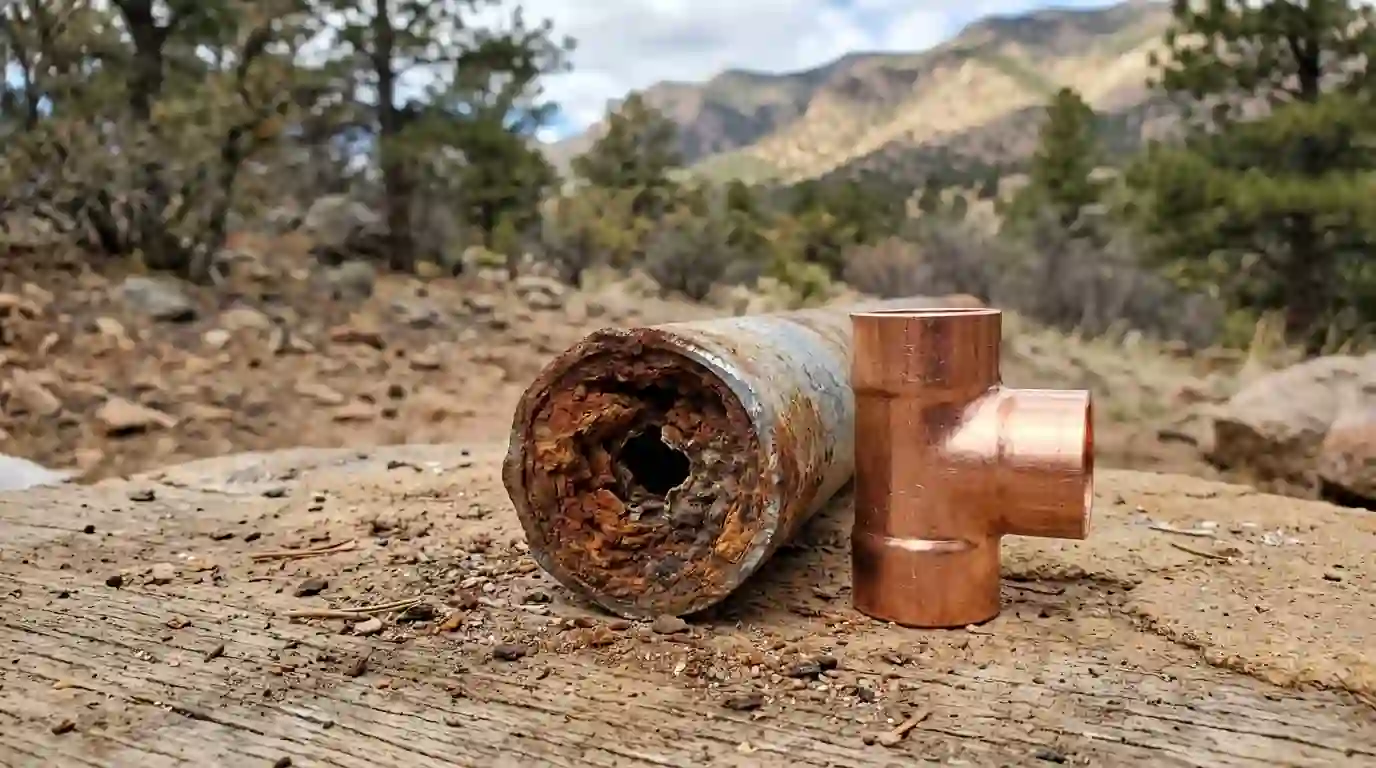
Galvanized steel rusts from the inside. The bore narrows until a half-inch line carries a trickle, water runs brown after it sits, and every repair at one threaded joint stresses the next. Polybutylene, the gray plastic supply pipe, fails another way: it turns brittle and lets go at fittings with no warning.
We read the pattern before recommending a repipe. One pinhole is a leak repair. Three leaks in a year on the same pipe, or pressure that collapses when a second faucet opens, is the pipe telling you it is done. A repipe covers supply inside the house. If the line from the curb is also galvanized, new interior pipe is still fed through a rusted straw, so we check the service line from the street before quoting and say so when it is the real bottleneck.
Cost
Repipe costs, and why the range is so wide
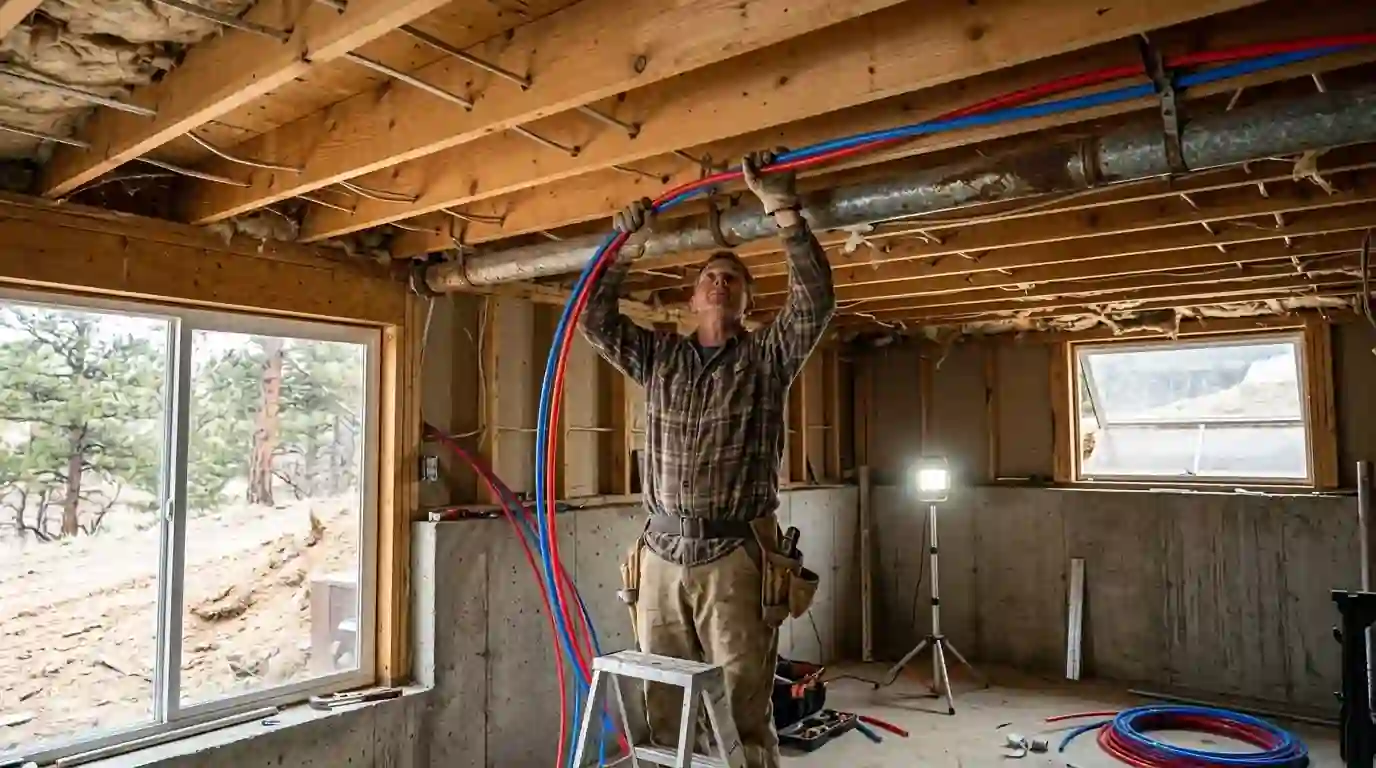
A repipe is priced by fixtures, floors and access. A ranch with an open basement ceiling is a very different job from a two-story with finished walls everywhere. This published national figure is not our quote; we price after walking the house and counting fixtures.
What moves the price
- Number of bathrooms and fixtures
- Finished ceilings or an open basement
- Copper or PEX-A
- One story or two
- New stop valves and supplies at each fixture
- Water heater connections and a new main valve
- Drywall patching after the pipe is in
Ranges are published market figures for planning, not a quote. We price your job after we see it.
Your options
Copper or PEX-A for your new lines
Both are good pipe. Access and budget usually decide.
| Type L copper | PEX-A | |
|---|---|---|
| Wall openings | More, at every bend | Fewer, runs pull through |
| Material cost | Higher | Lower |
| Hard freeze | Splits when frozen solid | Expands and often survives |
| Sun and heat | Fine exposed | Shield from UV, keep off flues |
| Best fit | Exposed runs, heater connections | Finished walls, long runs |
Replacing galvanized supply pipe
Brown water first thing in the morning, aerators clogged with rust flakes, and a shower that fades when the toilet refills are the classic galvanized signs. The answer is to abandon the steel, not chase it joint by joint. We start a new trunk or manifold near the main shut-off, run new branches to each fixture and finish at new stop valves. Exposed old pipe comes out; pipe buried in finished walls is cut and capped. Where any steel must meet copper, a dielectric union keeps the two metals from eating each other.
Replacing polybutylene
Polybutylene is flexible gray pipe, often stamped PB2110, joined with crimp rings and plastic or metal fittings. It tends to crack at those fittings and where chlorinated water has worked on the pipe wall, and it fails suddenly rather than weeping first. If you are buying or selling, expect it to come up in a whole-home inspection. We replace it run for run, including the short stubs behind toilets and sinks, so no polybutylene is left anywhere in the walls.
Copper or PEX for the new runs
Type L copper is rigid, handles heat, lasts and looks right in an exposed basement ceiling, but it costs more and every bend needs wall access. PEX-A expands over its fittings, curves around corners and pulls through stud bays in long runs, so openings are fewer and smaller. PEX has to be kept out of sunlight and away from a water heater flue; copper can pinhole if water moves through it too fast. Many of our repipes use PEX in the walls and copper at the heater and on exposed runs.
Local conditions
Why repipes here are not just an old-house job
The median year built for Colorado Springs homes is 1990, so half the housing is newer and half older. Our repipe work splits the same way: older homes tend to need galvanized steel replaced, while houses from the decades near that median sometimes carry polybutylene. On the service side, Colorado Springs code does not permit lead service lines to be connected, and when the utility finds one it records a notice every year with the El Paso County Recorder until the whole line is replaced. If we see lead at the meter end during a repipe, we tell you.
Warning signs
Signs your supply pipe is near the end
Brown water after sitting
Rust shows up first thing in the morning or after a trip.
Pressure drops with two fixtures open
Narrowed pipe cannot feed a shower and a sink at once.
Repeat leaks
A third repair in a year means the next one is coming.
Gray plastic at the water heater
Often polybutylene, stamped PB2110.
Crusted threaded joints
White or green buildup and damp spots on basement fittings.
Third leak this year?
Call us and we will tell you plainly whether a repair or a repipe makes more sense.
How the job runs
How a repipe runs in an occupied house
Walk and count
Trace the old supply, count fixtures, plan routes and openings.
Protect the house
Floors and furniture near each opening are covered first.
Run the trunk
New main lines from the shut-off through basement or attic.
Branch to fixtures
New pipe and a new stop valve at every fixture.
Pressure test
The new system holds test pressure before any cutover.
Cut over and flush
Switch to the new pipe, flush, clean every aerator.
FAQ
Repiping questions homeowners ask first
Most evenings, yes. New pipe goes in alongside the old, so water stays on while we work and goes off only for tie-ins. The final cutover is a planned window, and we tell you when it is coming.
Usually small openings at each fixture and where runs change direction, not whole walls. PEX helps because it pulls through stud bays. Two-story homes and finished basements need more planning, and you see the opening plan before we start.
No. A repipe is the supply side. If cast iron or galvanized drains are giving trouble, we look at them separately, often with a camera, and price that work on its own.
PEX made for potable water is listed for that use and is standard in new homes. A new system can taste slightly of plastic at first; flushing clears it. If you prefer metal throughout, copper is still an option.
If an inspector will flag polybutylene or failing galvanized, buyers will see it either way. Repiping first removes the objection; a credit at closing is the other route. We give you a written scope so the number you negotiate with is real.
Related services

