Slab leak repair in Colorado Springs: open the floor or reroute
A water line leaking under concrete wastes water, warms the floor and wets the soil the house sits on. We pinpoint it, then lay out the two real choices: a spot repair through the slab or a new line run overhead.
- Locate before we break concrete
- Spot repair or reroute
- Hot and cold lines
Updated October 2026Phones answered 24/7
Water running right now?
Close the main shut-off, then call. A person answers 24/7.
Quick answer
Slab leak repair in Colorado Springs comes down to one decision: cut a small square of concrete, often around two feet across, to splice the leaking line, or abandon that line under the slab and run new PEX through walls and ceilings. Pipe age, the flooring on top and any earlier slab leaks drive the choice.
Two ways to fix a line under concrete
Slab-on-grade homes and finished basements often have copper supply lines buried in or under the concrete. A leak there rarely makes a puddle. You get a warm patch, a cracked tile, a meter that never stops or a water heater that runs all day. We begin with electronic leak locating so the opening lands on the leak, not a foot away from it.
From there it is a decision, not a sales pitch. A spot repair costs less up front and keeps the original layout. A reroute leaves the old pipe dead in the slab and puts new pipe where it can be reached later. When the buried copper is as old as the rest of the house, repiping the supply at the same time can make sense.
How the job runs
Our order of work on a slab leak
Confirm and isolate
Meter test, then close the hot or cold side to see which line is losing water.
Pinpoint
Acoustic and thermal locating to mark the spot on the floor.
Choose the method
We walk through spot repair and reroute with the access each needs.
Open or route
Saw-cut at the mark, or cap the old line and pull new PEX overhead.
Test, then restore
Full pressure test before backfill or drywall, then concrete patched flush.
Spot repair through the slab
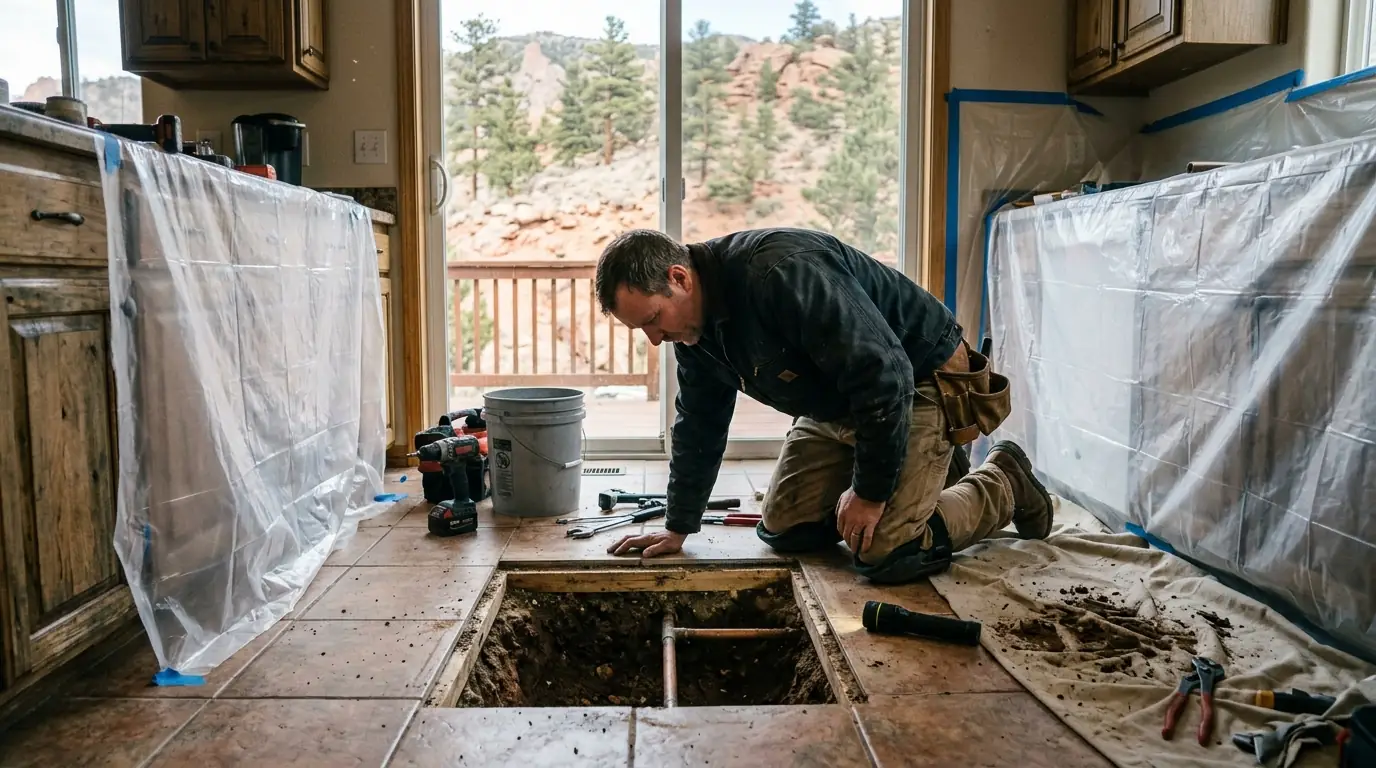
This is direct access. We pull back the floor covering, saw and break a square of concrete over the marked spot, dig down to the line and expose a foot or so either side of the leak. The damaged length is cut out and replaced with new copper or PEX, joined with fittings rated for burial, then pressure tested before backfill. We compact the fill and patch the concrete flush. Tile and wood refinishing is a separate trade, so we cut along grout lines where we can.
Rerouting a line overhead instead
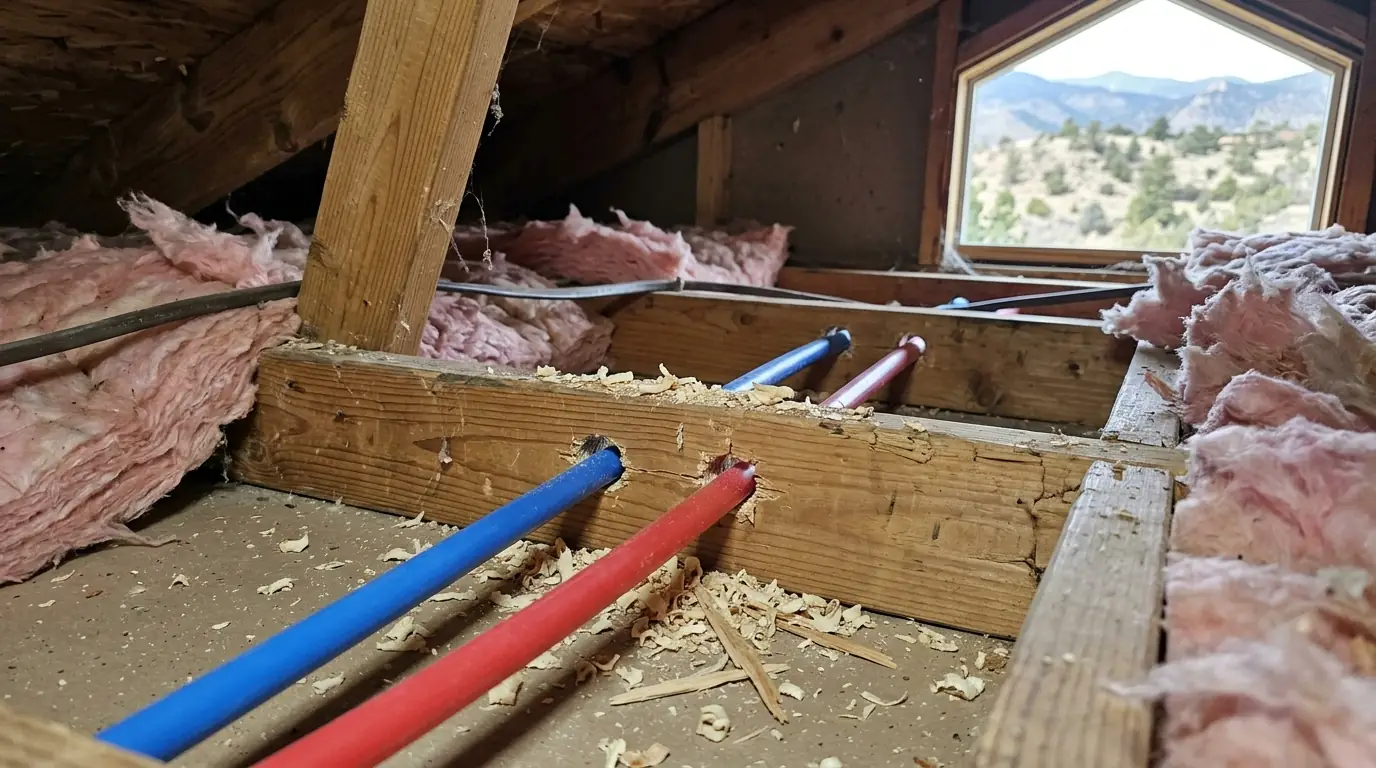
A reroute disconnects the leaking line where it rises out of the slab at each end, caps it, and runs new PEX through the attic, ceiling or interior walls to the same fixtures. You trade broken tile for a few small drywall openings, and the new line can be reached if it ever needs work. It is usually the better call when the slab has leaked before, when the leak sits under cabinets or costly flooring, or when the old copper is thinning elsewhere.
Warm floor or hissing under tile
A hot line leaking under a slab heats the concrete above it, so bare feet find a warm stripe or patch, often in a hallway, kitchen or bath. Pets sometimes find it first. A hiss with every faucet closed is pressurized water escaping. Other clues are a gas or electric bill rising with the water bill and damp carpet tack strip along one wall. Close the cold valve on top of the water heater: if the hiss stops, the leak is on the hot side.
Timing
How long you will be without water
For a spot repair, water to the house is usually off for part of a day: long enough to open the slab, splice the line and test it. The concrete patch needs to cure before tile goes back down, but water returns as soon as the joint passes.
A reroute can take longer because new pipe is pulled through the structure, but other lines often stay live while we work, so only the affected fixtures are off until the switch-over.
Local conditions
Expansive clay and the pipes under your floor
The Colorado Geological Survey says bentonite and montmorillonite clays underlie many populated parts of Colorado and can swell up to 20% by volume when wet, pushing with 20,000 pounds per square foot or more. It lists damage to pipelines and sewer lines among the losses and has published a heave-susceptibility map for Colorado Springs. That cuts both ways under a slab: a leak soaks the clay and makes it move, and a moving slab strains the pipes running through it.
Your options
Spot repair versus reroute, side by side
Neither option is always right. These are the tradeoffs we walk through on site.
| Spot repair through slab | Reroute overhead | |
|---|---|---|
| Disruption | Floor cut and broken concrete in one spot | Small drywall openings |
| Old pipe | Stays in service | Capped and left in the slab |
| Future leaks | Possible elsewhere on the buried line | New line stays reachable |
| Best when | First leak, pipe in good shape | Repeat leaks, or leak under costly flooring |
Hearing water under the floor?
Close the cold valve on the water heater, see if the hiss stops, and tell us when you call.
Cost
Slab leak costs, locating to backfill
Expect two parts on any slab leak bill, finding the leak and fixing it. These published figures are not our prices and do not include new flooring.
What moves the price
- Spot repair or full reroute
- Depth of the line and slab thickness
- Tile, wood or carpet over the leak
- Hot or cold line, copper or PEX
- Run length from entry to fixture
- Attic or ceiling access for a reroute
Ranges are published market figures for planning, not a quote. We price your job after we see it.
FAQ
Slab leak questions before we break concrete
Yes, in nearly every case. Water is off for part of the work, there is some concrete dust from the cut, and one room is out of use for a short time.
A steady leak wets the soil under the house, and on expansive clay that soil can swell or settle. Not every leak causes structural trouble, but it is a good reason not to let one run for months.
If the buried copper leaked from thinning, the rest of that run is the same age and wall thickness. A reroute stops paying for the next slab opening, which tends to show up in a different room.
Yes, and it will not show on the water meter because it only leaks when fixtures drain. Those are found with a sewer camera, not listening gear.
It is structurally sound and flush with the slab, but it is bare concrete. Your tile, wood or carpet goes back over it.

