Finding hidden water leaks in Colorado Springs homes
A leak you cannot see still costs water every hour. We prove it exists at the meter, then narrow it down with listening gear and thermal imaging so the one opening we make lands in the right place.
- Meter test first
- Acoustic and thermal locating
- Supply, slab and yard lines
Updated October 2026Phones answered 24/7
Want a price on this job?
Call and describe the job. We answer 24/7 and set a visit.
Quick answer
Leak detection in Colorado Springs starts at the water meter: with every fixture off, a moving leak indicator means water is escaping somewhere, wet spots or not. Closing the main then splits the house from the yard line, and listening equipment and thermal imaging narrow it to a spot before any wall or floor is opened.
Locating the leak before anyone cuts drywall
Opening a wall where a stain appears often misses, because water runs along studs, joists and pipe insulation before it drips. We narrow the search in stages: is water leaving the system at all, is it inside the house or out in the yard, which branch is losing it, and then which few inches of that branch. Each stage rules out most of the house.
Once the spot is marked, the fix depends on where it is. A line inside a wall is usually a short splice, a line under concrete means choosing between opening the slab or rerouting, and a leak between the meter and the foundation is a yard line repair. Silent toilet leaks get checked first, because they are the cheapest to fix.
Cost
What leak locating costs, apart from the repair
Most cost guides price detection separately from the fix, and the figures below come mainly from slab and pipe leak work. They are third-party numbers, not our prices.
What moves the price
- Whether the meter test shows a leak at all
- Inside the house or on the yard line
- Hot side or cold side
- Tile, carpet or wood over the suspect area
- How many branches need isolating
- Sprinklers, softener and RO units on the system
Ranges are published market figures for planning, not a quote. We price your job after we see it.
High water bill with no visible leak
A bill that jumps with no change in how the house uses water usually comes from one of four places: a toilet flapper seeping into the bowl, an irrigation zone valve that never fully closes, a water softener or reverse osmosis unit stuck in a drain cycle, or a pipe leaking out of sight. We check the cheap suspects with dye tablets and a look at the softener and sprinkler valves before any locating gear comes out. Plenty of high-bill calls end with a new flapper and nothing more.
Acoustic and thermal leak locating
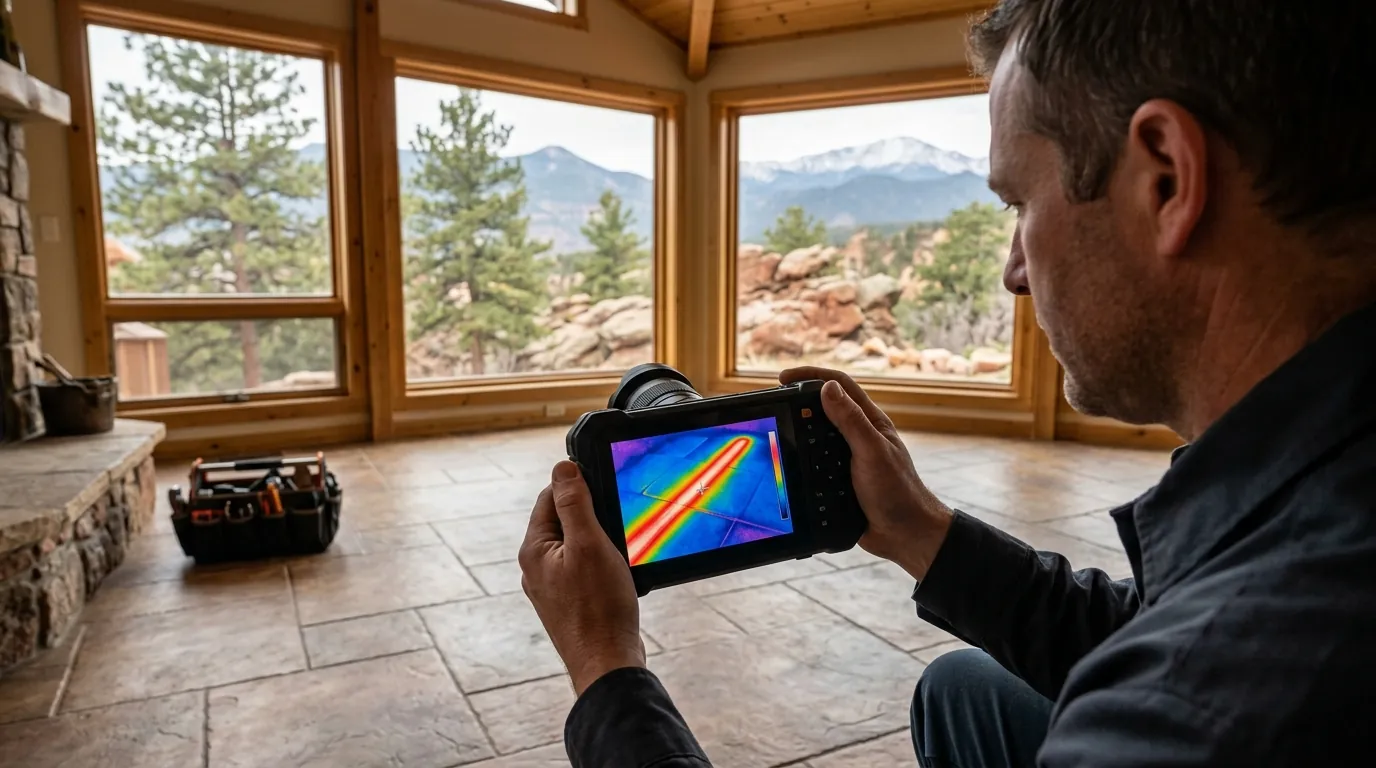
Pressurized water escaping through a pinhole makes a hiss that carries along the pipe and through concrete. Ground microphones and contact sensors pick it up, and we follow the sound to its loudest point. Thermal imaging helps on hot lines, which show as a warm streak across a floor or up a wall. Neither tool is magic: a slow cold-water drip under thick carpet pad can be nearly silent, so we combine readings, isolate branches with valves, and mark only what the evidence supports.
Meter test before opening any wall
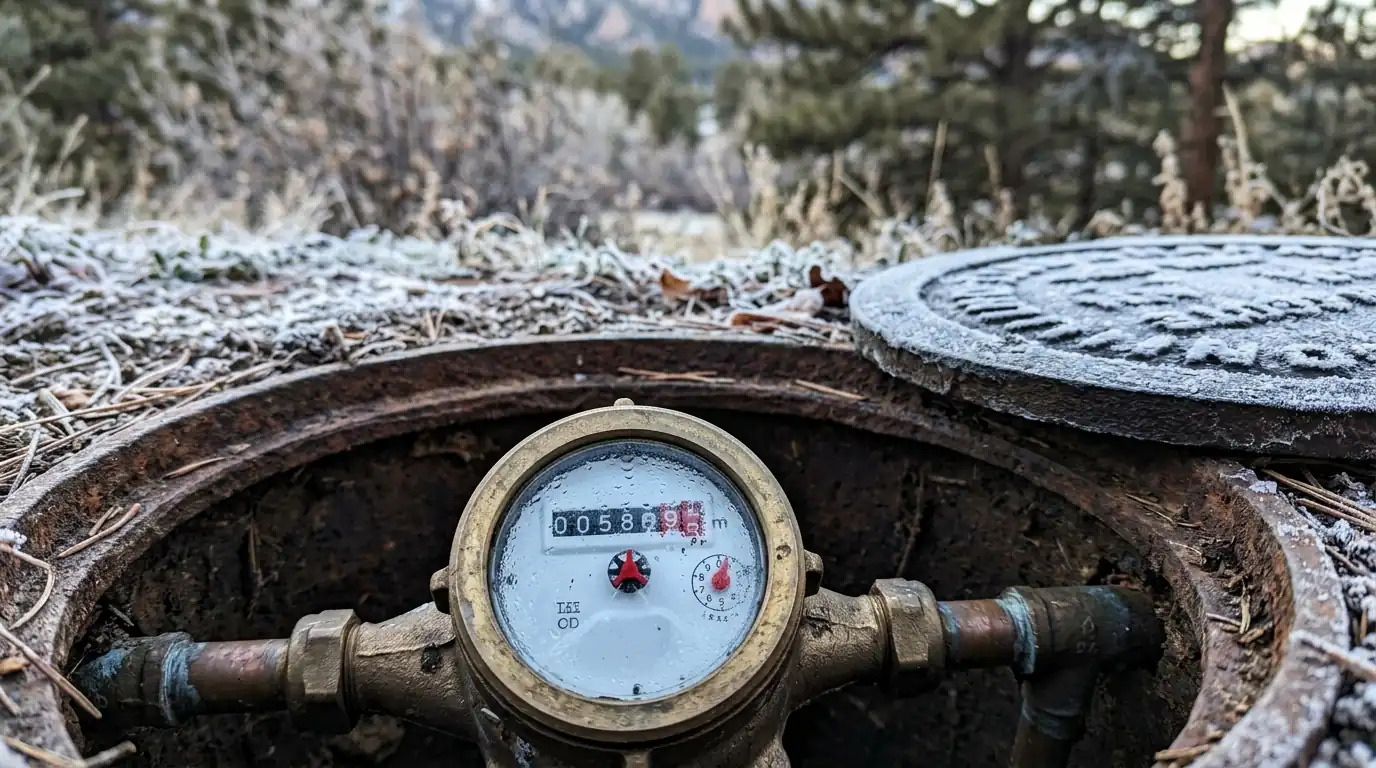
This is the step we never skip. With every fixture, ice maker and sprinkler controller off, we watch the meter's leak indicator, then close the main shut-off and watch again. If the meter keeps moving with the main closed, the leak is on the service line outside the house. If it stops, the leak is inside. A main valve that will not close fully shows up here too, and it needs replacing before any repair can be done safely.
Local conditions
Leaks between the meter and the house are the owner's to fix
Under Colorado Springs city code, the utility handles the water service line in the public right-of-way, but the property owner is solely responsible for repairing it from the right-of-way or easement line to the building. The curb stop is jointly owned, though only the utility may operate it. Once you find a service line leak, the code gives you 24 hours to report it, then 72 hours to repair a line over 1 inch or 45 days for 1 inch and smaller. A fast, accurate locate keeps those deadlines manageable.
What is included
What our locate covers, so you can compare
Leak detection means different things to different plumbers. Ours includes all of this before we call a leak found.
- Dye test on every toilet
- Irrigation and softener valve check
- Meter test with the main open and closed
- Hot and cold sides isolated separately
- Acoustic survey along the suspect run
- Thermal scan on hot lines
- Leak spot marked on the surface
- Repair options and the access each needs
Warning signs
Clues that point to a hidden leak
Meter leak indicator turning
The small triangle or dial moves with all water off.
Bill up with no new use
Compare the same month last year before blaming a rate change.
Warm patch on a tile floor
Often a hot line leaking under the slab.
Water heater firing constantly
A hot-side leak keeps it refilling and reheating.
Soggy or extra-green strip of lawn
Can mark a leak between the meter and the house.
How the job runs
How a leak locate visit runs
Rule out fixtures
Dye in every toilet tank, plus a look at softener, sprinkler valves and hose bibs.
Read the meter
Everything off, then the leak indicator watched with the main open and closed.
Isolate branches
Closing branch valves narrows the loss to one run.
Listen and image
Acoustic sensors along the run, thermal imaging on hot lines.
Mark and explain
We mark the spot on the wall, floor or lawn and lay out repair options.
FAQ
Leak detection questions we hear most
Finding it, usually yes. Fixing it normally takes one small opening at the marked spot. The point of locating first is that there is one opening, not five.
On a pressurized line with a steady leak, it narrows things to a small area. Accuracy drops on very slow leaks, on plastic pipe that carries sound poorly and under thick flooring, which is why we confirm with more than one method.
In Colorado Springs, the owner is responsible for the service line from the right-of-way or easement line to the house, and the utility handles the stretch in the public right-of-way. We show you where the leak sits relative to that line.
Yes. Turn off every fixture and the sprinklers, then watch the meter's leak indicator for a few minutes. If it moves, water is going somewhere.
Yes. A flapper that never fully seals can trickle water into the bowl around the clock without a sound, and it is one of the most common causes of a high bill.
Related services

