Hot water boiler repair and yearly service in Colorado Springs
When a hot water boiler quits in a Colorado Springs winter, the house cools room by room. We trace the fault through burner, pump, valves and pressure, then fix what failed.
- Answered around the clock
- Hot water boilers
- Zone valves and circulators
Updated October 2026Phones answered 24/7
Water running right now?
Close the main shut-off, then call. A person answers 24/7.
Quick answer
Boiler repair in Colorado Springs usually comes down to four things: the burner will not light, the circulator is not moving water, a zone valve is stuck, or loop pressure has dropped below the roughly 12 to 15 psi most homes run cold. We read the gauge first, because pressure rules a lot in or out.
Warning signs
Signs your boiler needs a look
Pressure creeping down
The gauge drifts lower between fills or reads near zero.
One zone stays cold
Other rooms heat but one thermostat never gets satisfied.
Water at the relief valve
A drip or stain at the discharge pipe during a heat cycle.
Repeated lockouts
An error code that clears on reset and comes back.
Yellow or lifting flame
On older burners, a combustion problem to test.
What is behind a cold radiator
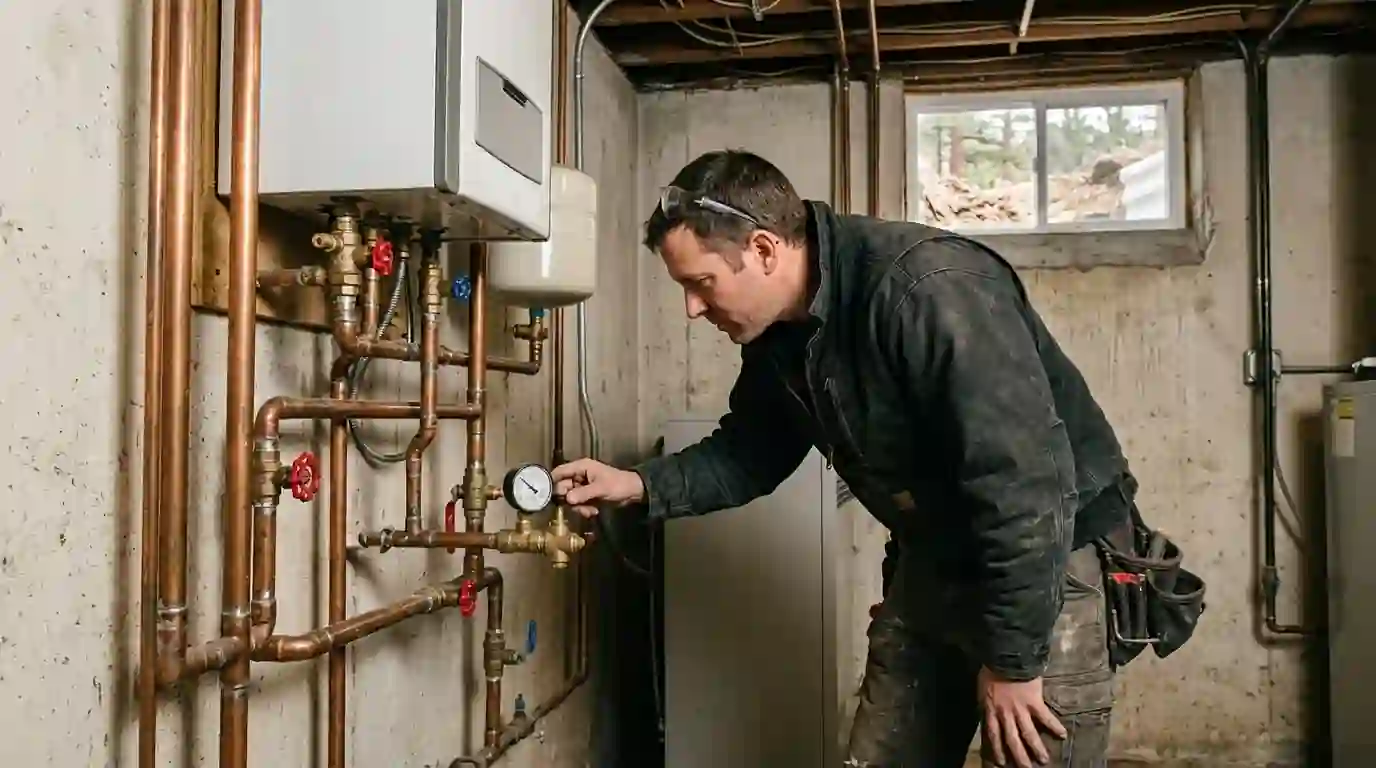
A hydronic system is a closed loop: the boiler heats water, a circulator pushes it through baseboard, radiators or floor tubing, and it returns to be reheated. A flame that lights and drops out points to the igniter, flame sensor or gas supply. A boiler that fires while rooms stay cold points to air in the lines, a seized circulator or a zone valve that never opens.
We work on hot water boilers, including wall-hung condensing and combi units. Steam is a different animal, and we will say so on the phone if yours is steam. When an indirect tank hangs off the boiler, no heat and no hot water can share one cause. A weeping gas union at the boiler is handled as gas line repair on the same visit.
How the job runs
How we track a no-heat call to its cause
Read pressure and temperature
Is there water in the loop, and is the boiler making heat?
Check the call for heat
Thermostat, zone relays and end switches.
Watch an ignition cycle
Inducer, igniter and flame signal in order, plus the error history.
Confirm water is moving
Supply and return pipe temperatures expose a stuck pump or closed zone.
Repair and purge
New part, refill, purge zone by zone, recheck pressure hot.
Combustion test
Analyzer readings at the flue before we leave.
No heat from a hot water boiler
Start at the gauge. Near zero means the loop has lost water through a leak or the relief valve, and the low-water cutoff may be holding the burner off. Normal pressure with the boiler firing means the heat is not moving: an air-bound loop, a circulator with a seized impeller or a failed relay. If nothing happens at all, we follow the call for heat through inducer, pressure switch, igniter and flame rod. On condensing boilers, a clogged condensate trap alone can shut the burner down.
Leaking zone valves and circulators
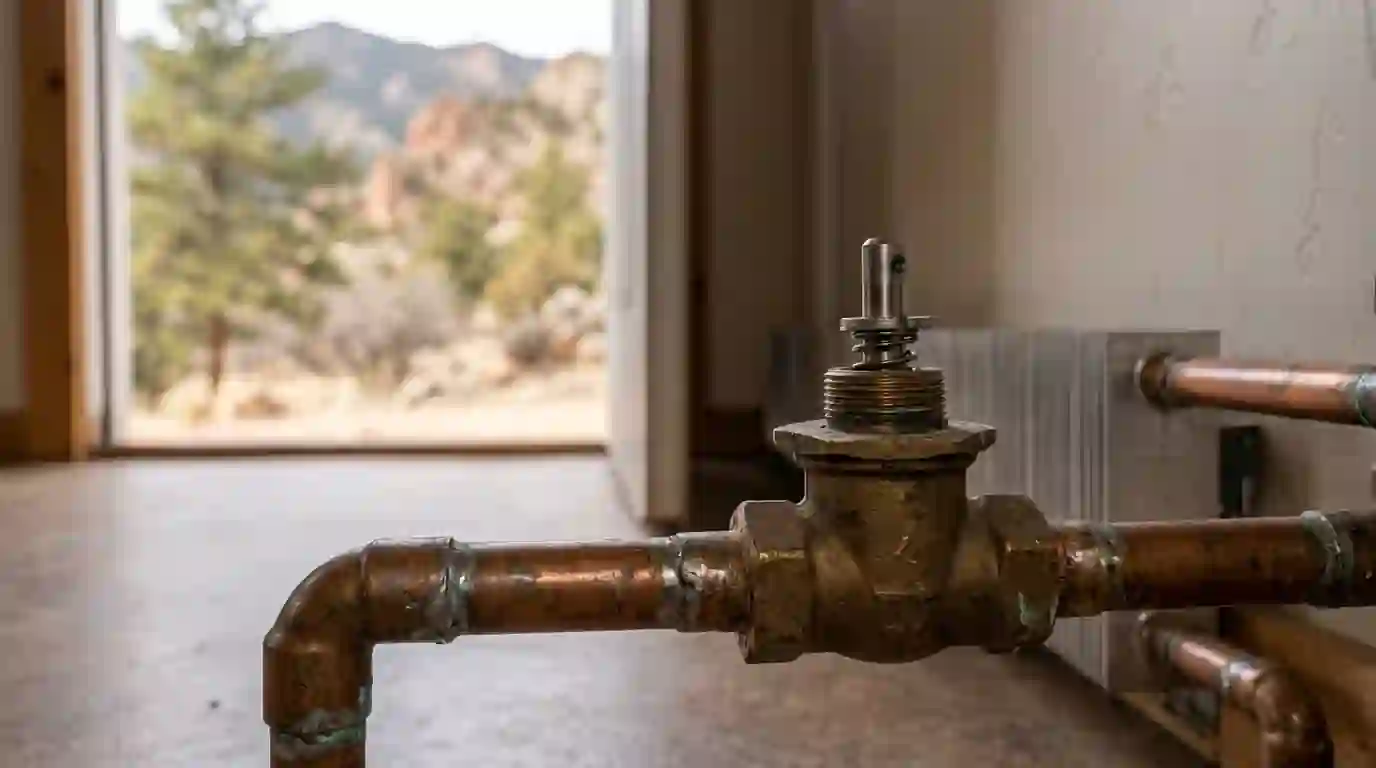
Zone valves fail two ways. The actuator head burns out and that zone stays cold, or the stem packing weeps and leaves green crust and a drip on whatever sits below. A head usually swaps without draining anything; a leaking body means isolating and draining the zone. Circulators leak at the flange gaskets or quit with a hum and no flow. An old cast iron circulator often gives way to a variable-speed pump sized to the loop. Any repair that opens the loop ends with a refill, purge and pressure check.
Annual boiler service
A yearly visit catches slow failures before the first cold night. We test the relief valve and low-water cutoff, check the expansion tank charge, clean the burner where the design allows and read CO and oxygen at the flue. Condensing boilers get the trap and neutralizer cleaned and the vent checked for sagging joints. If an indirect tank is part of the system, we can flush it and check its anode on the same visit, using the same altitude logic that applies to gas water heaters here.
Timing
How long you might be without heat
Most repairs take part of one visit, since valve heads, relief valves and igniters are common parts. Draining and purging a zone adds time before every room heats again.
The longer waits come from parts. Boards and heat exchangers for some wall-hung boilers are model specific, and when one must be ordered we tell you up front and make sure the rest of the system is left safe.
Local conditions
Combustion and boiling point at 6,035 feet
Colorado Springs sits at 6,035 feet, well above the altitude where manufacturers start adjusting gas burners, so a boiler left on sea-level settings can run rich, sooty or short of its rated output. We confirm it with a combustion reading, not the label. Altitude also lowers the boiling point: Colorado State University Extension puts it near 203 F at 5,000 feet and 198 F at 7,500 feet, against 212 F at sea level. A pressurized loop boils higher, one more reason we never leave a system running low.
Cost
What boiler repairs typically cost
Most boiler calls land in a narrow band, because the common parts are not large. A cracked heat exchanger or a failed board on a condensing unit is the exception, and that is where repair versus replacement becomes a real conversation.
What moves the price
- Which part failed: valve head, circulator, igniter or board
- Draining and refilling one zone or the whole loop
- Condensing versus older atmospheric boiler
- Access in a tight mechanical closet
- Parts availability for older models
- Combustion adjustment after the repair
Ranges are published market figures for planning, not a quote. We price your job after we see it.
Brands we service
We service wall-hung and combi boilers from Navien, Rinnai and Noritz, and replace Watts relief valves, fill valves and mixing valves on all makes.
- Rheem
- A. O. Smith
- Bradford White
- Navien
- Rinnai
- Noritz
- Moen
- Delta
- Kohler
- American Standard
- InSinkErator
- Uponor
- Watts
- Zurn
FAQ
Boiler questions we hear every heating season
Water is leaving the loop through a weeping relief valve, a leaking valve or fitting, or a leak under a floor. An automatic fill valve hides it by topping up, and fresh water brings oxygen that corrodes the boiler, so we find the leak.
Usually the expansion tank has lost its air charge, so heated water has nowhere to expand and pressure climbs to the valve setting. Recharging or replacing the tank often fixes it. A valve that drips at normal pressure has a worn seat.
Gurgling is air in the loop, which cuts heat to that zone and wears the circulator. It often follows a repair or a slow leak the fill valve keeps topping up. We purge zone by zone and find where it got in.
A cast iron boiler with a sound heat exchanger can run a long time with new valves and pumps. A cracked section, a leaking exchanger or discontinued parts push toward replacement. We show you what we found and the call is yours.
Burner settings drift, condensate traps clog and expansion tanks lose their charge without showing it. A visit before the first cold spell catches those while the house is still warm enough to wait for a part.
Related services

