Pipes froze in Colorado Springs? Do these things first
By Ulysses Elkins, Plumbing Guides EditorUpdated October 2026
Need a plumber, not a guide?
We answer 24/7 across Colorado Springs and the Pikes Peak region.
Quick answer
When a pipe freezes in Colorado Springs, shut off the main water valve first, open the faucet on that line, then warm the pipe gently from the faucet end back toward the ice. Never use an open flame. The city averages 5.2 nights a year below 0 F, so lines in garages, crawlspaces and outside walls freeze first.
The first five minutes: valve, faucet, then heat
A frozen pipe is not leaking yet, but it may already be split. Ice expands inside the pipe, and the pressure it builds is usually released at the weakest point between the ice plug and a closed faucet, which is often a fitting or a stretch of pipe a foot or two away from the frozen spot. That is why the order matters. Shut the water off before you thaw, so a hidden split does not turn into a flood the moment the ice lets go.
- Close the main shut-off where the water line enters the house, usually in the basement or a utility closet
- Open the faucet the frozen line feeds, both hot and cold, to relieve pressure
- Turn off the water heater gas control or breaker if the hot side is frozen and the tank may drain
- Move anything valuable away from the pipe and ceiling below it
- Only then start warming the pipe
Where pipes freeze in a Colorado Springs house
The normal January low here is 18.5 F, and the record lows are -27 F, set on February 1, 1951 and December 9, 1919. Ordinary cold rarely freezes a pipe inside a heated room. The trouble starts where a line runs through space the furnace does not reach: a garage wall with the laundry or a hose bib on the other side, a crawlspace with a gap in the skirting, a kitchen sink on an exterior wall with the cabinet doors shut, a bathroom built over an unheated garage, or a supply line pressed against the rim joist in an unfinished basement.
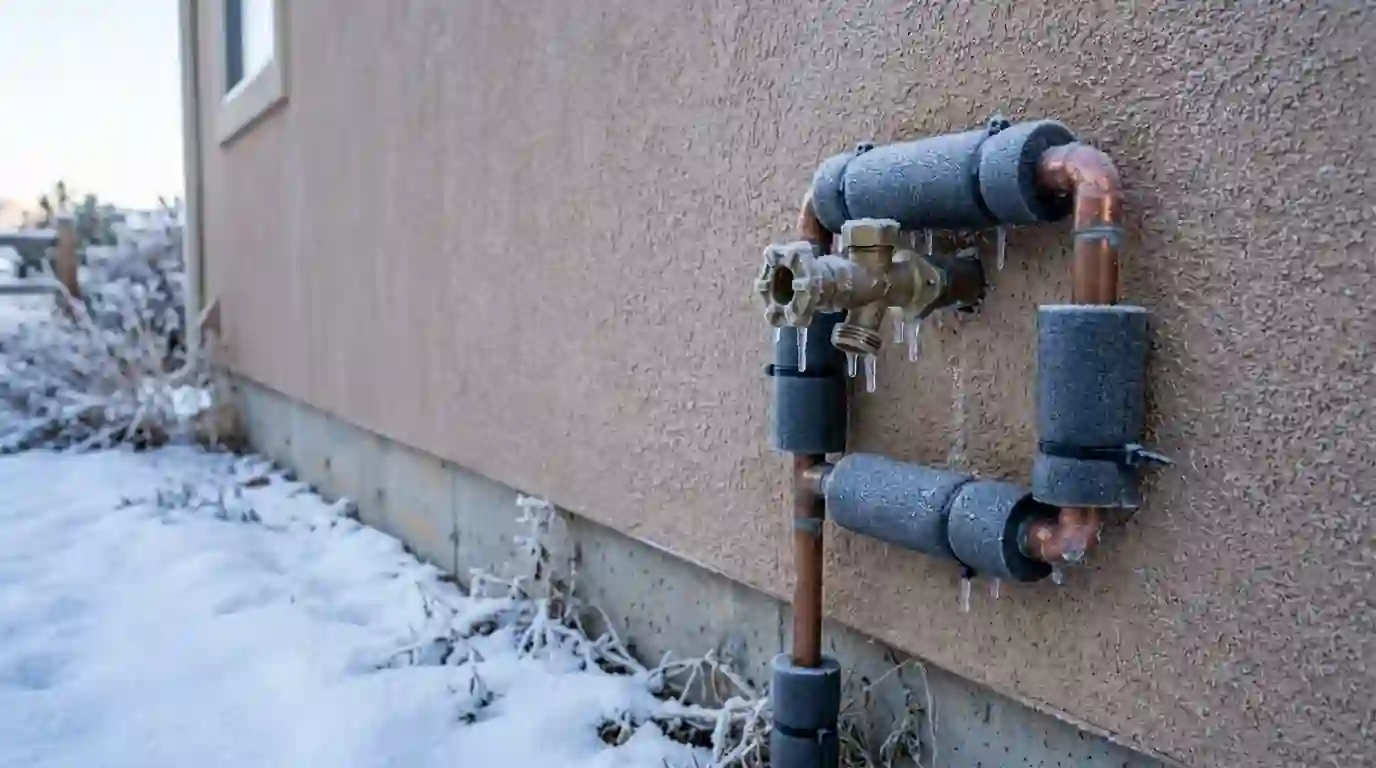
Outdoor plumbing is the other half of the problem. A hose left on a frost-free sillcock keeps water in the valve body, and a sprinkler system that was never blown out holds water in every lateral. Those usually split quietly and only show themselves when someone turns the water on in spring.
Thawing safely: what works and what starts fires
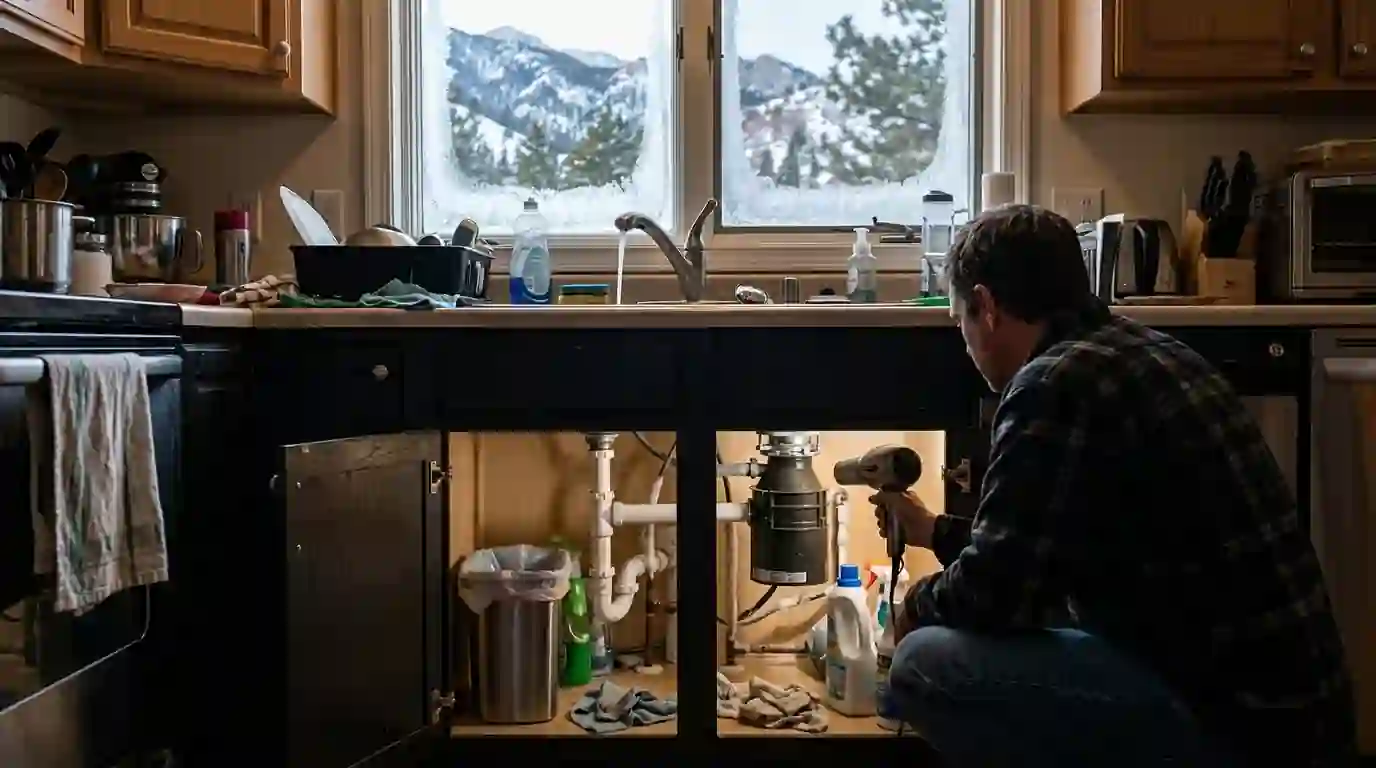
Gentle, steady heat is the whole method. Start at the faucet end so melting water has somewhere to go, and work back toward the ice. A hair dryer, a heat lamp kept clear of insulation and framing, a space heater set in the room, or towels soaked in hot water all work. Open cabinet doors under sinks so room air reaches the pipe. Keep the faucet open the entire time; a trickle that turns into steady flow tells you the ice is gone.
Never use a propane torch, a heat gun held close, or anything with an open flame. Torches set framing and insulation on fire every winter, and they can overheat copper solder joints or melt PEX and its fittings. If the frozen section is inside a finished wall or ceiling, or you cannot find it at all, stop and call. Cutting drywall at random to look for ice wastes time and patch work.

Rather have a plumber look at it?
Call any hour. A person answers.
Signs the pipe already split
Once flow comes back, watch the pipe and the ceiling under it for at least a few minutes before you reopen the main fully. Look for these:
- Water spraying or dripping from a fitting or a bulged section of copper
- A hairline crack or a fitting pushed off a PEX line
- A spreading stain or sag in drywall below the frozen area
- The water meter dial still turning with every fixture closed
- A hissing sound in a wall once pressure is back
When to stop and call a plumber
Call when the frozen section is behind a wall or ceiling, when you find a split, when the pipe is old galvanized steel, or when the whole house has no water at all. No water anywhere can mean the freeze is at the meter or in the service line, and Colorado Springs city code makes the owner responsible for the line from the right-of-way to the house, while the utility handles the part in the right-of-way. Our frozen and burst pipe repair visits start by finding the ice, then the damage.
We answer the phone 24/7. If water is already coming through a ceiling, shut the main and call our emergency plumbing line. If the split is small and the water is off, a standard pipe leak repair usually handles it. When the meter still moves and you cannot see where the water is going, leak detection finds the spot before anyone opens a wall.
What frozen and burst pipe repairs cost
HomeAdvisor reports that thawing frozen pipes often carries a flat fee of about $100, and that repairing a burst pipe falls in a normal range of $200 to $3,000, with $500 as a typical figure. ConsumerAffairs gives a similar picture: around $100 to thaw, and $250 to $500 if the pipe has burst or is leaking. The high end of those ranges comes from access, not from the pipe itself. A split in an open basement ceiling is a short repair. A split inside a finished wall above a kitchen means opening drywall, drying the cavity and closing it again.
A freeze season that runs from October into May
NWS Pueblo lists October 2 as the mean date of the first fall freeze in Colorado Springs, with the earliest on record on September 1, 1911. The mean last spring freeze is May 8, and the latest came on June 18, 1912. In practice that means seven months a year when an unprotected pipe can freeze, so the fixes that last are the ones that move pipes out of the cold or keep them warm.
Insulating lines on outside walls, adding heat cable to a run that cannot be moved, and rerouting a supply line out of a garage wall are all part of freeze protection work. Outdoor fixtures need their own routine every fall, which our guide to winterizing hose bibs and sprinkler lines walks through step by step.
FAQ
Questions readers ask
On lines you know are exposed, yes. A slow drip keeps water moving and, more importantly, relieves the pressure that splits a pipe if ice does form. Open both hot and cold on a sink against an outside wall and leave the cabinet doors open so warm room air reaches the pipes.
Almost always in the run feeding that sink, often where it passes through an exterior wall or under a window. Open the cabinet doors, warm the cabinet space with a space heater placed safely, and keep the faucet open. If it does not clear, the ice may be inside the wall cavity.
PEX tolerates a freeze better than copper because it can stretch a little, but it is not freeze-proof. Fittings, crimp rings and the valves at each end can still crack or pull loose. Treat a frozen PEX line the same way: water off, faucet open, gentle heat, and watch the fittings when flow returns.
Check again in a day. A small split can seep slowly into insulation or a ceiling cavity before it shows. Read the water meter with every fixture off; if the dial creeps, there is a leak somewhere. Then fix the reason the pipe froze, or it will freeze again the next cold night.
If the cold supply to the heater freezes, the tank simply stops refilling. The risk is running hot water until the tank partly drains with the burner or elements still on. If the main is shut for a thaw, turn the heater off as well and relight or reset it once water is flowing again.
A hose left attached over winter traps water in a frost-free valve, and the ice splits the valve body inside the wall where you cannot see it. The leak only shows when the valve is opened. The valve needs replacing, and the wall cavity should be checked for wet insulation.
Related