Backflow testing in Colorado Springs: what is required and when
By Ulysses Elkins, Plumbing Guides EditorUpdated October 2026
Need a plumber, not a guide?
We answer 24/7 across Colorado Springs and the Pikes Peak region.
Quick answer
Colorado Springs Utilities requires backflow prevention assemblies to be tested when installed and every year after by a certified backflow tester, and irrigation customers must have the test done before the system is winterized. HomeAdvisor lists annual testing at $70 to $350, small next to a suspended water service.
What a backflow assembly keeps out of the drinking water
Water in the city mains is meant to flow one way: toward your house. Backflow is any time it runs the other way. It happens two ways. Back-siphonage occurs when pressure in the main drops, during a main break or heavy firefighting draw, and pulls water backward out of house piping. Backpressure occurs when something on your side, such as a pump or a boiler, pushes water at higher pressure than the supply.
A lawn sprinkler system is the classic hazard. Its heads sit in soil with fertilizer, pet waste and standing water, and without protection that water can be drawn back into the line that feeds your kitchen tap. A backflow prevention assembly sits between the house supply and the irrigation piping to stop it. Boilers with chemical treatment, commercial dishwashers and fire sprinkler systems carry their own assemblies for the same reason.
Assemblies you will find on Colorado Springs properties
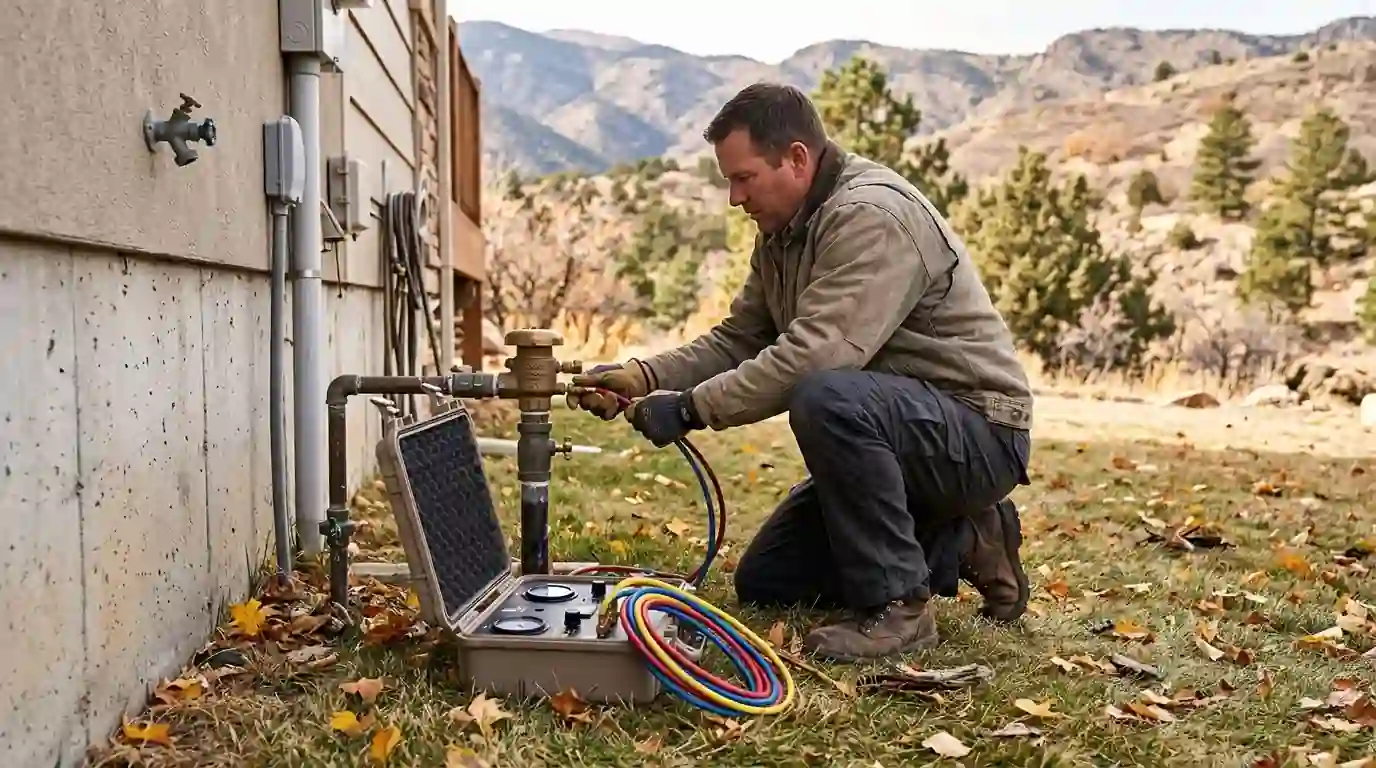
Residential irrigation usually uses a pressure vacuum breaker, a brass body with two test cocks, a spring-loaded check and an air inlet, mounted above the highest sprinkler head outside the house. Some systems use a double check valve assembly in a box below grade. Higher-hazard connections, including many commercial ones, require a reduced pressure zone assembly, which has a relief port that dumps water when the checks fail. Each type has its own test procedure, and the assembly's make, model, size and serial number go on the test report.
Who has to test, and how often
Colorado Springs Utilities' backflow program requires assemblies to be tested on installation and annually after that by a certified backflow tester. Customers may test their own assemblies only if they hold that certification and file current certification with the program. For most homeowners, that means arranging the test with a tester each year and making sure the results are filed, since the program tracks the result, not the effort.
The yearly rule applies whether or not anything seems wrong. An assembly can look fine from outside while a check valve is held open by a pebble or a worn rubber part. The test is the only way to know it still does its job. Backflow testing and certification covers residential irrigation assemblies as well as commercial assemblies at restaurants, offices and multifamily buildings.

Rather have a plumber look at it?
Call any hour. A person answers.
The before-winterizing deadline for sprinkler systems
Irrigation customers in Colorado Springs must have backflow prevention tested every year before the system is winterized. The 2019 schedule shows how firm that is: records were due October 1, violation notices followed from October 4, customers then had 20 days to comply, or 10 days after an Imminent Hazard Order before water service was suspended. Check the current year's dates with the program, but plan on early fall.
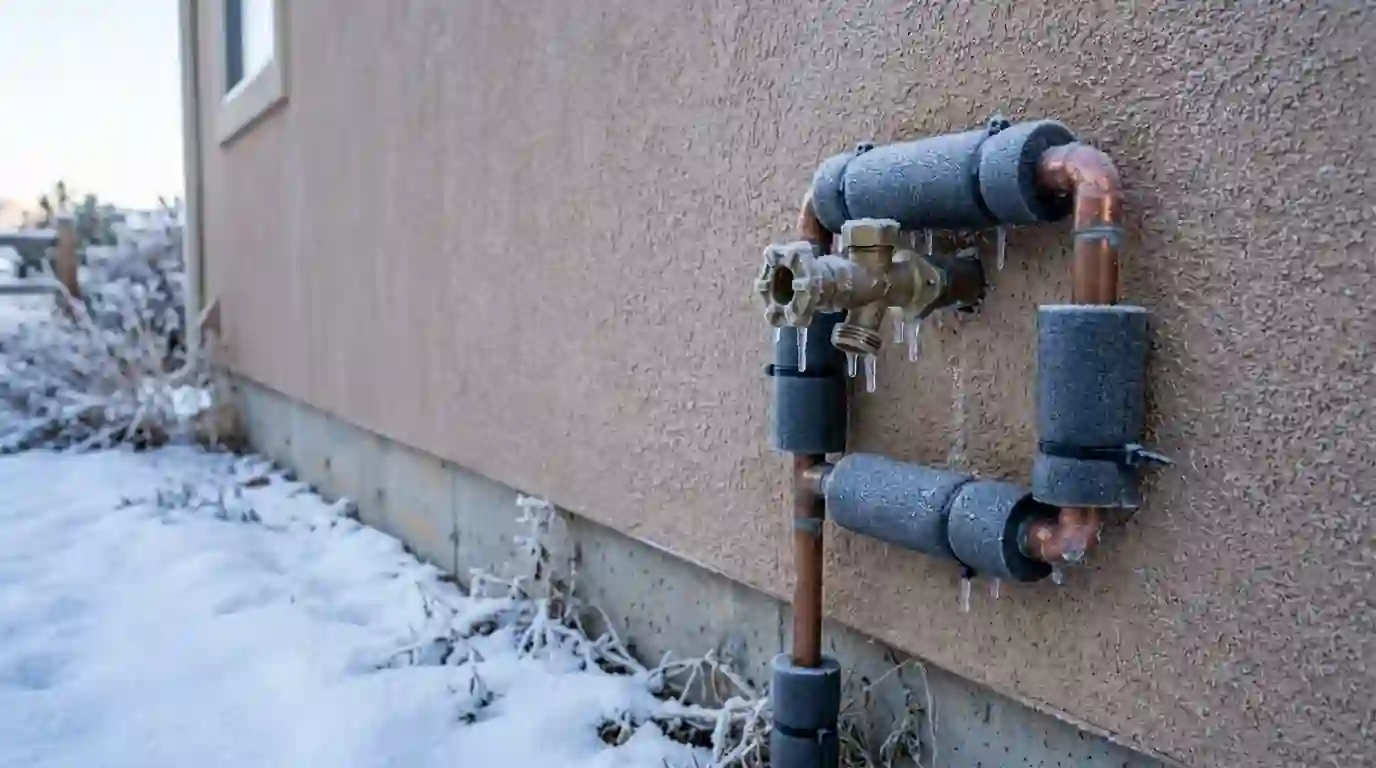
The weather makes the window tighter. NWS Pueblo lists October 2 as the mean first fall freeze in Colorado Springs, and the earliest on record came on September 1, 1911. A system has to be pressurized and running to be tested, so the order is fixed: test first, then shut down and blow out. Leave it too late and a hard freeze can crack the assembly before the test ever happens. Our guide to winterizing hose bibs and sprinkler lines covers the shutdown that follows the test.
What happens during a backflow test
A test takes the assembly through its paces with a calibrated differential pressure gauge. For a pressure vacuum breaker, it runs roughly like this:
- Close the downstream shut-off so the irrigation side is isolated
- Connect the test kit to the test cocks and bleed air from the hoses
- Confirm the check valve holds a minimum pressure drop in the flow direction
- Confirm the air inlet opens at the required pressure and stays open
- Record readings, restore the valves and file the report with the program
When an assembly fails, and what fixing it involves
Most failures are small. Debris lodged in a check seat, a hardened or torn rubber disc, a weak spring or a sticking air inlet poppet can usually be fixed with a manufacturer repair kit, followed by a retest. Freeze damage is different. A pressure vacuum breaker left full of water through a cold snap often cracks its bonnet or body, and a cracked body is a replacement, not a repair.
When the assembly has to go, backflow preventer installation and repair sets the new one at the right height above the highest head, with unions or isolation valves that make future tests and winterizing easier. A new assembly must be tested on installation under the program's rules, so the install and the first test go together.
What backflow testing and repair cost
HomeAdvisor lists annual backflow testing at $70 to $350 per test, and backflow preventer installation in a normal range of $150 to $450. For a Front Range comparison, the City of Longmont lists a city-contracted residential test at $137.50 per assembly for 2026; that is Longmont's program, not Colorado Springs', but it shows where a single routine test tends to land. Repairs add parts and a retest. Replacement after freeze damage costs more than catching it with a timely test and blowout.
FAQ
Questions readers ask
Yes. The program requires an annual test regardless of how much the system runs, and irrigation customers must test before winterizing. A system used for one summer month still connects to the drinking water supply every time it is turned on.
Only if you are a certified backflow tester and have filed current certification with Colorado Springs Utilities' program. Without that, a homeowner's own test does not count toward the annual requirement, even with the right gauge.
The requirement is a passing test before winterizing, so a failure needs a repair and retest first. Most failures are a cleaning or repair kit on the spot. If the assembly is cracked, it needs replacing, and the new one is tested on installation.
On a pressure vacuum breaker, a brief spit from the air inlet when pressure comes on is normal. A steady drip or spray means the poppet or its seal is not seating, often from debris or a worn part. That assembly will likely fail its test and needs service.
A hose bib vacuum breaker protects that faucet from back-siphonage through a hose, and every outdoor spigot should have one; a leaking one is a quick outdoor faucet repair. It is not a testable assembly and does not replace the tested device required on an irrigation system.
Check with the program for the property's test record. If it is missing for the year, arrange a test and file it before winterizing if the weather allows. If the system is already drained, ask the program how to handle it and test at spring startup.
Related